
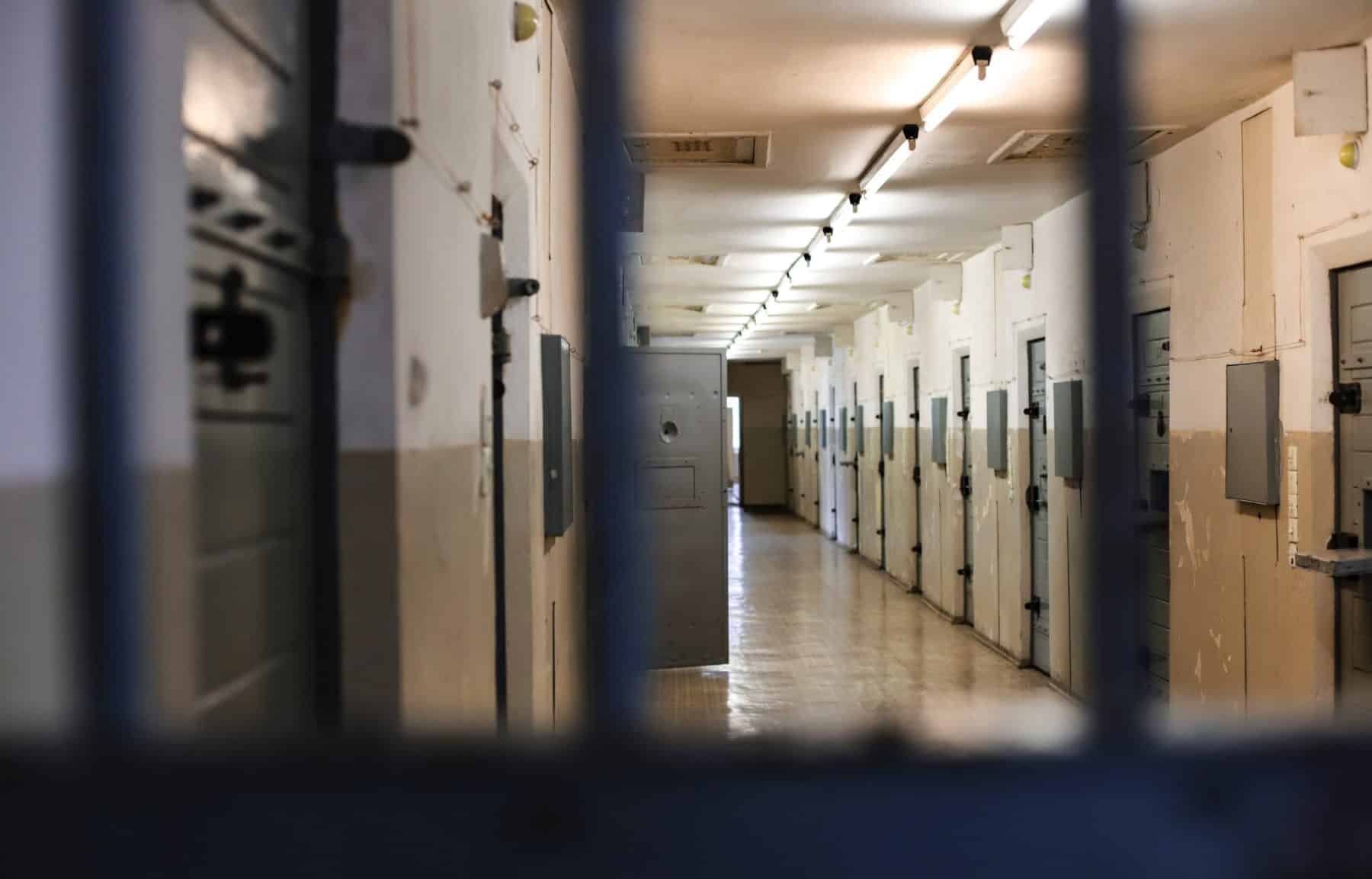
One morning in July we wake to rumors of being on lockdown, which happens at least once a month these days. Georgia Department of Corrections (GDC) cell doors don’t electrically lock anymore; a majority have functional dead-man locks welded on but the few officers here don’t care enough about the job to use those. So while the main building door to this dorm remains locked, movement inside is free.
Lockdown status is confirmed when kitchen workers arrived to deliver meals, escorted by an officer who opens the main door just enough for us to file past one at a time and receive an off-brand Styrofoam tray.
Cell phones come out. We learn the reason—another fight between rival gangs.
No one is surprised. Since he first took office in 2019, Governor Brian Kemp (R) has launched the state’s first “gang prosecution unit” and implemented five-year mandatory minimums for all gang-related convictions. Prisoners tagged by GDC as gang-affiliated have rather dim prospects with the Georgia State Board of Pardons and Paroles, the members of which all have law enforcement backgrounds.
At any given GDC facility more than half the officer posts might be empty, so a minor brawl can produce more armed combatants than there are staff members in the entire prison. Coordinated use of pepper spray and Tasers can still disperse a crowd, but it leaves administrators shaken and results in a lockdown of that facility until the relevant cameras and gang leaders can be reviewed for assessment. That could be done in an hour. Or, if the fight is on a Thursday, it could take until Monday.
No visitation, no religious services, no behavioral improvement groups that are mandatory for the parole-eligible. No library access, including the law library. No yard call. No ball games in the gym. Commissary cut by half. Group counseling, education and vocational tech classes—all cancelled.
Industry workers may still sent out though, under escort, to their unpaid full-time chemical or textile factory jobs. Georgia Correctional Industries is going to get theirs unless the plant burns down.
When multiple prisons have gang fights in the same week, it can look like a system-wide war. “Organized crime” is not that organized, though.
Lockdowns are being presented as the new normal, but the state does not have the resources to make that work, at least not in a constitutionally acceptable manner. Yet they continue.
When multiple prisons have gang fights in the same week, all of GDC goes on lockdown. It can give the appearance of a system-wide gang war. “Organized crime” is not that organized, though; it’s not as if members in different prisons are contributing to a national pot. These are just fights between the same gangs at different locations.
The next day, wardens will meet with leaders of the groups involved to check whether this was anything more than a local beef. Over time they’ve learned to call leading members of all gangs to such meetings; if any are left out, their paranoia becomes everyone’s problem. Paranoid is the norm in prison; dots connect at great distances in here.
Gang leadership tends to be those with cool heads who have learned how to talk to The Man, and say whatever’s needed to get their facility’s lockdown status reduced to “modified movement.” You might be surprised how many young hotheads will answer officers with the truth (“We want to kill all the __!”), which does not have the same effect.
Modified movement status means that at least visits and classes resume. Still no yard or gym time.
Corrections departments may tout their zero-tolerance approach to gangs, but the understaffing crisis ensures that wardens and gang leaders have never been closer. Without any experienced officers around, talking to gang leaders is the only way staff get anything to report up the food chain.
Everyone cuts their eyes toward any prisoner seen talking privately to administration, but it’s common now. Used to be that no one would even address a floor-walking guard without at least one witness in tow; if a guard is involved in a bust later that day, it is potentially unhealthy to have been the last one seen speaking to them beforehand.
Contraband cell phones aren’t the cause of gang violence.
In January, one medium-security facility had such a clash between rival gangs that it actually spilled from the walkways outside the living units into the open visitation area, filled with women and children on a Sunday. Three prisoners were killed during the fight, one of whom was days away from being released, and a fourth died later following injuries. All prisons were duly locked down while GDC began an investigation, which eventually resulted in 12 prisoners charged with murder.
Contraband cell phones aren’t the cause of gang violence. Has someone’s outside family ever been extorted through the medium of a contraband cell phone? Sure. But phones also play a huge role in violence reduction. They’re used to verify whether new arrivals are who they claim to be, which immediately shuts the door on a lot of sketchy behavior that leads to violence. They’re used to generate and transfer income. Violence breaks out because the state continuously prices edible food further and further out of reach, and people are hungry.
Violence also breaks out after crackdowns on drones. A single drone delivery can easily represent tens of thousands of dollars invested. When one gang has the drone connection, a peace treaty will allow rival gangs to handle distribution; everyone eats. But when a drone is intercepted, hunger inspires confrontation among those who want their money back. It’s telling that, alongside more traditional contraband like drugs and cell phones, drones are also bringing in food.
Allow local and online businesses to hire prisoners and pay them a living wage. Require parole boards to base their release decisions on time served, and their denials only on disciplinary infractions. Sell vapes at commissary. Or, if that’s just too sensible, then at least turn a blind eye to the contraband tobacco market.
Image via Matthew Ansley/Unsplash