
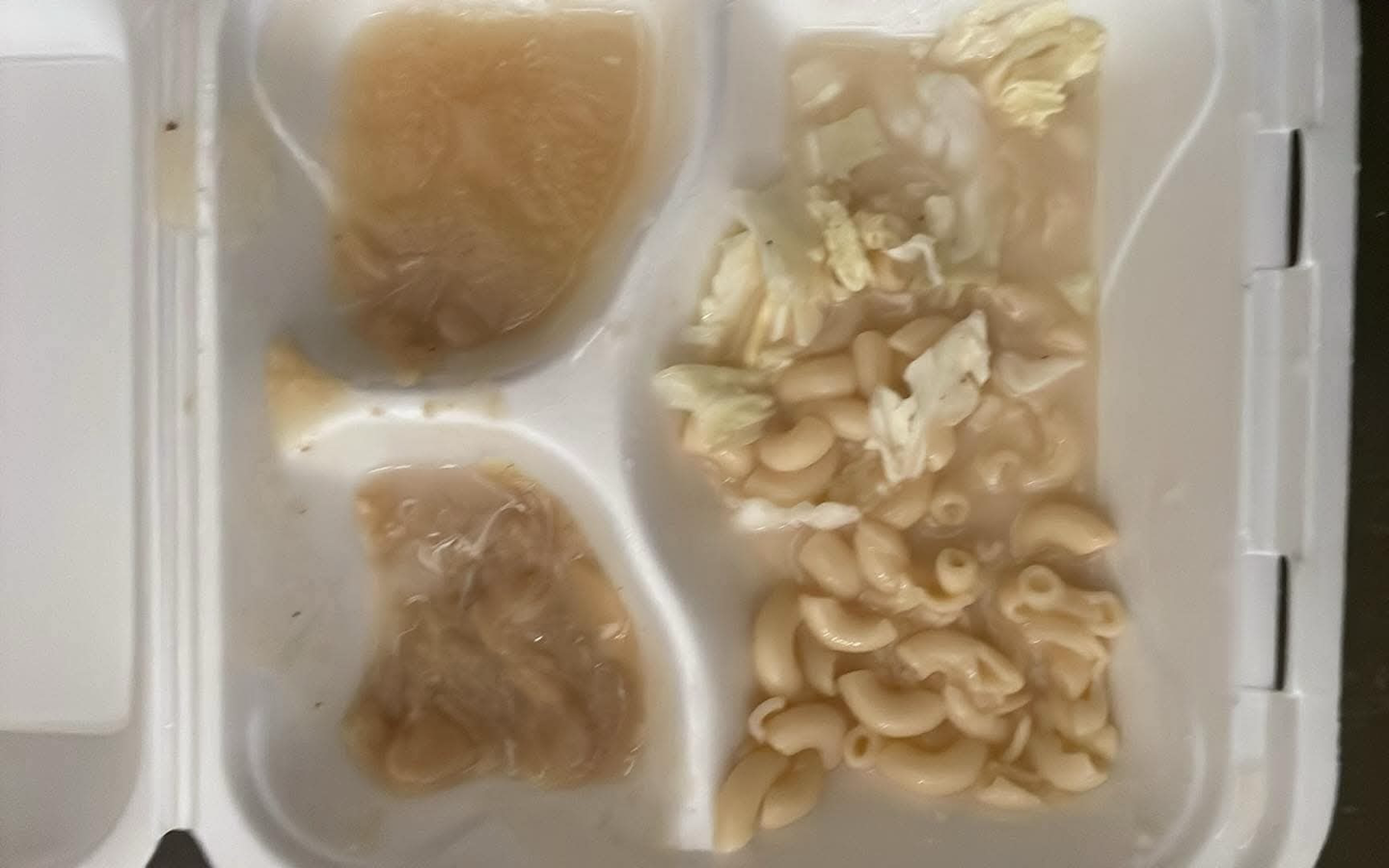
The Georgia Department of Corrections (GDC) is once again on track to surpass the record levels of violence and deaths reached the year before. In the first six months of 2025, at least 42 deaths in GDC were being investigated as possible homicides. Officials blame contraband cell phones and drugs, and somehow never seem to discuss one of the biggest and most obvious drivers of prison violence: The food.
“Food deprivation,” as the Department of Justice called it in its anticlimactic 2024 investigation of violence in GDC prisons, is common here. Food is withheld by corrections officers or by other prisoners, but even those who get three meals a day (weekdays at least) in the chow hall still talk of hunger pangs in their letters home.
It’s not uncommon to lose 50 pounds of body weight during the first months of incarceration. Even though in GDC we now get the privilege of lunch on the weekends, in the form of a peanut butter sandwich tossed on top of the breakfast tray. The breakfast tray itself arrives cold, wet with dishwater and mostly empty. After waiting 14 hours for that tray since dinner, many start the day irritable.
Behind every tray of soupy grits is a bean-counting bureaucrat who delegated food service to a contractor.
Malnutrition in prisons is linked to increased aggression against both corrections officers and other prisoners. Not surprisingly, research has also shown that modest improvements to prison food service—even just adding vitamin and mineral supplements—can significantly reduce rates of assaults, suicides and self-harm.
Across the country, food that’s expired or otherwise not fit for human consumption is a tried-and-true way for private contractors to increase profits. Behind every tray of soupy grits is a bean-counting bureaucrat who decided to delegate food service to a for-profit contractor. The contractor then pads its pockets at our expense without having to worry about the health conditions we’ll develop as a result; that’s the state’s problem.
Of course a healthy prison population would be less expensive to warehouse than an ailing one, but that assumes that anyone’s planning to pick up the check. Instead the state simply delegates medical care to a different contractor, and that contractor will inevitably disappear within the next few months or years as well. No one stays long enough to reap what they sow, except us.
Filter spoke with Bill*, a longtime food-service warehouse worker. Essentially he’s the guy who sets the weekly menu based on what’s available from the warehouse. Bill is currently incarcerated in one of GDC’s medium-security facilities, and has done kitchen work for most of the several decades he’s spent behind bars. Prior to prison he was a restaurateur with a formal education in culinary arts and nutrition. Our interview has been edited for length and clarity.
“Most of the staff think it’s signs of drug use, but it’s just being poor and not being fed proper meals.”
Jimmy Iakovos: What’s the food situation from a nutrition perspective?
Bill: It’s awful. I haven’t had three different vegetables in the warehouse to send to the kitchen in years … I’m having to piece together menus that are all carbs, starch and salt. That kind of diet causes diabetes and hypertension.
All these bony 20-somethings … guys who have no money in here are wasting away. Their teeth are loose, bodies gray and bony. Some in my dorm are so desperate, they’re eating their issue of toothpaste to kill the hunger pangs. Most of the staff think it’s signs of drug use, but it’s just being poor and not being fed proper meals. It’s how the system’s built.
[Policy requires we follow] national dietary guidelines, but Georgia prisoners are lucky to be getting half the daily calories, protein and vegetables they need.
We serving clumpy milk, white bread roll, one spoon each of fruit and vegetable—as the “diabetic tray” [for anyone who needs a special medical diet]. It’s criminal, or ought to be.

Lunch and dinner, served together
JI: And the quantity of food is as bad as the quality?
Bill: Kitchen workers are being told to “shake the spoon”—bounce the serving ladle on the pot before dumping the portion onto the passing trays—thus shorting portions to stretch meals. Menus meant to feed 150 prisoners are feeding 200. The stated 4-ounce servings of meat just don’t happen … the reason we stopped serving chicken quarters three times a month was, it takes exactly half as much meat to feed 1,000 men some form of a chicken soup dish.
My boss calls it “budget efficiency,” but it’s starvation.
“Malnutrition messes with your brain. It only costs a few dollars to just feed everyone a good meal.”
JI: How does that hunger play out in the cellblocks?
Bill: It’s chaos. Hungry guys will steal anything. Soap. Shampoo. Radios. Even the dirty laundry is stolen, washed and sold for a honeybun to eat. The few who can get assigned to the kitchen are quickly rotated out for stealing food.
In the dorms though is where it gets ugly. Gangs control the blocks; stealing someone’s snacks or personal stuff can lead to fights, stabbings or even worse. A Ware State Prison riot in 2020 was blamed on days of bad food and medical neglect—inmates set fires and grabbed the keys from the fleeing guards.
Malnutrition messes with your brain. It only costs a few dollars a year per inmate to just feed everyone a good meal. A meal that is good for them.
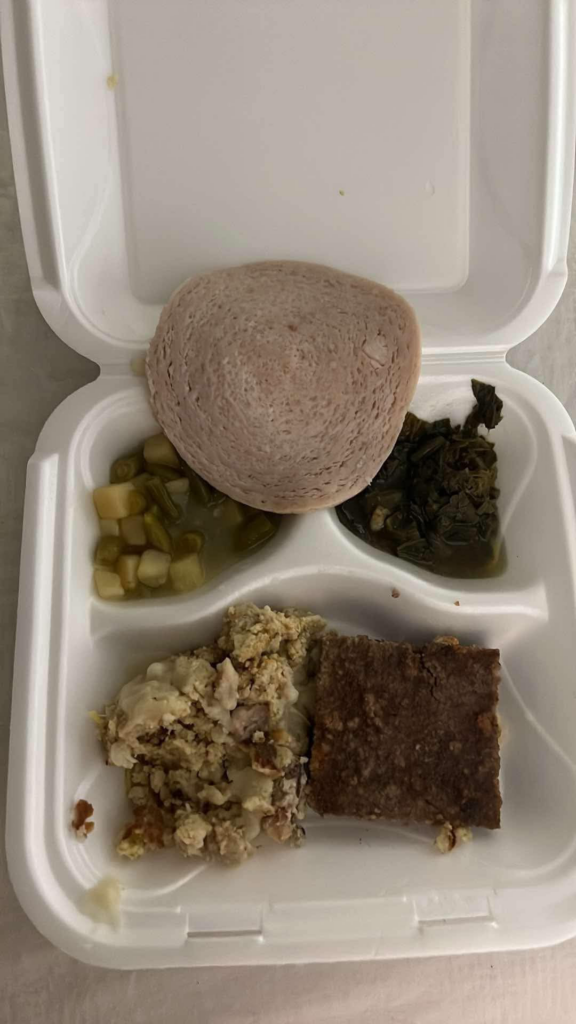
Thanksgiving dinner
JI: Who is the situation good for?
Bill: Private contractors. They save money serving us lightweight trays. They make bank off commissary sales of overpriced snacks. Malnourishment leads to sickness, which sends prisoners to the heath care contractor. They do little but [collect copays] and count the number of patients seen per month to justify their bill.
The top doesn’t see it as broken. Staffing’s down over 50 percent in [most] prisons. Some days meals don’t even reach segregation units. Inspections are a joke. They get advance notice, so facilities fake compliance—hiding the filth and boosting starvation rations for a day.
“End all the contracts. Get the spending back in-house.”
JI: Possible solutions?
Bill: The Maine Department of Corrections has a prison garden program where they’ve grown over 100,000 pounds of fresh produce a year and, instead of selling it as GDC does, they use it for better prison diets.
End all the contracts. Get the spending back in-house. Then the actions of one division could be noticed when costing more in another division, such as how cuts in feeding increase costs in health and maintenance. That would reduce theft and violence, and save lots of repairing infrastructure. Instead, they starve guys to save pennies, and it’s turning cellblocks into war zones that cost millions.
*Name has been changed to protect source.
Images used with permission via They Have No Voice/Facebook