

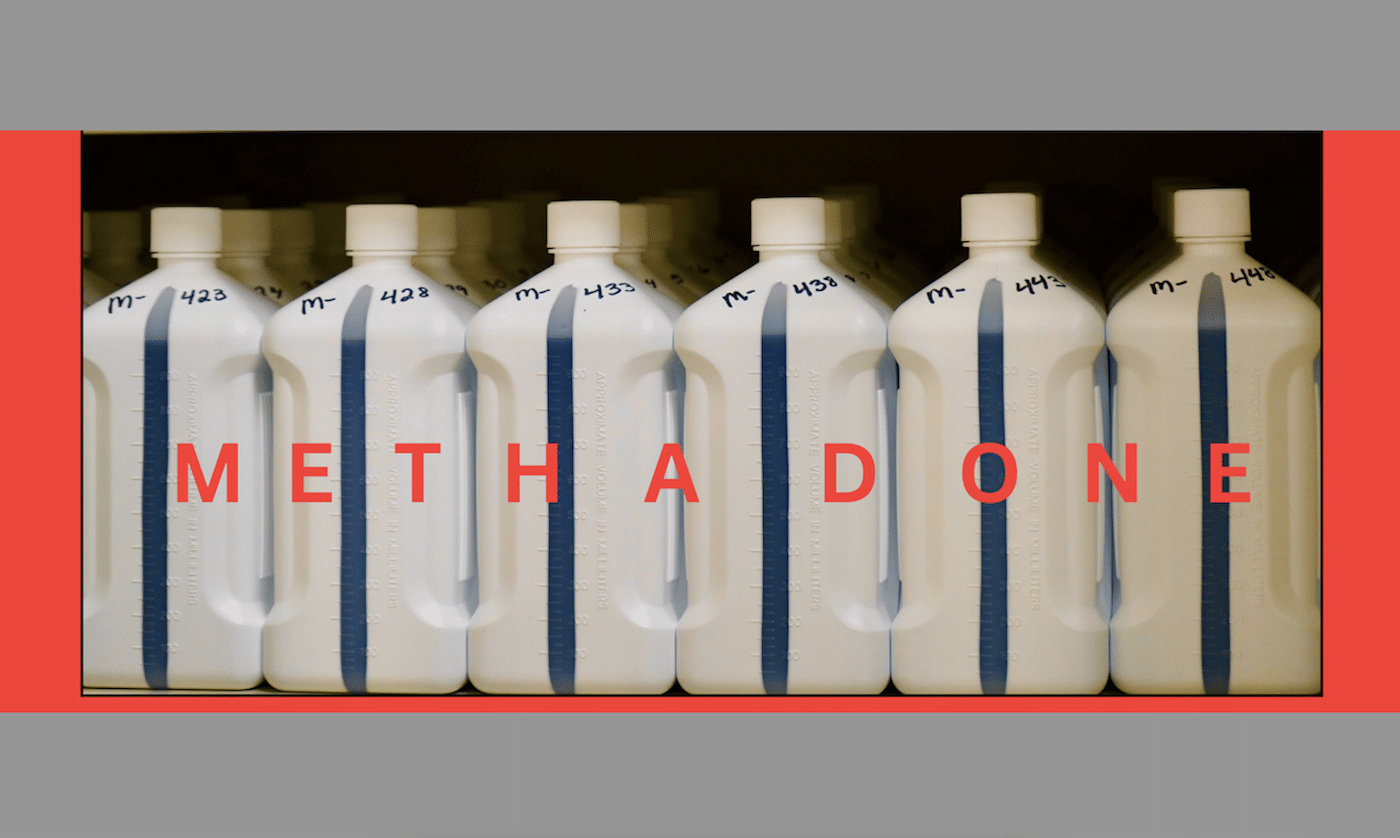
The Modernizing Opioid Treatment Access Act (MOTAA) is back. An updated version was reintroduced by Senators Edward J. Markey (D-MA) and Rand Paul (R-KY) in June.
“For too long, we have kept methadone—an evidence-based, life-saving medication—locked away, far from many of the people who need it,” Markey said. “The Modernizing Opioid Treatment Access Act 2.0 of 2026 would take a carefully considered step forward in expanding access to this medication by allowing the most highly trained addiction physicians in the country to prescribe methadone for their patients to pick up at a pharmacy. We must knock down barriers to treatment for people at risk of opioid overdoses—not build them up.”
He’s right that knocking down barriers to methadone is long overdue. But would MOTAA 2.0 unlock access for everyone who needs it? The answer is no. Nothing in the updated bill addresses the fundamental problems in the 2023 version.
“We know that there aren’t enough addiction medicine physicians and psychiatrists in the country.”
As Filter reported at the time, the first iteration of the bill contained fatal flaws. Limiting non-clinic prescribing to physicians board-certified in addiction medicine would exacerbate racial disparities in access to medications for opioid use disorder (OUD). It’s also just not nearly enough. There are about 6,400 doctors with this certification. About 600,000 patients currently take methadone.
“We know that there aren’t enough addiction medicine physicians and psychiatrists in the country to expand care to everyone who needs it,” a representative from the office of Sen. Markey told Filter.
“The goal of the bill is to expand the universe of providers who can prescribe methadone,” they continued. “It starts this expansion by allowing health care providers with the greatest expertise in addiction treatment—board-certified addiction medicine physicians and addiction psychiatrists—to prescribe methadone outside of an OTP.”
When it comes to prescribing methadone for OUD specifically, however, doctors board-certified in addiction medicine have no more experience than other doctors—because none of them have been able to do it. The law has restricted this to physicians who work in opioid treatment programs (OTP). There are approximately 2,100 OTP in the US, the majority concentrated in urban centers.
“One of the main changes in MOTAA 2.0 compared to the version introduced last Congress is the addition of language to allow the HHS Secretary to designate providers able to prescribe methadone outside of an OTP setting, in addition to board-certified addiction medicine physicians and addiction psychiatrists,” Sen. Markey’s representative said. “These providers would need to be licensed and registered to prescribe controlled substances.”
But who are these other providers? The representative didn’t say. The bill itself states that they would be “otherwise determined by the Secretary, under standards established by the Secretary.” The language is troublingly vague.
We still don’t know who the “future licensed providers” would be, nor any timeline. And what’s to stop HHS using its new “flexibility” to do precisely nothing?
The American Society of Addiction Medicine (ASAM) interprets the sentence to mean, “The HHS Secretary could add other qualified prescribers, who would remain subject to applicable state scope-of-practice laws…” But who are the “other qualified prescribers”?
Kelly M. Corredor, chief advocacy officer at ASAM, confirmed via email to Filter that the organization was involved in drafting the updated bill. But when asked who the other qualified prescribers would be, she wouldn’t specify.
According to a press release from Rep. Donald Norcross (D-NJ), a sponsor of the bill in the House this provision means, “flexibility for the Department of Health and Human Services to authorize future licensed providers without Congress needing to pass a separate law.”
But we still don’t know who the “future licensed providers” would be, nor any timeline on which this might happen. And what’s to stop HHS using its new “flexibility” to do precisely nothing?
MOTAA 2.0’s inclusion of more providers, however ambiguously, is a direct response to methadone reform activists’ criticisms of the original MOTAA. But its terms offer no guarantee that the HHS secretary will ever allow more prescribers.
Unfortunately, other provisions that helped doom the original MOTAA made it into 2.0. Participating doctors would need a special registration from the Drug Enforcement Administration (DEA)—extra surveillance that will deter some as has been the case with buprenorphine. The other poison pill is that any state attorney general could stop registering new providers and revoke or deny a registration.
“We cannot allow ourselves to become embroiled in territorial turf wars over prescribing privileges under the guise of ‘modernizing.’”
ASAM is the leading advocate for MOTAA 2.0. This conservative medical society has done almost nothing to end three decades of a crisis that has seen over 1 million people die from an opioid-involved overdose. It’s notable that ASAM had zero interest in reform prior to the pandemic. Given this abysmal track record, on what basis should its members have the exclusive right to prescribe methadone outside of clinics?
“The urgency of providing access to life-saving medications for people dealing with substance use disorders, particularly opioids, cannot be overstated,” Jerry Otero, who takes methadone and is the manager of the Drug User Health Hub at St. Ann’s Corner of Harm Reduction, told Filter. “We cannot allow ourselves to become embroiled in territorial turf wars over prescribing privileges under the guise of ‘modernizing.’”
In 2023, Dr. Stephen M. Taylor, then president-elect of ASAM, (now president), testified to a US Senate committee: “MOTAA is not methadone for everyone, prescribed by anyone. It represents a responsible expansion in methadone access for OUD.” Taylor’s statement shamefully carried no sense of urgency to save lives. The incremental, “responsible” expansion he advocated would free very few patients from the carceral clinic system.
ASAM’s description of MOTAA 2.0 as having strong federal and state oversight and safety guardrails” plays into the worst discrimination against methadone patients—the notion that they can’t be trusted and must be continuously monitored.
ASAM’s one-pager on the new bill has a section titled, “Improve Patient Safety and Address Diversion.” Diversion isn’t a major problem; lack of access is. This DEA framing panders to the idea that methadone is a uniquely dangerous medication. It’s not.
The first bullet point states that ASAM supports the terrible idea of DEA special registration of doctors. This is the DEA that has kept methadone under lock and key as people die; the DEA that has made the unregulated opioid supply exponentially more dangerous by pursuing its deadly drug war. Yet instead of campaigning to get these killer drug warriors out of addiction medicine, ASAM cosies up to them and rarely, if ever, criticizes their actions.
The second bullet point endorses the use of prescription drug monitoring programs (PDMP) for methadone dispensed through community pharmacies. According to those who’ve studied them, PDMP are tools of law enforcement and often harm patients.
“There is one thing that prescription drug monitoring programs are really good at, and that is bringing down prescribing rates,” said Dr. Elizabeth Chiarello, author of, Policing Patients: Treatment and Surveillance on the Frontlines of the Opioid Crisis. “But overdose is through the roof.”
Other ASAM bullet points welcome MOTAA 2.0’s ideas of states setting dispensing limits, which many will do to the detriment of patients, and prescriptions being written for “supervised use”—meaning pharmacists would be required to watch certain patients swallow methadone, just as clinic nurses do.
“This bill, in action, will keep methadone out of reach for the patients who need it the most.”
The Modernizing Opioid Treatment Access Act 2.0 doesn’t modernize access to methadone. It’s designed to fail by handing a small group of doctors a monopoly on prescribing to a small group of patients, who will skew wealthier and white. And it gives states veto power over new providers—states like West Virginia, which is so hostile to methadone that it’s had a moratorium on opening new clinics for 19 years.
In line with the DEA narrative, MOTAA 2.0 emphasizes diversion control and surveillance of patients; it reinforces stigma.
“This bill, in action, will keep methadone out of reach for the patients who need it the most,” Otero said, “by overcomplicating who can prescribe.”
A bill to truly modernize access to methadone would abolish the clinic system and permit all provider prescribing.
The obfuscating language in MOTAA 2.0 that might, maybe mean more providers can prescribe sometime in the distant future—who knows!—is an insulting trick to make methadone reform advocates believe 2.0 is a different bill from its predecessor. It’s not.
Instead, believe Dr. Taylor when he says, “MOTAA is not methadone for everyone, prescribed by anyone.”
Image by Helen Redmond