

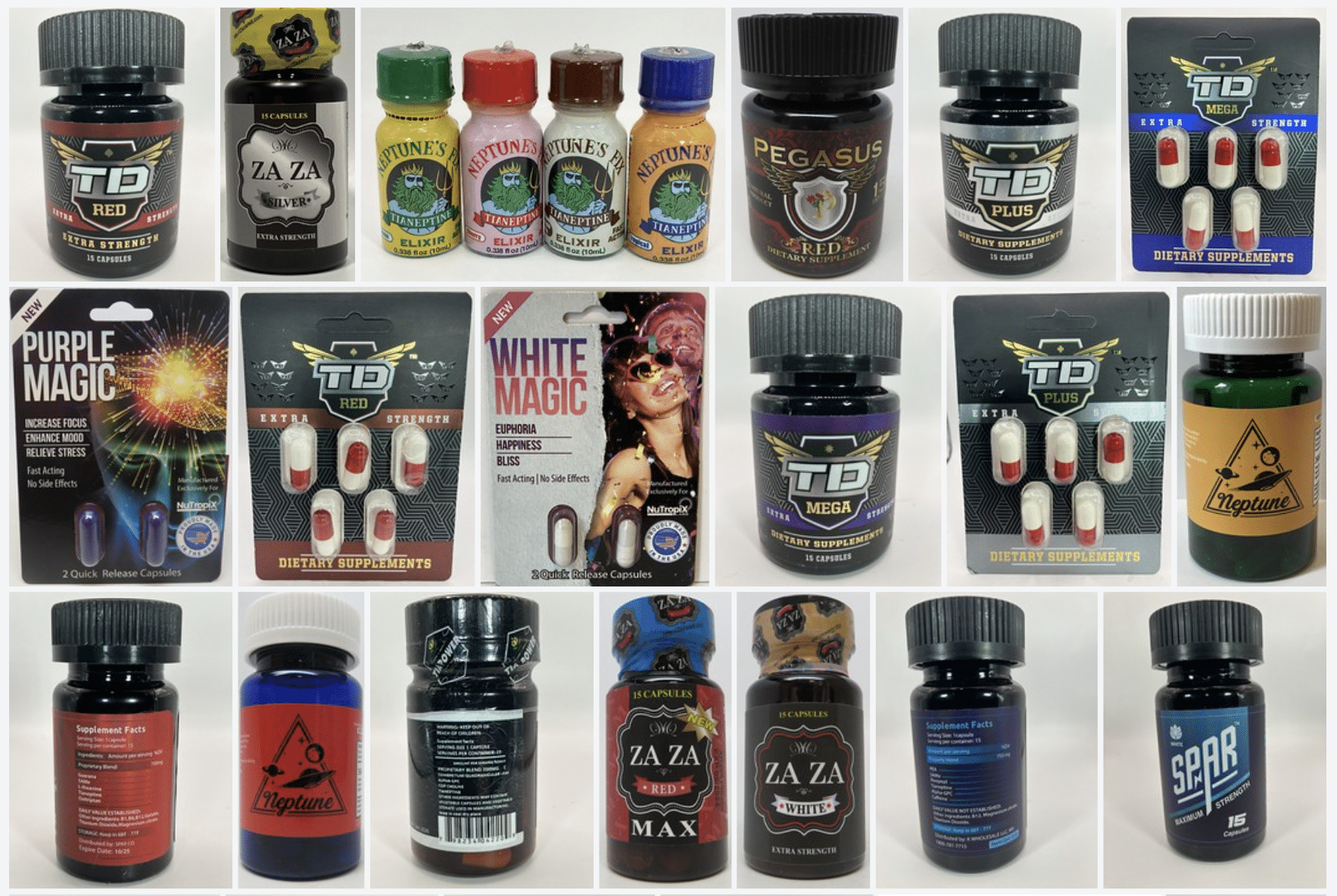
On July 8, the Drug Enforcement Administration moved to permanently ban tianeptine under Schedule I of the Controlled Substances Act (CSA). For the past decade tianeptine has been known in the United States as “gas station heroin,” a moniker that has come to represent a larger category of unregulated elixirs, tonics and supplements sold over the counter. The agency is accepting comment electronically or by mail, including requests for a hearing, through August 7.
Tianeptine is approved in other countries as an atypical tricyclic antidepressant, but at higher doses it’s an opioid receptor agonist—similar to morphine, but not as potent.
“Users are ingesting tianeptine in high dosages for its opioid effects, resulting in serious harm, including fatal overdoses both in combination with other opioids and with tianeptine alone,” the DEA stated. “[The Department of Health and Human Services] has concluded that tianeptine has a high potential for abuse.”
So-called gas station drugs include 7-OH, kratom, Delta-8 and an evolving list of other synthetic opioids, cannabinoids and cathinones (like “bath salts“).
“Amidst the current opioid epidemic, users are constantly searching out new substances, with often similar or increased danger to the user, to feed their addiction,” the DEA stated. “In addition, some users have attempted to self-medicate using online drugs such as tianeptine, marketed as ‘addiction remedies.’ While some users seek out substances to curb withdrawal symptoms from other opioids, select individuals try new substances to gain a novel high from the substance or to evade drug tests that more commonly known substances trigger.”
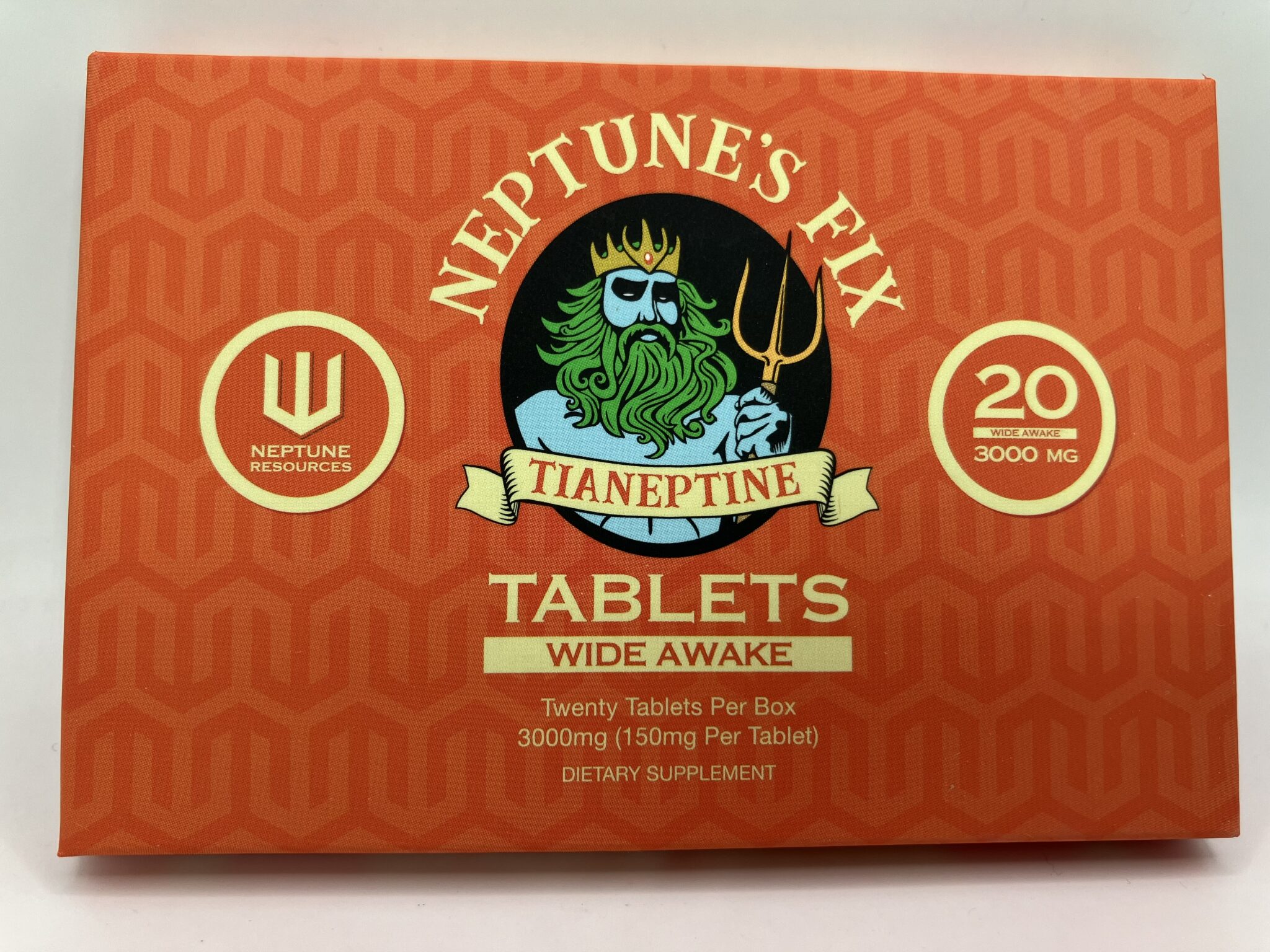
In late 2023, the Food and Drug Administration issued a public safety alert for Neptune’s Fix, one of the more prominent “gas station” products. It had been linked to a string of non-fatal exposures reported to New Jersey poison control, and analysis of some of the samples revealed synthetic cannabinoids that weren’t listed among the ingredients. A Centers for Disease Control and Prevention report associated those substances with the unexpected symptoms, warning that health care workers and the public should “be aware that readily purchased tianeptine products might be adulterated with synthetic cannabinoid receptor agonists or other drugs and can produce severe adverse effects.”
In early 2024 Neptune’s Fix was voluntarily recalled by distributors. But the FDA formally attributed this to “undeclared tianeptine” and has often described it entirely in terms of tianeptine, without mentioning other synthetic cannabinoids or any other substances. Neptune’s Fix packaging advertised it as a tianeptine product, and the ingredients list additionally included the substance popularly known as kava, which also falls into the “gas station drug” category.

The CSA can be updated either via legislation passed by Congress, or the rulemaking process established between the DEA and HHS (which oversees the FDA). The DEA requested that HHS review tianeptine nearly three years ago, under the Biden administration. HHS recommended Schedule I placement in July 2025, and the DEA subsequently completed the eight-factor analysis required for any substance to be scheduled permanently. In 2024 Congress introduced a proposal to add tianeptine to the CSA, but in Schedule III rather than Schedule I; it has not moved forward.
In many cases the DEA pursues temporary scheduling, a more unilateral process that bypasses HHS—and the possibility of judicial review—for however many years the temporary order is in effect at least. Permanent scheduling is a longer process, but the DEA isn’t necessarily in a hurry if it isn’t missing out on a lot of CSA-based prosecutions in the meantime. A 2024 report from the Center for Forensic Science Research & Education suggested that tianeptine isn’t being mixed into the unregulated fentanyl supply. It hasn’t been widely linked to fatal overdose, despite the DEA and FDA framing it that way.
Though it has been detected in port-mortem toxicology testing, tianeptine-involved deaths cited don’t appear to have involved “gas station” products. For the Pennsylvania overdose that represents the only DEA example of a death attributed to tianeptine alone, the agency notes that a “digital scale with a white powdery substance and other paraphernalia were located on the nightstand next to the bed.” A more recent fatal overdose, also in Pennsylvania, has also been attributed “strictly due to” tianeptine. The formulation was unknown.
The agency did review clinical studies supporting tianeptine’s use as a prescription medication in other countries, but concluded that these couldn’t be factored into the drug’s “abuse potential” because therapeutic doses are much lower than what’s being reported by people using unregulated versions.
Though it’s not mentioned in the DEA’s scheduling proposal, between 2021 and 2023 the FDA was considering an investigational new drug (IND) application for a tianeptine medication. It was in Phase 2 trials as a treatment for depression and post-traumatic stress disorder before it was ultimately dropped for ineffectiveness.
Top composite image and inset graphics Food and Drug Administration/Flickr