

GOP representatives have introduced legislation that would amend the federal Controlled Substances Act (CSA) by drastically lowering the number of grams that trigger mandatory minimum prison sentences for fentanyl trafficking. The text of the No Leniency for Fentanyl Dealers Act has been proposed repeatedly under various names over the past five years, a testament to the pervasiveness of the misconceptions and logical fallacies at the center of the legislation.
As the CSA stands currently, 10-year mandatory minimums in federal fentanyl trafficking cases are triggered at 400 grams. The Act would drop this to 20 grams. For fentanyl analogs, the threshold would drop from 100 grams to 5 grams.
Five-year mandatory minimums are currently triggered at 40 grams, which the Act would drop to 2 grams. For fentanyl analogs, the threshold would drop from 10 grams to 0.5 grams. Analog thresholds would apply regardless of whether or not the analog in question has been scheduled.
The Act was introduced July 23 by Rep. Marlin Stutzman (R-IN) as the companion bill to the Fairness in Fentanyl Sentencing Act sponsored by Sen. John Kennedy (R-LA). The latter was introduced in February 2025 and hasn’t moved out of committee. Kennedy previously attempted it in 2023 under the Biden administration.
Stutzman and Kennedy’s public messaging around the legislation has been that 400 grams of fentanyl, the current threshold for 10-year mandatory minimum sentencing, is enough to kill 200,000 people. This was also the case for the sponsors of the Fentanyl Penalties Parity Act of 2021, which proposed the exact same threshold modifications. But the actual threshold in the CSA is not 400 grams of fentanyl. It’s “400 grams or more of a mixture or substance containing a detectable amount of” fentanyl, which is very different. Stutzman’s office did not immediately respond to Filter‘s inquiry.
If that logic bore out, a fentanyl pressed pill would be the size of three grains of table salt.
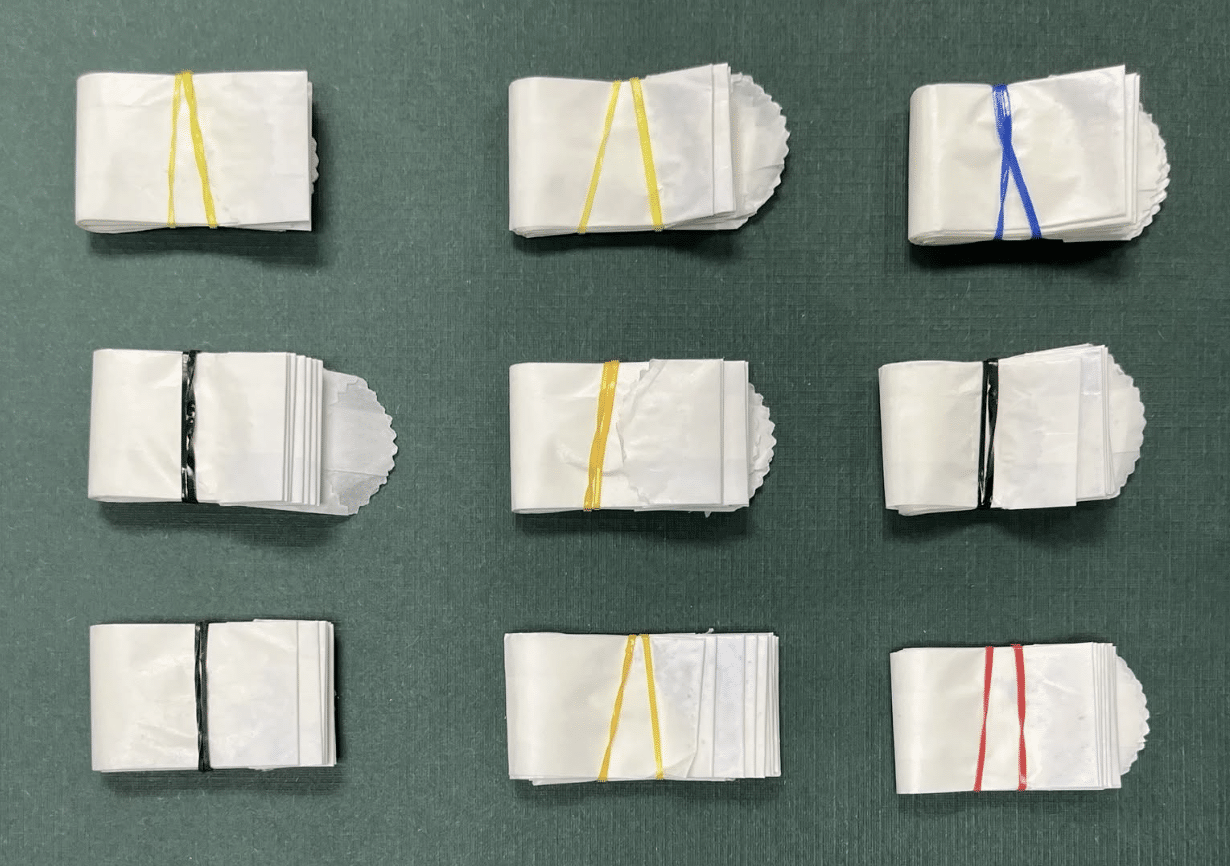
If you consider the common Drug Enforcement Administration talking point about how fentanyl is approximately 50 times more potent than heroin, you can imagine that it’d be difficult to sell or use a dose that’s 50 times smaller. Because of this, most of the “fentanyl” in a typical stamp bag or pressed pill is a mixture of non-psychoactive fillers like mannitol (sugar alcohol) or acetaminophen. The United States Sentencing Commission has acknowledged that the mixture’s total weight is used even “when a drug is mixed with an inert substance, such as a binder or filler used in the production of pills or tablets.” Changing a quantity threshold from e.g. 400 grams to 20 grams has no direct bearing on the amount of actual fentanyl involved.
Proponents of the Act and similar legislation, however, consistently characterize the mixtures as pure fentanyl.
“It only takes two milligrams of fentanyl to kill a person. That’s just about three grains of table salt,” stated cosponsor Rep. Rob Bresnahan (R-PA). “Despite this, it takes 40 grams of fentanyl, or roughly three tablespoons of butter, to trigger the federal five-year mandatory minimum sentence for trafficking. That threshold simply does not reflect the deadly reality of this drug.”
If that logic bore out, a fentanyl pressed pill would be the size of three grains of table salt.
Lowering the five-year mandatory minimum threshold for fentanyl analog mixtures from 10 grams to 0.5 grams would effectively target possession and low-level distribution—0.5 grams could mean just two stamp bags, or five pills. Anyone who uses street-supply fentanyl could find themselves subject to the penalty, if what they picked up that day happen to contain trace amounts of any analogs. It’s extremely unlikely that either the buyer or seller in that scenario would know whether the bags contained any analogs, which are usually found in combination with fentanyl and many of which are comparable in potency.
The fentanyl crisis demands action. My new bill goes after drug dealers and traffickers by:
➡️ Keeping these criminals off our streets through lowering federal sentencing thresholds.
➡️ Investing $9M to strengthen drug detection, staffing, and enforcement across the Postal… pic.twitter.com/dJVslxCi8M— Rep. Marlin Stutzman (@RepStutzman) July 24, 2026
“This bill targets the worst offenders,” stated National District Attorneys Association Executive Director Nelson Bunn. National Alliance of State Drug Enforcement Agencies Executive Director Carlon Stapleton praised the “zero-tolerance approach toward those who manufacture or distribute” fentanyl. Indiana Drug Enforcement Association President Chris Goergen condemned those who “take advantage of fentanyl’s low cost to produce as well as its high profit margin … with little to no regard for the people it hurts the most.”
USSC data show that most of the people convicted in federal overdose cases are local sellers and that, of those who’d been at the scene of the overdose when it happened, most had tried to help the victim. But it’s not clear that the Act has any direct bearing on cases linked to overdose. The CSA currently provides that regardless of whether the mixture quantity triggers a 10- or five-year mandatory minimum, the sentencing range is 20 years to life when the case is linked to overdose; the Act does not propose to change this.
“Hundreds of thousands of Americans die every year from fentanyl poisoning,” Stutzman claimed in his announcement. “I am proud to take up the No Leniency for Fentanyl Dealers Act with Senator Kennedy so those peddling this lethal substance are punished with sentences commensurate with their actions.”
Kennedy correctly described US fentanyl-involved deaths as in the tens of thousands per year, but stated that he was proud to work with Stutzman “to ensure these ghouls get the punishment they deserve.”
The legislation would additionally authorize $9 million for drug interdiction within the United States Postal Service, and require more staffing resources—namely scientists who can be “available during all operational hours” to identify suspected fentanyl as quickly as possible.
It would also direct the USSC to review the changes and, “if appropriate,” update its drug sentencing guidelines accordingly. In late 2025 the USSC amended those guidelines to deemphasize the role of thresholds in determining someone’s sentence, in recognition of how easily those numbers are distorted in court and how meaningless they were to begin with.
“I find no greater joy than putting a fentanyl dealer behind bars,” stated cosponsor Rep. Clay Fuller (R-GA).
Image (cropped) via New Hampshire Division of State Police