
The European Parliament has rejected two different plans to set minimum taxation rates for safer nicotine products.
On June 17, the European Commission’s proposal, calling for a tax hike on all nicotine products irrespective of risk profile, was heavily defeated by 439 votes to 181. Earlier that day, a report from the parliament’s economic and monetary committee (ECON) report—calling for relatively scaled-down tax increases on alternative nicotine products, based on a “less harm, lower tax” principle—had also been rejected, but by a much narrower margin: 308 in favor and 320 against.
At stake is the revision of the EU Tobacco Taxation Directive (TTD) to include newer nicotine products, which will affect people’s access to tobacco harm reduction in the world’s highest-smoking region.
Tobacco harm reduction advocates are generally united in condemning taxation levels that could reduce people’s incentive to switch from deadly products to safer ones. But given the nuances of the ECON report, they have expressed differing views on that vote.
Some unequivocally welcomed the rejections of a “misguided attempt to impose higher taxes” on safer nicotine products. Others have accused the EU of prioritizing “politics over public health” by rejecting the ECON report, because of its “recognition that different nicotine products carry different levels of risk”—a groundbreaking acknowledgement by EU standards—and despite its proposal of a tax hike on vapes.
The European Commission proposal has long been criticized for excessive tax increases that advocates say would dissuade switching and boost illicit markets, while failing to recognize the huge risk differences between combustible and non-combustible products. The ECON report sought to address some of these concerns.
“This means almost half of the EU parliament actually has a positive opinion on harm reduction products that are on the market now.”
To add to the confusion, observers note that a parliament member’s (MEP) stance on tobacco harm reduction might not be the only motivation behind each vote. The Swedish parliamentary delegation, for instance, voted against the ECON report. Sweden has achieved the world’s lowest smoking rate due to snus and nicotine pouches, so those MEPs probably didn’t object to the relative-risk language. But Sweden also has an election coming up, so a likely factor is that any kind of tax increase on popular products may not be conducive to winning votes.
Stefan Mathisson, editor-in-chief of Vejpkollen, a tobacco harm reduction-oriented publication in Sweden, was in favor of the ECON report, and said the “close call” of the vote makes him feel hopeful.
“This means almost half of the EU parliament actually has a positive opinion on harm reduction products that are on the market now,” he told Filter.
“Even though this feels like a backlash in the short term,” he continued, “it also means the pressure and advocacy from consumers, scientists, as well as industry, actually has an impact on MEPs.”
Mathisson concluded that he believes this “bodes well” for upcoming negotiations over revisions to the Tobacco Products Directive, which regulates nicotine products across the EU.
Whatever advocates’ views on the implications for future EU nicotine policy, it should be remembered that the parliament’s opinion here is non-binding.
“This is a tax matter; the [European] Council must pass it unanimously and is only required to obtain an opinion from Parliament,” Peter Beckett, an EU policy expert and co-founder of the Clearing The Air blog, told Filter. “Parliament gave its opinion in its resolution, and that’s it.”
The European Council, made up of ministers from the 27 member states, will now have the job of reaching a consensus on nicotine tax rates before adopting a directive.
But Beckett shares Mathisson’s view that the voting has significance as a litmus test—and that both the split on the ECON report and the emphatic rejection of the European Commission proposal indicate that numerous MEPs do recognize tobacco harm reduction.
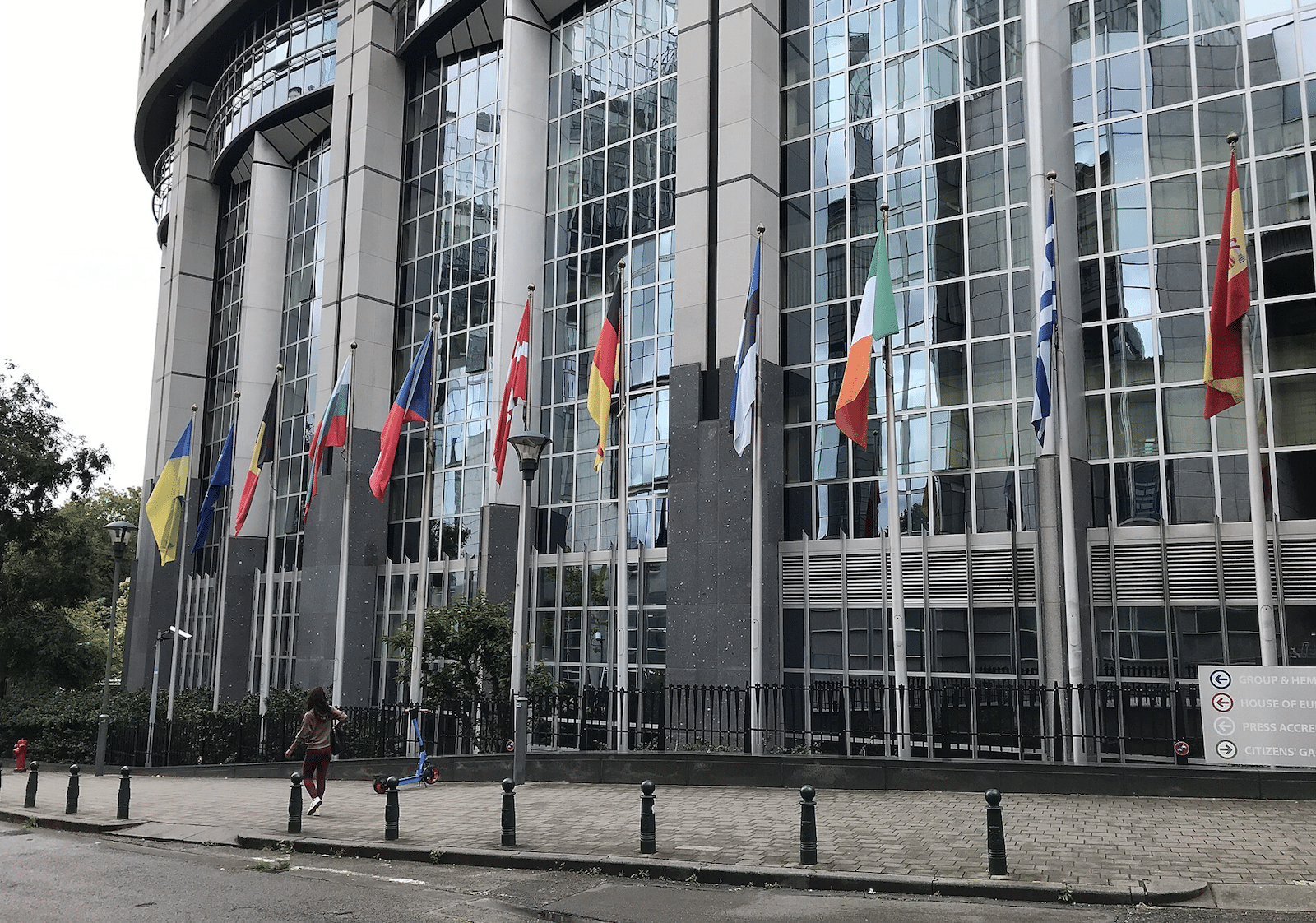
Photograph (cropped) by Marina Bauer via Wikimedia Commons/Creative Commons 4.0