

On October 7, New York Attorney General Letitia James (D) announced the arrests of 17 people across the central region of the state, as well as the seizure of guns, $880,000 in cash, and fentanyl, methamphetamine and cocaine allegedly worth $782,000.
The eight month-long investigation was coordinated by the AG’s Organized Crime Task Force and was part of the Suburban and Upstate Response to the Growing Epidemic Initiative (SURGE). Since 2017, SURGE has led to the arrests of 1,008 alleged traffickers.
When announcing the seized fentanyl in a press release, James relied on tired drug-scare tactics, stating, “23 pounds of fentanyl is enough to kill one New Yorker every six seconds for an entire year.” The statistic was repeated by journalists.
This would mean that 5,256,000 people would fatally overdose after consuming roughly 2 milligrams of fentanyl each—the lethal amount reported by the Drug Enforcement Administration (DEA). On its website, the DEA depicts the drug’s lethality with a photo of a small amount of fentanyl placed on a pencil tip.
The truth is that many other factors besides dosage—including a person’s tolerance, biology and route of ingestion, their proximity to harm reduction resources and the nature of any adulterants in the substance they use—all play a role in determining whether or not 2 mg of fentanyl proves fatal.
The message is clear: Fentanyl produces “mass destruction,” and large-scale arrests make our communities “safer.”
Certainly, fentanyl overdoses are deadly; in 2024, fentanyl was involved in almost 90 percent of fatal opioid overdoses across New York State. Yet James’ statistic is more rhetoric than reality: It presumes an inherent dangerousness within fentanyl that puts the public, and New Yorkers in particular, at risk. Drug arrests, the logic follows, save lives.
Onondaga County Sheriff Tobias Shelley (D) echoed this sentiment in the press release. Praising the “collaboration between local and state law enforcement,” he claimed: “Taking these dangerous drugs and weapons off the streets will save lives and make our neighborhoods safer. The individuals charged today were trafficking quantities of fentanyl capable of mass destruction, and their arrests send a clear message that we will not tolerate this.”
Syracuse Police Chief Joseph Cecile added, “I want to thank the Attorney General’s office, and all our law enforcement partners throughout the state for always being willing to collaborate to make our communities safer.”
The message is clear: Fentanyl produces “mass destruction,” and large-scale arrests make our neighborhoods and communities “safer.”
But massive drug sweeps—enabled and incentivized by our drug policies—are frequently deadly.
As drug policy scholars have long known, prohibition incentivizes people in the drug trade to transport compact, potent substances to avoid detection; this has been referred to as the “iron law of prohibition.” “[T]he harder the enforcement, the harder the drugs,” economist Richard Cowan put it when coining the term.
Arresting people who sell drugs also forces buyers to navigate an unpredictable market as new sellers fill the gap. Research has indicated that local overdose mortality increases in the immediate aftermath of a drug bust.
Simply put, when drug raids happen, communities become less safe. Drug-war policies, to adopt the Sheriff’s terminology, are capable of mass destruction.
I interviewed people who use drugs when researching the opioid-involved overdose crisis and mass policing, surveillance and incarceration in New York’s Southern Tier. Nate (a pseudonym) shared that, after Operation Get Money in Binghamton, which resulted in the arrests of seven people and the seizure of 2,700 bags of heroin in 2016, consumers started “tapping bags” with fentanyl.
“Everyone was panicking,” he told me. “People were tapping bags, because they didn’t have the real stuff anymore…They had to get something to recoup, and they didn’t know what else, so everybody started going to the black market [the internet], getting fentanyl, and cutting it. Boom, everybody’s dying… ‘cause everything is gone. It was like a frantic running around trying to figure out what to do.”
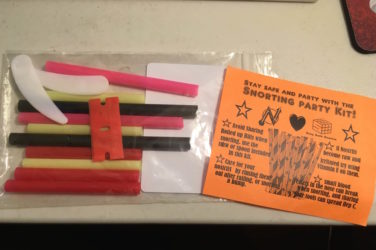
Prioritizing drug arrests over health care and harm reduction services puts consumers at additional risk of drug-related illness, injury and death. People are forced to inject quickly in public spaces to reduce the risk of being arrested, and many must do so with drugs that have untested potencies and compositions.
Overdose prevention centers, syringe service programs and accessible drug-checking strips not only humanize people who use drugs but reduce fatal overdoses. Yet such programs’ budgets are dwarfed by police budgets, despite the fact that drug sweeps counteract New York’s stated commitment to harm reduction.
Simply put, when drug raids happen, communities become less safe. Drug-war policies, to adopt the Onondaga Sheriff’s terminology, are capable of mass destruction: They put consumers at increased risk of overdose; make people who sell drugs out to be monsters in need of swift punishment; and engender a vengeance-seeking public caught in a cycle of retributive violence.
If New York aims to prioritize accessible health care and harm reduction services, then the state needs to disinvest in drug-war policing. Only then can the staggering overdose rate truly be addressed.
Drug enforcement is not complimentary to harm reduction; it is contradictory to it.
Photograph via the Drug Enforcement Administration