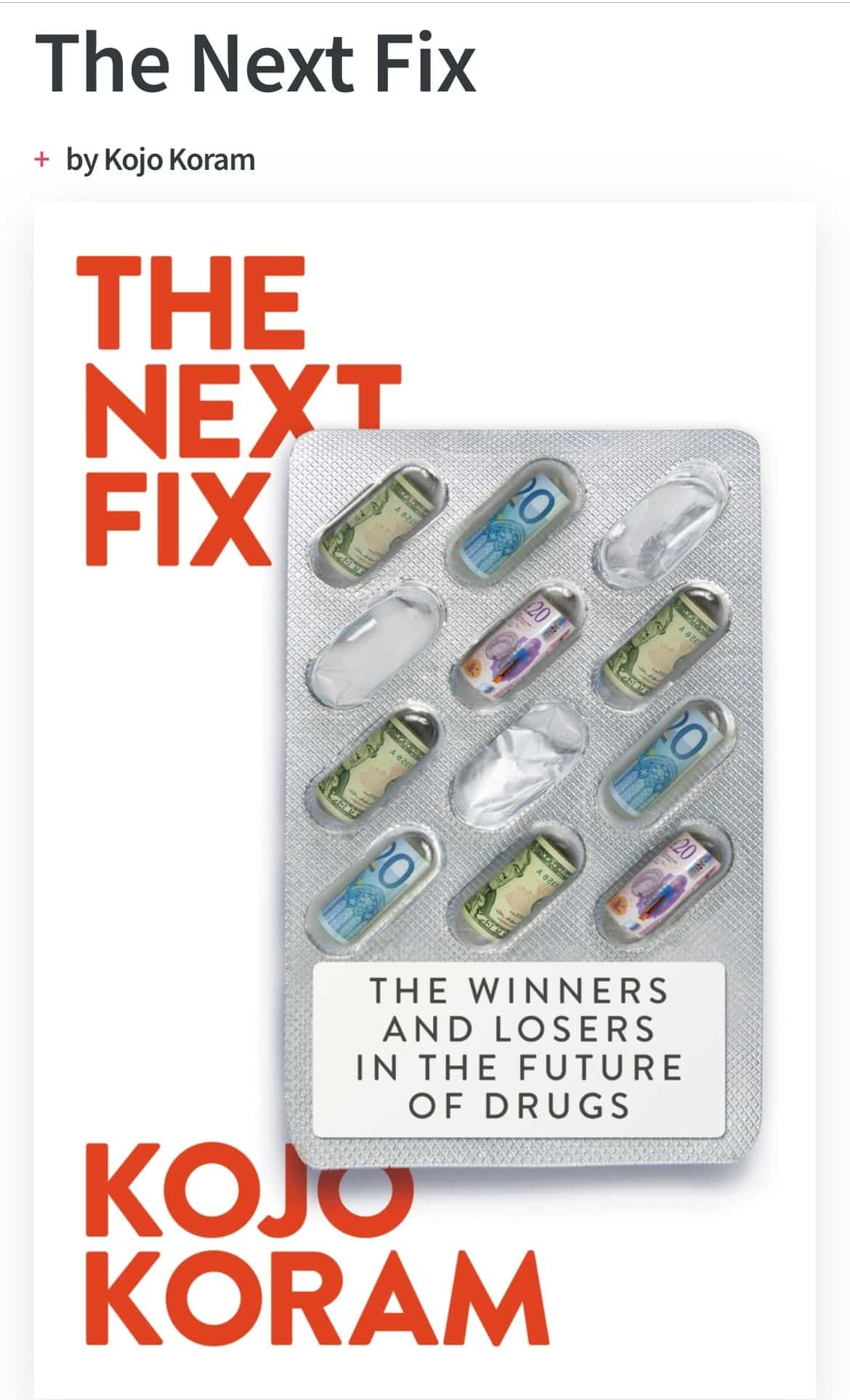


The day I finish reading The Next Fix: The Winners and Losers Inside the Future of Drugs, by Professor Kojo Koram, a London-based legal scholar, I also see that a British cannabis clinic has been named eighth in the Sunday Times’ list of 100 fastest-growing private companies.
In my five years of reporting on the global cannabis and psychedelic industries, I’ve seen this growth happen in real time, as the gap between those who can afford legal access and those who remain criminalized widens.
This tension between the fight for just drug policies and the race to profit from potential new markets is one that Koram explores at length in his book. A global review in The Lancet is among other recent contributions to the debate; it found cannabis-related harms to be higher in jurisdictions with commercialized legalization models than in those with decriminalization or other forms of legalization.
In The Next Fix, Koram travels across the globe, visiting some of these jurisdictions, to ask some crucial questions at what appears to be an inflection point in the debate over drug policy reform: What comes next, when the war is over? And who will the real winners be?
I sat down with him to find out. Filter’s interview has been edited for length and clarity.
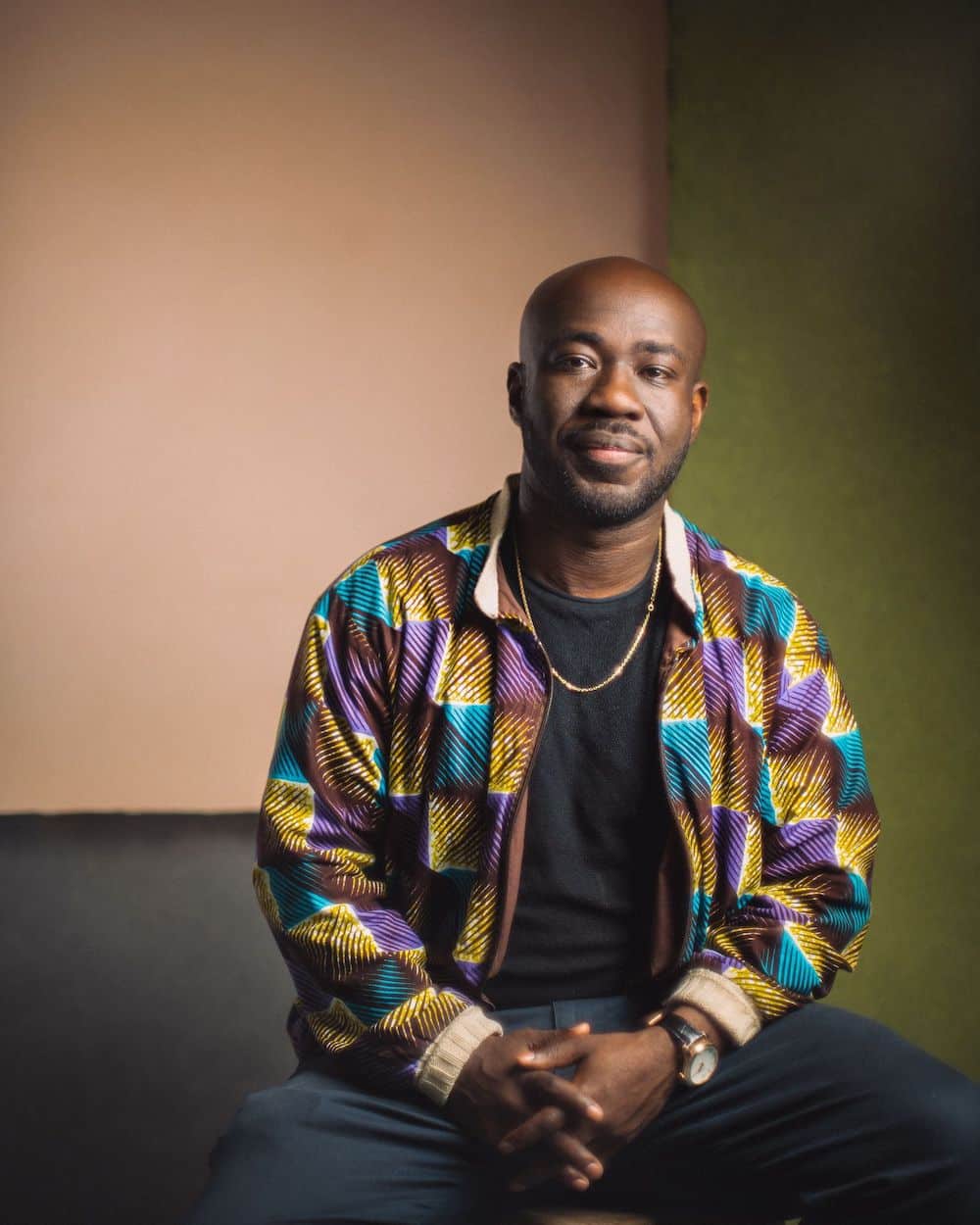
Prof. Kojo Koram
Sarah Sinclair: Your reflections on your time as a lawyer at Angola Prison, on a former slave plantation in Louisiana, when the first state legalized cannabis, are such a stark portrait of the injustice at the heart of prohibition. Was that the moment when you first knew you had to write the book?
Kojo Koram: Angola is an extreme example, but the United Nations estimates that around 20 percent of the world’s prison population—2.5 million people—are in prison for growing, selling, or possessing the wrong type of drug. For me, that was the moment I realised this system wasn’t delivering what it promised.
I was working in the US when the first states [Colorado and Washington] legalized commercial cannabis markets in 2012. Seeing people imprisoned on a modern-day slave plantation for doing something that, elsewhere, people were now getting licenses for, I think that was the moment I started studying this. Eventually, it led to the opportunity to write this book, travelling from jurisdiction to jurisdiction looking at what actually changes when you implement different drug laws.
“We could be entering a world in which criminalization and commercialization are happening simultaneously, and I think that raises some real questions.”
SS: In the book, you argue that the debate around drug laws is shifting, to be less focused on whether cannabis should be regulated and more around how. Does that mean the “War on Drugs” is ending?
KK: During the 20th century, when people debated the idea of legalizing drugs, we assumed it was a simple yes-or-no question. Either we legalize drugs, or we don’t. But what we’re seeing in the 21st century is something much more complicated. The debate is around how we might legalize these drugs and how some of the systems of commercialization actually reduce some of the impact of criminalization. But we’re also seeing the potential for criminalization and commercialization happening simultaneously.
In December 2025, Donald Trump signed an executive order to reschedule cannabis from Schedule I to Schedule III, the biggest change in US federal drug policy in the best part of a century. If you’d told a Republican during the Reagan era—when drugs were framed as public enemy number one—that a future Republican president would be signing an executive order to reschedule cannabis and fast-tracking access to psychedelics, they would have thought you’d been spiked. That’s a massive shift, and I don’t want to minimize that.
But the same month, Trump seized Nicolas Maduro from Venezuela on charges of narcotrafficking. We could be entering a world in which criminalization and commercialization are happening simultaneously, and I think that raises some real questions.
SS: Medical cannabis legislation has shown how legal markets can coexist with continuing criminalization, where many patients can only access treatment if they can afford it while others remain criminalized. Are psychedelic frameworks at risk of repeating the same mistakes? What could an alternative model look like?
KK: In this new psychedelic industry, we’re seeing biotech companies patenting molecules and monopolizing intellectual property. That’s the traditional pharmaceutical model for raising investment to develop these medicines. I visited Australia, which became the first country to legalize prescribed psychedelic treatments [psilocybin and MDMA-assisted therapy] in 2023, but it costs around A$1,000 to access.
Psychedelics could be one of the most transformative medical advances of the 21st century, given the scale of the global mental health crisis, but if you pick mushrooms from the ground or grow them in your back garden, you could still face criminal consequences. We need to think carefully about how we shape this emerging market to ensure we’re not reinforcing the same structures of exclusion, criminalization and violence upon the communities who suffered most during the War on Drugs.
Within cannabis, we’ve seen very different models of social equity across the US. Some states have pursued highly commercialized models while people continue serving sentences for trafficking offenses. Others, including Illinois, Massachusetts, and New York, have been much more explicit about embedding social equity into legislation. That means expunging criminal records, not just for people currently serving sentences, but for those whose convictions still prevent them from accessing jobs, student loans or travel visas. It means making sure licenses are available to people who were previously excluded from the market, and committing tax revenues to communities that were over-policed, as well as to education and public health.
These measures can offset some of the risks as these substances become commodified, and can be put in at the point of transition. It’s in the interests of the industry. A century of the War on Drugs has embedded deep fears and stigma around these substances, and a really aggressive commercialized model is just going to facilitate a backlash.
“We have an opportunity to put policies in place that genuinely benefit those on the ground … I think there’s real value in thinking about how we can do this differently.”
SS: Perhaps I’m being cynical, but in an ultra-capitalist society, is commercialization inevitable? Or is there still an opportunity to build these markets differently?
KK: I think there’s an opportunity, but that window is closing. The argument needs to be made now.
One of the industries I compare the emerging cannabis market to in the book is cocoa. Ghana is one of the world’s largest cocoa producers, yet the farmers harvesting those cocoa pods receive only a tiny fraction of the final product’s value. We need to bring together all those working on fair trade, sustainable development and environmental justice initiatives that are trying to intervene in industries like cocoa, coffee and fast-fashion. Cannabis is an entirely new industry and many of its rules haven’t been set yet.
We have an opportunity to put policies in place that genuinely benefit those on the ground, such as protecting access to land, preventing monopolies over seeds and genetics, and creating protected geographical designations for products such as Jamaican ganja or Moroccan hash, in the same way that Champagne can only come from the Champagne region of France. That is their cultural and financial inheritance. This might be optimistic, but I think there’s real value in thinking about how we can do this differently.
SS: Some might argue that there is a strong economic argument for a commercial market that generates tax revenue, and surely commercialization is preferable to criminalization?
KK: In the book, I tell the story of a man called Fate Winslow, who was sentenced to life without parole for facilitating a $20 cannabis transaction in Shreveport [Louisiana]. It was his third non-violent conviction. He eventually won his release after 12 years through a series of appeals, but died shortly afterwards. He spent the final years of his life in Angola Prison for facilitating a $20 cannabis transaction. That represents such a profound failure of human rights.
I absolutely recognize that commercialization is preferable to criminalization, but I think we should aim for something much higher than that. We’re living through widening wealth inequality, the devastation of the climate, and huge swathes of the human population being rendered surplus to the actual mechanics of capitalist production. Let’s not just change drug laws, but do it in a way that can mitigate and even repair some of that damage.
“One of the things I wanted to achieve with this book is to help people understand all the different parts of life that drug policy touches.”
SS: In the book, you set out a five-point plan for more fair and equitable regulation. How do we move these ideas from the fringes into mainstream political debate?
KK: For a long time, drug policy has been treated as a niche issue, and other movements have often been reluctant to engage with it because of the stigma. It took organisations like Amnesty International years to adopt a position on ending the War on Drugs, despite the most vulnerable communities being most affected by prohibition. It hasn’t been connected to environmental justice, racial justice or economic justice movements.
One of the things I wanted to achieve with this book is to help people understand all the different parts of life that drug policy touches, from the economy and medicine to the environment and crime. Connecting it to those broader movements will allow for a much more substantive idea of what drug reform might look like, rather than simply handing over a previously prohibited market to a highly commercialized capitalist model.
This is already happening in jurisdictions across the world, but it’s happening in a world where we have rampant wealth inequality, increasing corporate control over technology and infrastructure, and an erosion of living standards for many people. This isn’t the hippie dream of the 1960s, and we need to recognize that when we think about how we can use this moment to make a broader intervention to shape the economy of the 21st century.
SS: After travelling the world researching and writing The Next Fix, what left you feeling most hopeful about the future of drug policy reform?
KK: What made me most optimistic was how people are using this moment of transition to rethink our relationship with drugs. Humans have been using cannabis and psychedelics for thousands of years, and if the planet survives, we’ll likely be taking them 1,000 years in the future. We’re not going to achieve the drug-free world the UN once promised, so the real question is how we relate to these substances.
I was really encouraged by models like the cannabis social clubs in Barcelona, which are now being adopted in Germany. If you want something, you don’t just go and buy it, you learn how to grow it, understand different strains, and develop a more thoughtful relationship with what you consume.
I was also inspired by the conversations around reparative justice, particularly in Colombia, where the War on Drugs wasn’t a metaphor, but a real war. We need a truth and reconciliation process, almost like they had in South Africa, to ensure that this transition benefits Indigenous communities. It’s really exciting seeing examples of reparative justice in how we use technical, legal and financial tools like intellectual property rights or guaranteed ownership within communities that have been overly-policed, to try and transfer wealth to people who’ve been most devastated by the War on Drugs. I was really optimistic to see people thinking about that—and even starting to put it into practice.
Top image shows detail from the cover of The Next Fix: The Winners and Losers Inside the Future of Drugs, to be published by Verso in late July. Images courtesy of Kojo Koram/Verso.