
In 2020, after 10 years in prison, I was getting ready to come home—I just needed a place to live. Once out of prison I would be required to register as a sex offender, so the Tennessee Department of Correction said my release address needed to be registry-compliant. One reentry staff member said that eventually if I couldn’t find a place, they’d ship me back to the county where I was convicted and label me “transient.” I’d have had to re-register with the local sheriff’s department once a month, rather than once a year.
Four different people stepped up and offered to let me stay at their place, for free, but all four of their addresses were rejected. Within 1,000 feet of a school, a church, a park. One was rejected because of an HOA.
Finally I found an “efficiency apartment” complex in Nashville that was known for renting to people on the registry. The address would be approved, if I could pay $1,600 up front and another $800 after I was released, for first and last month’s rent and the security deposit. That was two-and-a-half years of prison wages. But I was desperate to get out of the hellhole that is prison.
That apartment complex wasn’t a great place to live, but I was in the free world with a roof over my head. So I was truly thankful for that. In time I found a job and began to make friends with people who felt the same way about the system as I did.
“It’s not one issue, it’s everything stacked together—mental health, substance use, incarceration, low wages, rising costs. It builds until something breaks,” said my coworker Sabrina Westmoreland, who used to be an outreach worker in Los Angeles. “And when it does, we don’t respond with care—we respond with punishment. Laws. Tickets. Pushing people out of sight like that solves anything. It doesn’t.”
My friend Tom, who’s also on the registry, had been living on the street. I was able to help him get into the apartment complex. But he was struggling with drug use, and without the proper support he soon lost the apartment. The last time I saw Tom he was living on the street again, with a GPS monitor on his ankle.
“We’re living in a time where housing is treated as a privilege instead of a right,” Westmoreland said. “And that belief that people deserve or don’t deserve a place to live based on how much money they make—that’s a moral failure.”
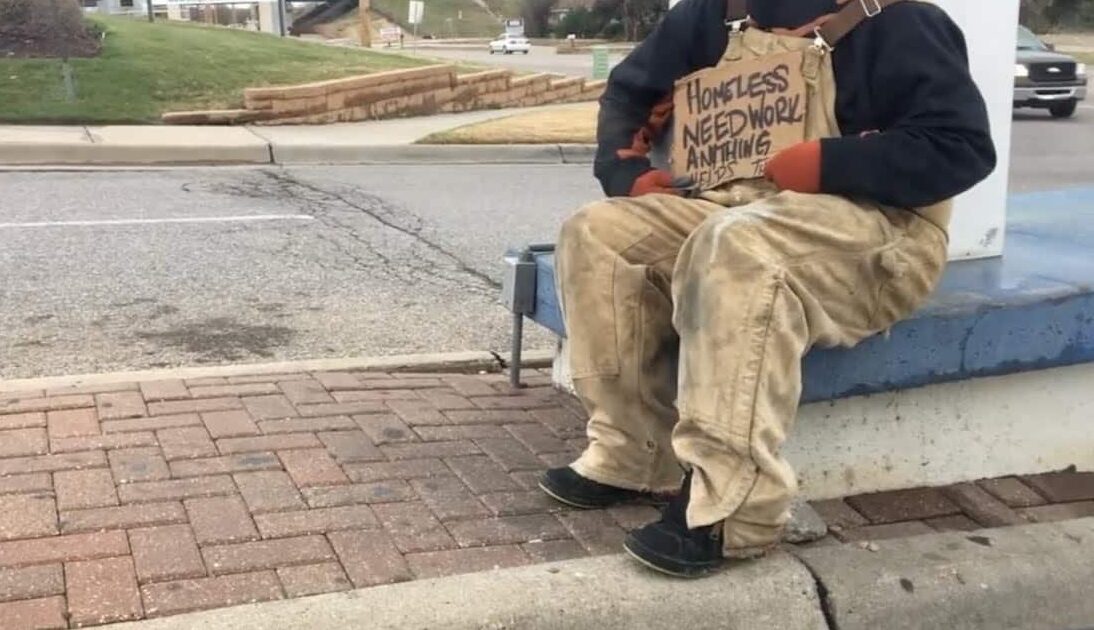
We’ve all seen people standing on street corners, holding cardboard signs that say: Anything helps. And we’ve all looked away, at least some of the time.
A nonprofit ministry called People Loving Nashville did outreach to the apartment complex, and through them I met so many wonderful people.
“Being seen is everything,” Lindsey Smith, People Loving Nashville’s community connections manager, told Filter. “That’s why I try—at the very least—to acknowledge people standing on corners. A wave. Eye contact. Something.”
One day I was sitting in my truck when an older woman walked up to me, trying to sell a worn-out bungee cord. It wasn’t worth anything, but I gave her two dollars for it. I had an unopened six-pack of Shiner Bock—the Tennessee Bureau of Investigation allows me to consume alcohol in moderation—so I asked if she wanted to drink one with me.
Her face changed instantly. She smiled—wide, real. I don’t think it was just about the beer. It was like she was smiling to be recognized as a human being, not as a problem to avoid, or as a quick transaction at a stop sign. Like she existed to someone, even if just for a moment. We sat on the tailgate and shared that beer. That moment stayed with me.
We’ve all seen people standing on street corners, holding cardboard signs that say: Anything helps. And we’ve all looked away, at least some of the time. But now that I’m navigating life on the sex offender registry, I understand how important that wave or moment of eye contact really is. It’s why I looked forward to People Loving Nashville knocking on my door every Thursday. Even if it was just for the next few minutes, I knew I was going to be seen.
Image (cropped) via City of Wichita