
Four years after Washington state sued Albertsons Companies, Inc. alleging that the grocery chain’s opioid dispensing “created a public health crisis and a public nuisance,” the litigation has made it to court. The trial kicked off July 13 in King County Superior Court, where it’s expected to continue through early September.
The state alleged that “most” of the 641 million prescription opioid pills Albertsons dispensed during the 16-year period investigated had unresolved “red flags,” referring to activity that the Drug Enforcement Administration’s proprietary algorithms register as suspicious.
“The AG’s office’s investigation revealed that between 2006 and 2022 Albertsons unlawfully dispensed opioid orders without adequately investigating and documenting the resolution of such red flags,” the Office of Washington State Attorney General Nick Brown stated ahead of the trial. “Albertsons also self-distributed opioids to its own pharmacy stores for a span of time and failed to report any of the more than the tens of thousands of suspicious orders from its own pharmacies to the DEA as required by law. Instead, Albertsons shipped them all.”
During the investigation period Albertsons owned the state’s second-largest pharmacy chain. The company acquired Safeway in 2015, and owns a number of other grocery chains like the Washington-based Haggen stores. Between those brands the company currently owns about 200 pharmacies across Washington. For approximately five years Albertsons was also the distributor to its own pharmacy stores.
Similar to much of the other opioid litigation against major pharmacy chains, Washington alleged that Albertsons repeatedly pressured pharmacists to fill as many prescriptions as possible while ignoring “red flags,” required them to fill prescriptions from “pill mill” prescribers, prevented information from being exchanged between different store locations, and generally put profits over people.
The lawsuit alleges that Albertsons violated not only Washington’s Consumer Protection Act, but state-level nuisance statutes. Washington defines a “public nuisance” as one that affects “the rights of the entire community or neighborhood,” and an “actionable nuisance” as including “whatever is injurious to health or indecent or offensive to the senses.”
In the tradition of opioid litigation nationally, the lawsuit features a number of tropes that come at the expense of chronic pain patients and anyone living outside.
In April, Albertsons announced a $774 million settlement that spanned multiple states including California, Colorado, Illinois and Oregon.
“This settlement framework marks a significant step toward resolving opioid-related litigation, and Albertsons Cos. believes the settlement framework is in the best interest of all parties,” the company stated in April. “This settlement is not an admission of wrongdoing or liability.”
Washington, however, continued to pursue the litigation it had filed in 2022. The state has not yet announced the amount it’s seeking in damages. In addition to Albertsons, the lawsuit names Kroger, Rite-Aid and multiple subsidiaries owned by each. Kroger settled for $47.5 million in 2024. Rite-Aid declared bankruptcy in late 2025. To date, Washington’s opioid litigation payouts total approximately $1.3 billion.
In the tradition of opioid litigation nationally, the 2022 lawsuit features a number of opioid tropes that come at the expense of chronic pain patients and anyone living outside. It warns of babies being “born addicted,” and long-term use being associated with “significant mortality.” It describes “drug-seeking patients” who fake their symptoms.
The “nuisance” conditions Albertsons has allegedly wrought include the various health care settings, abandoned homes and public spaces that “have attracted opioid drug dealers and people seeking illicit opioids.” Unlawful prescribing is further blamed for negatively impacting parks, libraries and other public spaces.
“The scope of human suffering and economic cost of opioids on Washington reverberates far beyond overdose mortality rate,” the lawsuit states. “The State spends significant additional public resources on medical services, law enforcement, corrections, workers’ compensation, diversion programs, prosecution, probation, treatment, and child welfare because of the impacts of opioids.”
The state seems to be spending additional resources because of the impacts of the criminalization of opioids, not the opioids themselves. Its other complaints reflect distortions, exaggerations or the nation’s affordable housing crisis.
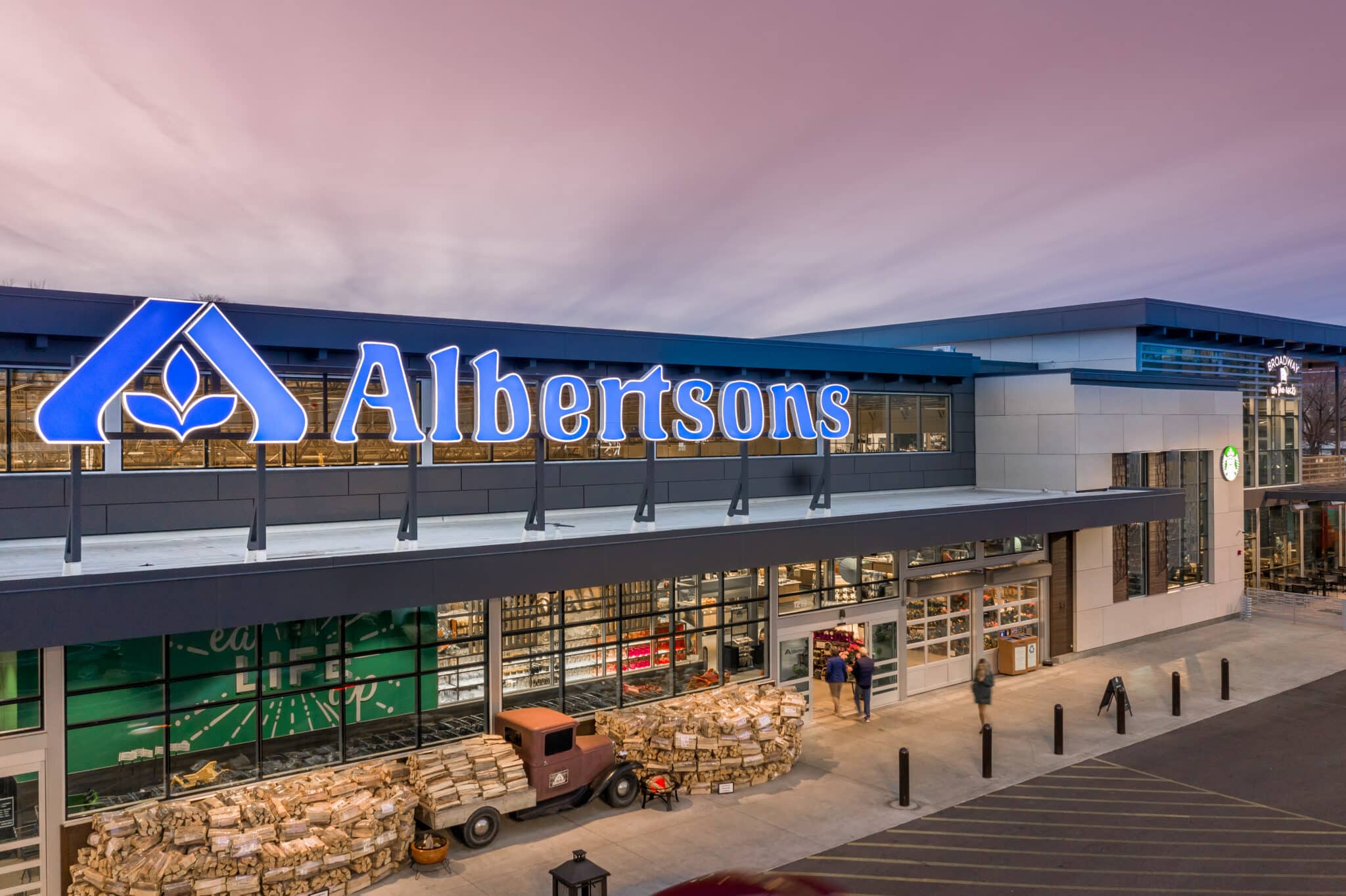
Image courtesy of Albertsons Companies