

Emi Koyama is the founder of Seattle-based Coalition for Rights & Safety for People in the Sex Trade. Her advocacy spans Washington and Oregon, and is rooted in her own lived experience. That included 15 years of living in Portland, working on Martin Luther King Boulevard and sometimes 82nd Avenue, the corridor targeted by a new ordinance from the Portland City Council.
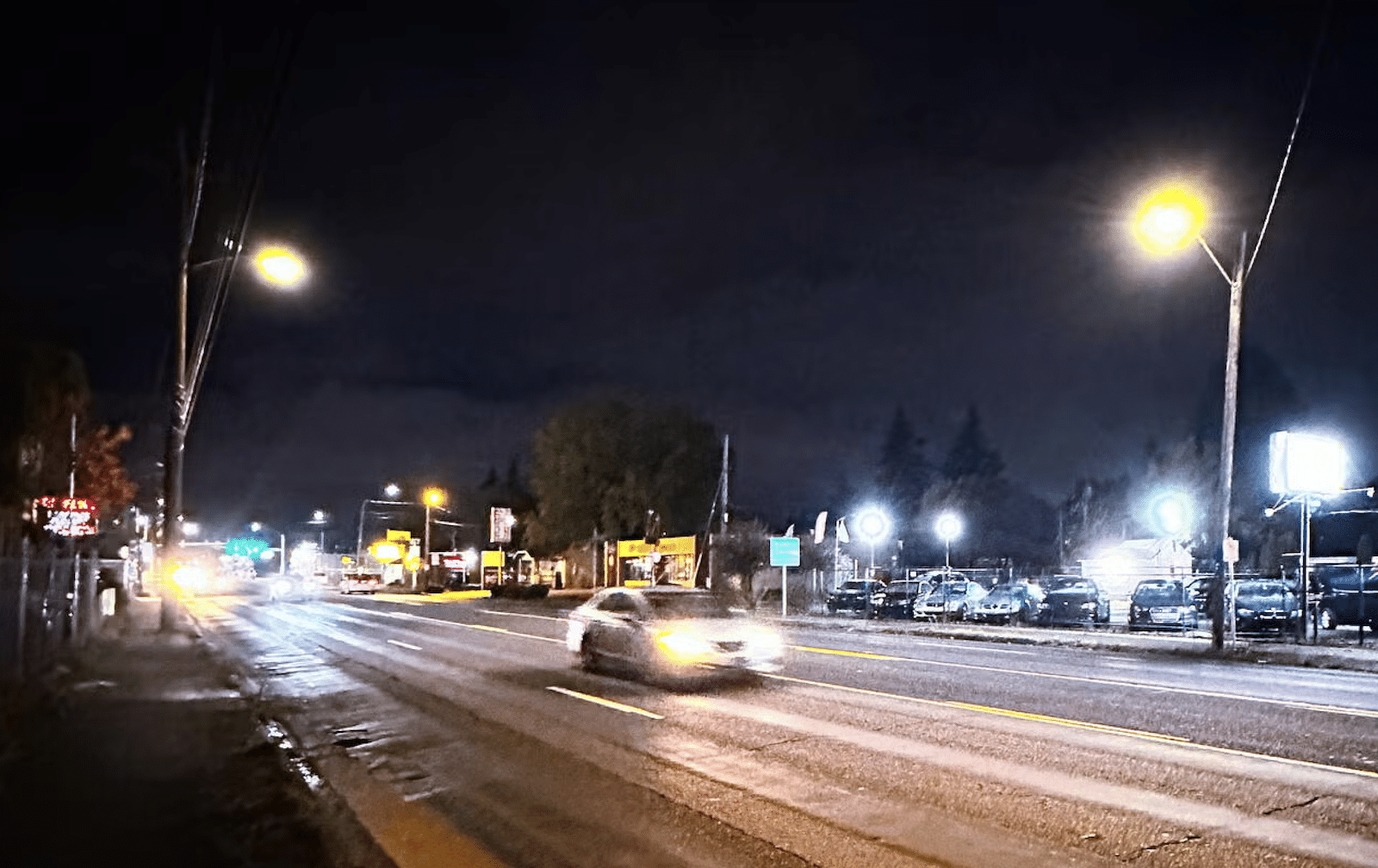
On May 6, councilmembers approved a proposal to update the city code that governs “chronic nuisance property”—buildings cited in repeat complaints related to criminalized activity like drug use and sex work. The proposal, from District 3 Councilor Steve Novick, is clear about what businesses it’s targeting: 82nd Avenue motels.
“Shutting down a venue doesn’t make [sex work] go away,” Koyama told Filter. “It displaces people to other areas, and it becomes more dangerous.”
Koyama testified against the ordinance in March. Though the city council argued that the changes were necessary to keep pace with “human trafficking,” Koyama does not believe that the motels on 82nd Avenue are facilitating or complicit in such activity.
“What you see is people engaging in underground economies,” she said, “and underground economies happen whenever there’s poverty.”
The ordinance had initially proposed to change the definition of a chronic nuisance property to one cited for two or more “nuisance activities” in any 90-day period, when previously it was three or more in a 30-day period.
“Something that happens twice within a 90-day period is hardly a chronic thing,” Phillip Chachka of the nonprofit Portland Copwatch told Filter.
After significant pushback, the final version was amended to three or more nuisance activities in a 90-day period.
There are 25 designated nuisance activities, which in the original proposed version of the ordinance included “prostitution or related offenses” and “loitering to solicit prostitution.” Following pushback, these were replaced with “Human Trafficking or related offenses.”
“There’s become very little [legal] distinction between trafficking and voluntary sex work.”
Grant Hartley, Multnomah County director of Metropolitan Public Defenders, agreed that the ordinance is criminalizing poverty, and punishing businesses “for the failures of our society.” He also told Filter that he’s suspicious of the claims that this protects trafficking survivors. This sort of surveillance, he explained, has often been to find evidence of “promoting prostitution,” which could be interpreted as applying to almost anything—friends giving gas money to someone in the sex trade, for example. Such activities could be associated with human trafficking in the same way.
“There’s become very little [legal] distinction between trafficking and voluntary sex work, and that’s just dangerous for sex workers,” he said. “Sex workers are pulled over, and their phone is seized … you don’t seize the telephone of someone who is a victim.”
Lorren Snowwolf, deputy director at the community closet and food bank Mainspring Portland, told Filter he’s concerned this will “become a witch hunt.” Mainspring Portland is on 82nd Avenue and serves anyone in need, including sex workers.
Multnomah County Senior Deputy District Attorney Glen (JR) Ujifusa said that the ordinance is part of a “multi-faceted approach” to reduce trafficking, which also includes educating motel owners and employees on ways to make their properties safer. He said that the goal isn’t to shut down any businesses.
“What it’s trying to do is clean up and make business-owners responsible for the type of things they attract around them,” he told Filter. “We all know that the criminal justice system is slow and expensive, and so is law enforcement sometimes, so this [ordinance] is another way to maybe get at some of the same issues and deter it in a different way.”
“It just seems like a power grab.”
Koyami would prefer if local law enforcement focused on improving basic safety for people on the margins, rather than punitive interventions. In addition to founding Coalition for Rights & Safety, she’s the co-founder of Aileen’s, a peer-led hospitality space for women in the sex trade. Aileen’s, founded in 2019, serves the notorious stretch of the Pacific Coast Highway in Washington state where in the 1980s and 1990s Gary Ridgeway killed at least 49 women, many of them sex workers.
“Having small organic communities being built up are something that we need to support and not destroy,” Koyami said.
Chachka echoed the sentiment, pointing out that business owners might prefer dealing with civilian city workers rather than armed law enforcement officers. He also finds law enforcement to be “a little disingenuous about their priorities” in this instance.
In 2025, Portland had directed its police bureau to put overtime dollars toward combatting human trafficking, among other issues like domestic and sexual violence. Only 4 percent of the requested funds actually went toward those issues, with the bureau instead putting some toward crowd control at anti-ICE protests.
“It just seems like a power grab on their part,” Chachka said of the new ordinance. “It kind of cuts way back on the due process for property owners and businesses to be able to handle things without city intervention.”
Image via City of Portland