
[Read Part 1 of this story here]
Up until 2019, monitoring the people in the suicide watch cells at South Central Correctional Facility in Tennessee was a job for staff. This meant for each shift watching each prisoner under observation, an officer making somewhere around $20 per hour had to be pulled from their post elsewhere in the facility. So it saves quite a bit of money to decide that prisoners can do it for less than $1 an hour instead—especially these days, when there are usually about five times as many people on suicide watch as there were back then.
I was in South Central’s inaugural class of “inmate observers.” We were told that the federal Bureau of Prisons had already been doing this for years, but that Tennessee would be among the first state prison systems to try it. There were 20 of us at first, enough to monitor three people. South Central usually only had one or two people on suicide watch at a time, so it seemed like we would be enough.
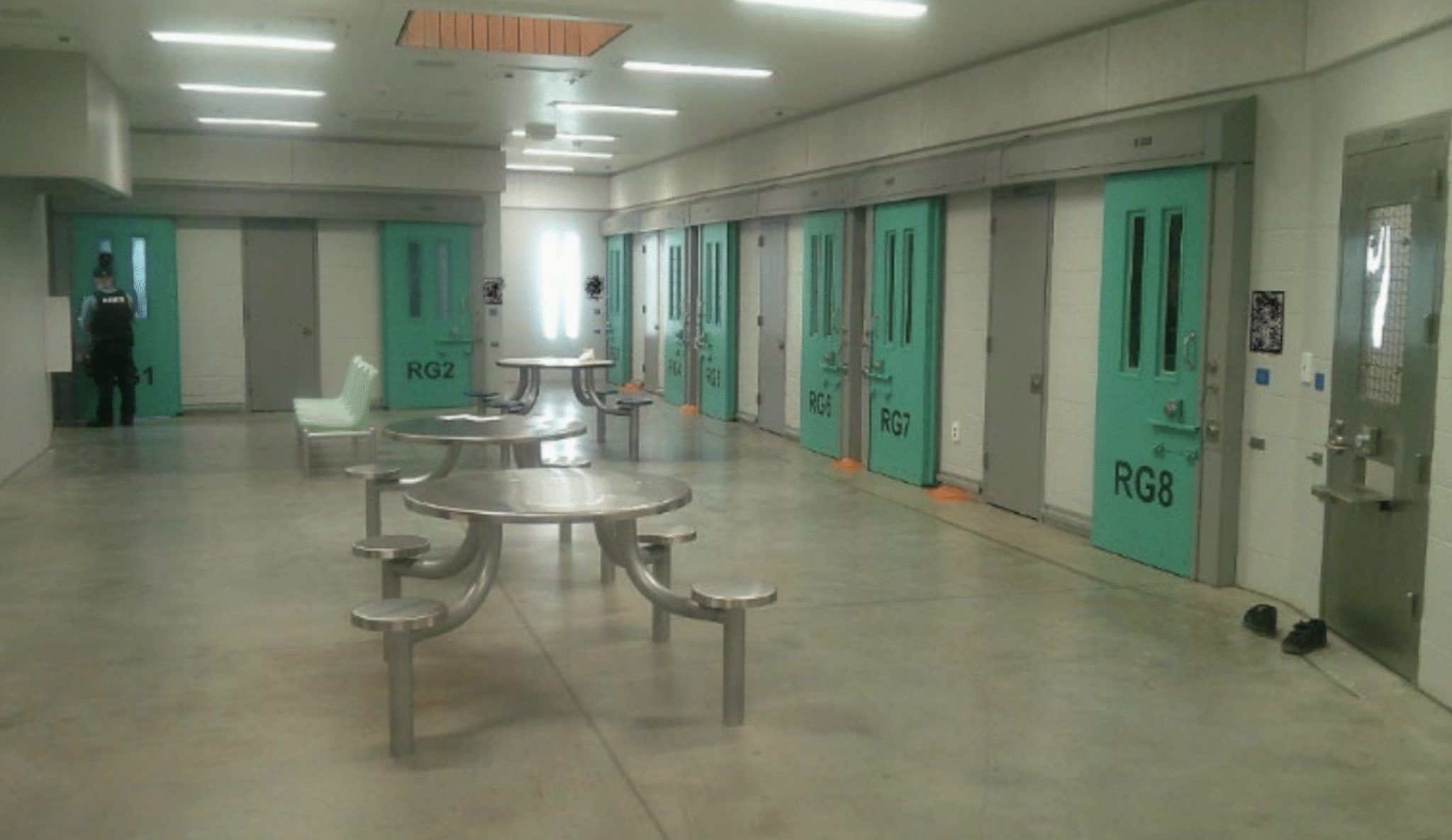
My job involved sitting in a chair outside one of the four suicide watch cells and looking inside through a large window in the electronically operated door. From the chair we were required to make an entry in our log book every 15 minutes. For example:
9:00 am—Inmate sleeping, breathing
9:15 am—Inmate sitting up, later back down
9:30 am—Inmate walked around room
The situations that require informing staff are when the person under observation makes requests for items, like toilet paper, or engages in self-harm.
In 2019 the job paid $0.84 per hour, and today pays $0.94 per hour. That’s around double that of most jobs here, other than the jobs in the correctional industries program. But at first the observer slots were hard to fill. It seemed weird for prisoners to be given responsibility over our peers. Staff said we’d be helping our fellow prisoners get home safely, and that we’d do the job more efficiently than they might.
Today, the job has changed quite a lot. South Central now has 54 observers. This is because it’s normal now to have at least eight people on suicide watch at a time, and often up to 14. Observers are supposed to work four-hour shifts, but the six observers reached by Filter said that with so many people to watch, they often have to work double shifts. It’s intense work, constantly watching what someone else is doing, and you’re not allowed to leave your chair until the next observer relieves you. So four hours is long enough already.
Medical staff are required to check on the suicide watch prisoners every 30 minutes. That simply means walking by and checking that each person on suicide watch has an observer outside the door. But this was easier when it was just the four suicide watch cells, which are on the other side of a secured door from the rest of the medical building.
Those four cells are no longer enough, so makeshift ones are popping up anywhere there’s room. Some of these makeshift cells are in other parts of the prison outside the medical department. Observers told Filter it can be very difficult to concentrate in some of these areas. Especially for eight hours at a time. They also reported that medical staff rarely check in with them there.
Suicide observation here might cost well over $7,000 per day if officers still did the job, but under $320 per day to have prisoners do it. Though in recent years many officer duties have been delegated to prisoners, this may be the only instance of one being formally outsourced as an hourly paying job. The Tennessee Department of Correction did not respond to Filter’s request for comment.
From what staff members reached by Filter remember, there’s been little to no increase in the number of people at risk for suicide since 2019. Most of the people going on suicide watch are there because the protective custody (PC) cells are full. PC is for those who have people waiting to hurt them in general population, so they need to be housed somewhere physically separate.
The mental health policy states that suicide watch is not supposed to be used as a means of segregation or isolation. Officers asked by Filter about this policy were not familiar with it.
“I just do what’s necessary to keep the place running,” one said with a shrug.
Security staff mainly suggested sending violent prisoners to a different facility with the resources to handle them.
There are several reasons why there is so much more demand for PC, and thus suicide watch, than there used to be. Like in many prisons across the United States, understaffing that worsened during the COVID-19 pandemic allowed South Central to descend into out-of-control gang violence, which means more people need to be housed in PC. But there is no more room in PC, so those prisoners are being sent to suicide watch even though most have not tried to harm themselves.
The PC situation has also become worse because of changes to how the facility punishes violence. It used to be that when a prisoner stabbed someone, they would be taken to maximum security and we wouldn’t see them again for years. Now they might be released back onto the compound within a few days, or even the same day.
In 2023, shortly after the arrival of new TDOC Commissioner Frank Strada, we learned that there would be no more “incentive transfers”—meaning no one’s request to be sent to a particular facility would be considered, whether it was to be closer to family or simply out of desperation to go somewhere less violent. Now you’re just stuck where you are, which is particularly hopeless for those who’d landed at South Central or one of the other facilities privately operated by CoreCivic. So for many people here, there is not much reason to change their behavior.
The situation has recently gotten worse as South Central has received more and more transfers from Trousdale Turner Correctional Center, the CoreCivic facility under investigation by the Department of Justice.
Prisoners do make better observers than staff.
In addition to federal BOP facilities, many county jails have long used incarcerated observers. More than a dozen state prison systems also have some version of “inmate observers” described in their policies, but that does not include those like TDOC whose policies do not appear to mention them.
Staff at the North Carolina Department of Adult Correction, which also began to use observers in 2019, have said that this wasn’t intended to address understaffing but was particularly helpful because it freed up staff resources.
It did turn out to be true that prisoners at South Central make better observers than staff. One member of the mental health staff who began working here prior to 2019 told Filter that though they don’t have hard numbers, incidents of self-harm by those on suicide watch decreased after the job was handed to prisoners.
“Observers provide more consistent and considerate watch than officers,” they said. “And [are] quicker to bring problems to the attention of medical staff.”
Image (cropped) via Nebraska Unicameral Legislature