Schick Shadel Hospital in Burien, Washington, was the sole remaining facility in the United States to offer aversion therapy for alcohol use disorder. It shut down in 2022. Is that the last we’ll see of this form of treatment?
Aversion therapy—often involving pairing an alcoholic drink with an emetic, to condition an association with nausea—had proved highly effective for many patients who were voluntarily seeking abstinence, as Filter described in March 2023. By the 1980s, dozens of hospitals were offering it.
The complete erasure of aversion therapy is disempowering, because it narrows people’s choices.
However, the advent of managed care led to ever-increasing competition for an ever-declining pool of patients whose insurance would pay for treatment. This led to the treatment wars of the 1980s, where each treatment modality claimed to be the best and denigrated the others as worthless. The Raleigh Hills chain of aversion therapy hospitals fell victim to political chicanery in that period and went out of business. Schick Shadel Hospital suffered a similar fate decades later, through a combination of mismanagement and COVID-19.
It is increasingly accepted today that there are multiple pathways to recovery. It’s not a one-size-fits-all proposition. Rather, different things work for different people. The complete erasure of aversion therapy is disempowering, because it narrows people’s choices.
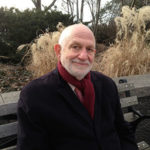
Richard St. Peter, who benefited from aversion therapy himself, is the former CEO of Schick Shadel Hospital. He’s also in the early stages of working to reopen it. Filter’s interview has been lightly edited for length and clarity.
Kenneth Anderson: How did you first get involved with aversion therapy for alcohol use disorder?
Richard St. Peter: I realized that I had a problem with alcohol by the 1970s. I tried AA, but it wasn’t really helpful for me because it did nothing for my cravings. Then a friend of mine took the aversion treatment at Raleigh Hills, which operated a chain of 28 aversion treatment hospitals, mainly on the West Coast.
I was afraid that if he quit drinking, he wouldn’t be any fun anymore, but quite the opposite was true. He out-hunted, out-fished and out-dived all of us who were still drinking, and took our money playing poker. So in 1982, I decided to take the aversion treatment at Raleigh Hills myself.
KA: And how did that work out?
RSP: It was amazing! The aversion therapy took away all my cravings for alcohol completely! I stayed abstinent from alcohol for 11 years until 1993. My training is in finance, and during that time I served as CFO and executive vice president for a number of companies.
KA: What happened in 1993?
RSP: I was at a casino in Las Vegas playing poker, and I ordered a virgin bloody mary. It took a very long time for the drink to come, and when it finally did, I gulped it down because I was thirsty. But it didn’t taste right, and I told the waitress, “I think this tomato juice is rotten.”
And she said, “No, that’s a bloody mary.” And I said, “A real bloody mary with alcohol?” And she said, “Yeah.” And I said, “I wanted a virgin bloody mary.” And she said, “Okay, I’ll bring you a virgin bloody mary.”
A short while after that, for the first time in 11 years, I felt the buzz, and I said to myself, Well, that was stupid drinking that. And, the next day, for the first time in 11 years, I felt the cravings come back. And I thought since my career was going so good, my family was doing so good, everything was going so good, that I could become a social drinker.
“The Schick Shadel treatment worked for me when nothing else did … I believe in multiple pathways; different things work for different people.”
KA: How did that work out?
RSP: Badly. In less than a month, my drinking spiraled out of control. I woke up one morning in a pool of vomit with no idea where I was, and that’s when I realized that I had retriggered uncontrollable alcoholic drinking.
KA: What did you do then?
RSP: Well, I tried contacting Raleigh Hills, but I found out that they had gone out of business due to some rehab politicking. But then I found out that Shick Shadel in Seattle was in business and offering the same kind of aversion treatment. It was actually Schick Shadel that had first pioneered the aversion treatment for alcohol use disorder. So, I took two days of the conditioning treatment at Schick Shadel, and have never drank since.
KA: How did your connection with aversion treatment continue?
RSP: I did well in business; I got lucky and I retired in 1998, and I started joining pay-it-forward types of activities, like alumni associations for my schools, hospitals, and businesses that put me on their boards because they thought I would help them out. That’s when I was contacted by the Schick Shadel Hospital Foundation.
They called me up and asked me if I would join. I said, Sure, I’d love to. I went to Seattle, and I was at a foundation meeting, and afterwards the hospital administrator got me and said, “I hear you’re a finance guy. We have a controller here, and we’re bouncing checks and I can’t understand his explanations. Could you come and talk to him?” I said, Sure. And we went to his office.
His office had a front door and a back door, and when he saw me come in the front door, he went out the back door, and we never saw him again.
The hospital administrator asked me if I could just stay on for a little bit and kind of get things sorted out until we could get a replacement. I said I would do that, and I looked at their financial statements and saw that they were indeed in deep trouble. I figured out what their problem was and got them a positive cash flow within a month. A month later, the partners that owned Schick Shadel asked me if I would like to buy in. They had some shares left, and I said yes. After that, I started buying up any shares that anyone wanted to sell. That’s when they asked me to be their CEO. I stayed on as CEO until 2011.
“We could reopen as a nonprofit. I would like to make the Schick Shadel program available to anyone who could benefit from it.”
KA: Why did you leave?
RSP: Well, the Great Recession of 2008 hit, and the majority of the stockholders decided to sell Schick Shadel to Ascend Health Corporation in 2011 because Ascend Health was willing to pay them 14 times their original investment. Then, in 2012, a hospital mega-corporation named Universal Health Services, Inc. bought Ascend Health Corporation and replaced experienced addiction management with big corporate managers.
When COVID-19 hit, the new management, unlike other hospitals, allowed medical staff to remain employed but not come to work. The census dropped, and that’s why Schick Shadel closed on June 30, 2022.
KA: And why do you want to reopen Schick Shadel?
RSP: The Schick Shadel treatment worked for me when nothing else did. My kids went through some of the best-known rehabs in the country without being helped, and then they tried the Schick Shadel program, and that’s worked for them. And now I’ve got grandkids, and I’d like the Schick Shadel program to be there for them, too, if they need it.
I believe in multiple pathways; different things work for different people. Some people do great with AA, but others need a different kind of a program.
KA: And what do you need to do to reopen Schick Shadel?
RSP: Well, I have money to invest, but not enough to do it all on my own. So I need to find some investors who are interested in a solid, steady return on their investment. Schick Shadel was a very profitable business for over 80 years, until these problems with COVID and management that I mentioned.
Or, if we could find a foundation to back us, we could reopen as a nonprofit. I would like to make the Schick Shadel program available to anyone who could benefit from it.
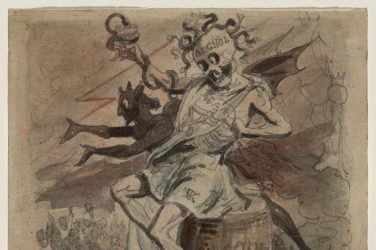
Photograph (cropped) via GetArchive/Public Domain