

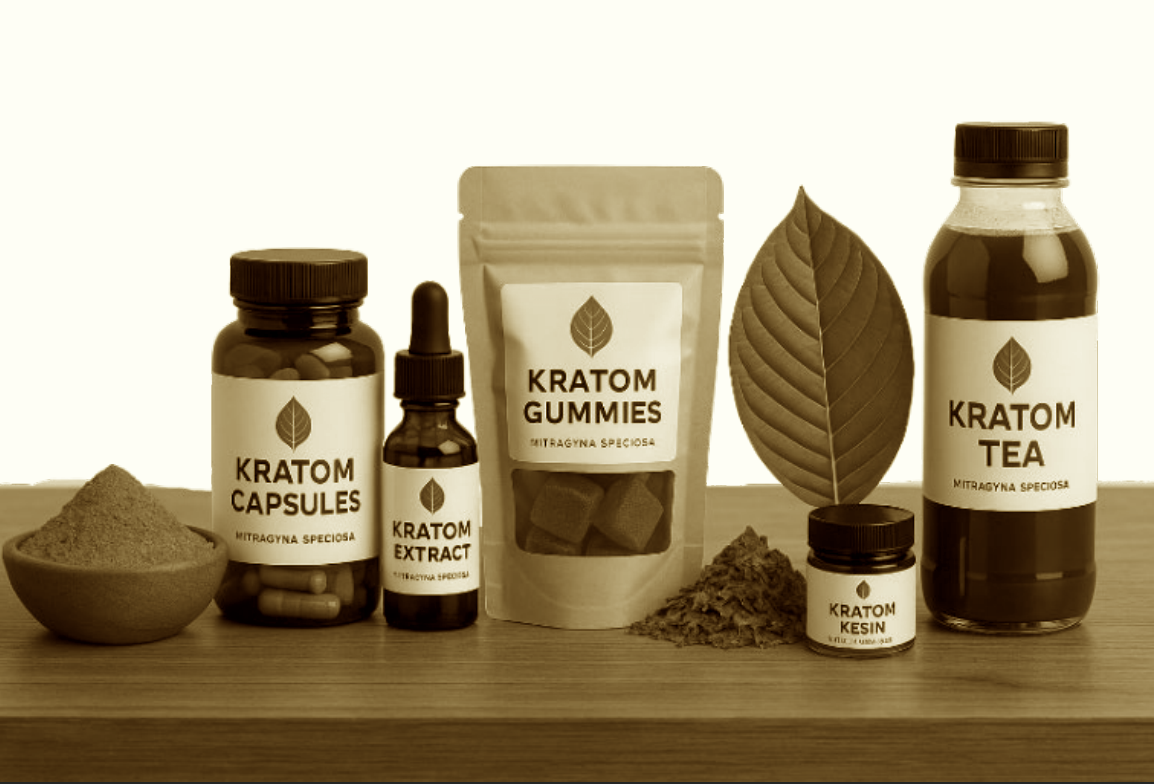
Nine months after Rhode Island passed a law regulating the sale of kratom, the partial opioid agonist that has divided legislators across the country about how to respond to “gas station drugs,” those regulations are now in effect. Rhode Island had designated kratom a Schedule I controlled substance in 2017, making it the first and so far only state to overturn such a ban.
That new law requires kratom products to be kept behind sales counters and not sold to anyone under 21. It does not allow for the sale of 7-hydroxymitragynine (7-OH) products, which are more potent because they contain a synthetically concentrated form of the main psychoactive compound in kratom. Both kratom and 7-OH have been the subject of increasing attention from media and lawmakers ever since 7-OH was recommended for federal Schedule I by the Food and Drug Administration in July 2025, shortly after Rhode Island passed its reform.
“Rhode Island is facing a deadly opioid crisis, and we must embrace every tool available to reduce harm and to save lives,” Senate President Pro Tempore Hanna M. Gallo (D) stated in July 2025. “Kratom is used by many to manage pain and to ease opioid withdrawal symptoms. Rhode Island remains the only New England state where this substance is prohibited. This legislation replaces prohibition with sensible regulations.”
Seven states and the District of Columbia currently have full kratom bans like the one Rhode Island overturned. (Louisiana, which enacted its full kratom ban in August 2025, is currently considering a bill that would revise that ban so it only applied to 7-OH products.) In Connecticut, where the most recent of these bans went into effect March 25, reports are already emerging that many consumers, some of whom are struggling to find withdrawal support, are driving across state lines to buy it from Massachusetts or New York.
“Some sellers lost a lot of money—threw it away or sold it at a discount,” smoke shop owner Omar Nasser told the Lakeville Journal. “It would be no surprise if others are taking it over the border into New York to sell it or are selling it under the table.”
A growing number of states have introduced consumer protection bills that would regulate kratom alongside other legislation that would ban it.
With the decision to ban 7-OH at the federal level still pending, many states moved to schedule it under their own versions of the Controlled Substance Act, which has been complicated by the fact that many of them are trying to regulate kratom at the same time—kratom naturally contains small amounts of 7-OH. While the proposed bans have tended to focus on 7-OH products rather than on the broader category of kratom products, a growing number of states have introduced consumer protection bills that would regulate kratom alongside other legislation that would ban it.
South Carolina already enacted a consumer protection act regulating kratom in 2025, and is now considering legislation to reverse course and ban it instead. A Michigan bill to regulate kratom stalled in November 2025, while in late March a bill that would ban kratom crossed over from the House to the Senate. Iowa also recently advanced a House bill that would ban kratom under Schedule I, after narrowly rejecting an amendment proposed by Rep. Ray Sorenson (R) that would have regulated the plant instead.
“I believe the government has a role in protecting public safety, especially when it comes to minors, but when it comes to adults making decisions about legal products, we should be cautious about expanding criminal prohibitions,” Sorenson said according to Iowa Public Radio. “We need to target the real problem: unsafe products.”
At this point in the legislative session many of the regulation bills and prohibition bills alike have already died in committee or been postponed. But multiple states, including Delaware, Idaho, Illinois, Ohio and Tennessee, are still considering both.
Image (cropped) via Tennessee Department of Health