
Adolescent drug use often triggers moral panics, fear-mongering and the passage of draconian laws to “keep the kids safe” by putting their caregivers in prison. A “troubled-teen” industry preys on parents desperate to help their kids at any cost—subjecting young people whose drug use is deemed problematic to abstinence-only “tough love” and isolating, abusive “boot camps.”
Harm Reduction Approaches With Adolescents Who Use Substances, a new book by Amanda Reiman and Barry Lessin, is a much-needed corrective to conventional, violent and failed ways of working with young people who use drugs. They dismantle the cruel and ineffective concepts of tough love and zero tolerance. They critique the disease theory of addiction, detailing why it can’t explain adolescent drug use and causes enormous harm.
The authors make a convincing case to stop punishing and shaming adolescents, and instead seek to understand drug use in the context of this developmental life stage. Using the scaffolding of the eight principles of harm reduction, their approach centers on respect, dignity, meeting teens where they’re at, and the nonjudgmental and noncoercive provision of services.
One of the most pernicious problems the book addresses is how drug prohibition and associated “just say no” messages deny young people basic knowledge of drugs. Widespread misinformation puts them at risk, and the nuance of a spectrum of drug-related challenges is lost in the rush to panic about any use. The book explains that a harm reduction approach assesses where a young person is on that spectrum, and how that may inform consensual treatment.
“The goal is not to force behavior into compliance, it’s to build trust and reduce harm in the real world.”
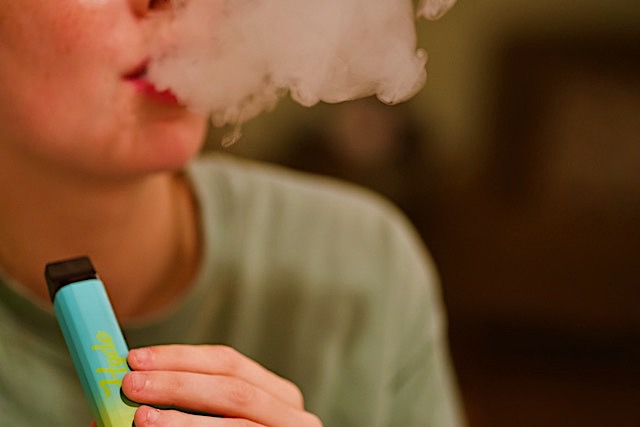
Another strength of the book is it rejects the outcry over teen nicotine vaping, recognizing that it can be harm reduction for teenagers, too. The first section of the book, written by Reiman, states that, “While many adults use e-cigarettes as a form of harm reduction to cut down on smoking, teens may be using them for different reasons but still in the context of harm reduction.”
The second half of the book is written by Lessin, who has been a practicing psychologist and a certified alcohol and other drug counselor for 40 years (he has also written for Filter). It includes instructive case examples and teaching points to illustrate how creative and affirming harm reduction can be in working with adolescents and their families.
The ideas developed in Harm Reduction Approaches With Adolescents Who Use Substances need to become the standard of care. Filter’s interview with Barry Lessin has been lightly edited for length and clarity.
Helen Redmond: What are some of the problems with the traditional approach to working with adolescents who use drugs?
Barry Lessin: Mainstream models have leaned heavily on abstinence, compliance and diagnosis, often at the expense of understanding context and relationship. These models tend to treat substance use as the primary problem rather than as a behavior that may be a function of regulation, mood, connection, escape, identity formation within a much bigger developmental and systemic picture. This framing acknowledges the reality that adolescents are still forming their identities, learning how to regulate emotion, navigating power, belonging and autonomy. So treatment that doesn’t understand this ends up feeling punitive or alienating to young people, and disempowering families.
HR: Explain the harm reduction approach to adolescence substance use.
Dr. Patt Denning developed a model of harm reduction therapy. It’s a classic and it’s proven to be very effective. Patt allowed me to adapt it for working with adolescents. It’s a rigorous, ethical, relational approach. It starts with respect for autonomy, ambivalence, lived experience and the protective functions that behaviors might serve during adolescence. It means centering safety, collaboration, small and incremental change, rather than control.
The goal is not to force behavior into compliance, it’s to build trust and reduce harm in the real world. You can have boundaries about adolescent substance use while still meeting young people where they are, and without moralizing.
Harm reduction therapy centers engagement through a therapeutic alliance. Change happens in the context of relationships and adolescents change most through trusted relationships, not through pressure. Harm reduction therapy looks at drug, set and setting. Adolescent behavior is shaped by peers, family, and school, not just individual choice.
Development also includes experimentation, so learning happens through trial and error. So we should expect experimentation and setbacks. Kids learn by trying, overshooting, recalibrating, and punitive responses will just interrupt that sense of learning.
Kids are figuring out who they are. Harm reduction therapy supports agency and self-definition, which is in alignment with identity formation. It emphasizes better skills and supports before demanding behavior change, which helps kids develop self-regulation over time.
Parents get so upset. Why isn’t my kid listening to me? Why is my kid behaving like this? Why is he just continuing to sabotage or hurt himself? The parents forget that kids are not adults, they’re kids! Young people are sensitive to shame and stigma, so harm reduction approaches don’t use shame or moral judgments because it increases secrecy and risk.
“You can’t do much of anything when things are fear-based, especially parenting. If you’re scared, you get backed in a corner and lose your sense of instinct.”
HR: Why do parents freak out when they find out their kids are using drugs, and what are the mistakes they make in addressing it?
BL: So a lot of it comes from drug policy, and how it filters down into our culture, to how parents are educated, by what to expect about drug use and the role of stigma.
I tell my parents you don’t have to reinvent yourself as parents. Most have an instinct of what they know is best for their kids. They have a sense of values and principles that they are already imparting in their relationship with their kids. When they hear about drugs, the messages of, My kid is an addict, he needs rehab, the fear and panic sets in.
You can’t do much of anything when things are fear-based, especially parenting. If you’re scared, you get backed in a corner and lose your sense of instinct. And the messages that are coming from our culture are the messages that something is wrong and you need to get tougher. They are prohibition-based myths. I think the all-or-nothing narrative that is embedded in our culture does a lot of damage.
What do parents do? They either go along with what they’re taught or, if that fails, they think something is wrong with them. That is what our drug policy does to parents and families.
One of the things that I talk to parents about is the CRAFT approach, which stands for community reinforcement and family training. It’s a model used for families that have a member who is using substances. It helps them learn communication skills to have conversations based on engaging their kid where they’re at, and to realize that they’re using substance for reasons. An important idea in CRAFT is to understand that substance use is about a relationship with drugs, as opposed to having a drug problem.
HR: In the media we are constantly hearing scary stories about drugs and the adolescent brain. What’s your take?
We know that the adolescent brain is highly neuroplastic. It’s open to being shaped by experience, relationships, habits and environments. The systems for impulse control and long term planning are still developing and the two triggers for reward and peer sensitivity are really active. There are physiological reasons that adolescents like to take risks. It’s a normal process. So that combination is why they are more drawn to novelty and short-term relief, including substances—and why supportive relationships, structure and stigma-free guidance can have a huge impact.
HR: In the book you say that harm reduction views vaping as a safer way to consume nicotine. That’s a controversial position when it comes to youth.
BL: In the book we say vaping for adolescents isn’t safe, it’s safer than smoking combustible cigarettes. For kids who already smoke, switching to vaping can reduce exposure to the most dangerous chemicals in cigarettes, but for kids who don’t smoke, starting to vape obviously introduces some risk. Harm reduction for tobacco is about assessing risk.
“We criminalize people who use drugs, attach moral failure, and teach families that even one-time use means addiction and a ruined future. That framing doesn’t match reality.”
HR: What is the impact of social media on adolescent drug use?
BL: One of the influences that was good timing for the book, is the work of Jonathan Haidt. He’s a social psychologist who has developed a very strong body of research that shows how the iPhone and social media has really contributed to significant mental health and substance use issues among teens.
When we look at social media, we connect it to substance use through the same developmental lens that Haidt describes. Social media is built to hook a reward-sensitive adolescent brain that’s still developing impulse control. And social media amplifies peer comparison, social pressure and compulsive rewards, which increases stress, sleep disruption and emotional dysregulation. So it’s the same conditions that often drive kids towards substances as a coping strategy. It normalizes risky behaviors. Part of dealing with social media from a harm reduction approach is accounting for the digital environments that can shape substance use.
HR: Who is your book for and what do you want them to get out of it?
BL: We wrote the book because of the way that drugs are talked about in the United States, especially when it comes to young people using drugs. It’s built on fear and stigma and punishment, rather than public health and safety. We criminalize people who use drugs, attach moral failure, and teach families that even one-time use means addiction and a ruined future.
That framing doesn’t match reality. At the same time, parents are terrified, understandably, because the consequences of drug charges and stigma are real and lifelong. We wrote it for anyone who has a stake in adolescent well-being; therapists, school counselors, health care providers, educators, caregivers and parents. Anyone who’s sitting with kids in clinics or classrooms or living rooms or community programs. The book is for people working with adolescents who know that the standard playbook is not working.
Photograph by Helen Redmond