
On December 11, Vietnam passed an amendment to its Investment Law in order to prohibit all investment or commercial trade in nicotine vapes and heated tobacco products.
The move makes the country’s total ban on these harm reduction alternatives to smoking—implemented at the beginning of 2025, and including personal possession and use—even more absolute.
The World Health Organization—which broadly opposes and demonizes tobacco harm reduction—had previously urged Vietnam to add the safer nicotine products to its list of prohibited businesses, as a means to “ensure this ban can be effectively enforced.” There must be no exceptions even for exporters, the WHO insisted, as that could “undermine public health objectives, as well as create significant enforcement challenges.”
The WHO duly applauded the Vietnamese National Assembly’s compliance.
The WHO has also been praising Vietnam’s original prohibition of the world’s most successful smoking cessation aids, with a November 29 post marking the first anniversary of the legislature’s decision. The country’s smoking rate is just over 20 percent; among Vietnamese men, it’s over 40 percent.
The WHO elaborated on what it portrayed as the benefits of the ban: “Fewer young people using these products; Fewer cases of hospital admissions; A major drop in online promotion, in partcular [sic] that targets vulnerable young people.”
“Southeast Asia is one of the world’s highest-density regions, with highly uneven economic development. This makes harm reduction vulnerable to policy volatility.”
Experts are skeptical. Clive Bates, of Counterfactual Consulting, was among those to point out on social media that no data had been made available to validate the WHO claims. He added that one year was little time to get a clear picture of all the ramifications of the prohibition, given factors like stocks running out, potential behavioral changes and how the illicit market would respond.
“I am pretty sure the cigarette business and organized crime will be high-fiving the ban,” Bates wrote in a followup post, demanding evidence from the WHO’s Vietnam office.
Experts with a focus on Asia are similarly troubled. Alan Zhao is the CEO of a vape-oriented publication called 2Firsts, and has reported on Vietnam.
“Southeast Asia is one of the world’s highest-density regions, with some of the highest smoking rates and highly uneven economic development,” he told Filter. “This makes tobacco control and harm reduction particularly vulnerable to policy volatility.”
“When we look beyond the surface,” Zhao continued, “whether a country allows, bans or wavers, my personal observation is that the biggest risk is this: Policymaking seems driven more by interest-group dynamics than by evidence-based, scientific reasoning.”
The majority of people who smoke live in Asia. Yet though the continent includes tobacco harm reduction success stories like Japan, bans and restrictions on safer substitutes for cigarettes are widespread.
Vietnam’s state-owned tobacco company has about 60 percent of the cigarette market share.
Conflicts of interest can be observed in some of these policies—as in India, where the government holds a significant stake in the country’s dominant tobacco company, while banning the vapes that might outcompete it.
“Vietnam is really not so different than Thailand, India and China with regard to government tobacco interests,” Nancy Loucas, executive coordinator of the Coalition of Asia Pacific Tobacco Harm Reduction Advocates (CAPHRA), told Filter regarding Vinataba—Vietnam’s state-owned tobacco company, with about 60 percent of the cigarette market share.
“All those countries mentioned get accolades for banning safer products whilst manufacturing and selling deadly products,” Loucas said of reactions from the WHO and the network of anti-vape nonprofits funded by billionaire Michael Bloomberg.
Combustible tobacco use is a huge driver of death and disease in Vietnam. In 2021, over 14 percent of all the country’s deaths were linked to smoking.
The government seems determined to make sure that the most dangerous nicotine products are the only ones available. However, an illicit vape market is sure to give at least some consumers another option, as Loucas noted, albeit with more risks than if the products were regulated.
“Illicit products flow across borders easily between Vietnam, Laos and Thailand,” she said.
Loucas described developments in Vietnam as part of a pattern in Asia, with predatory external NGOs pushing bans that hamper smoking cessation while fueling illicit markets. “The issue of sovereignty doesn’t even rate,” she said, “because the countries with tobacco interests are still profiting from selling death.”
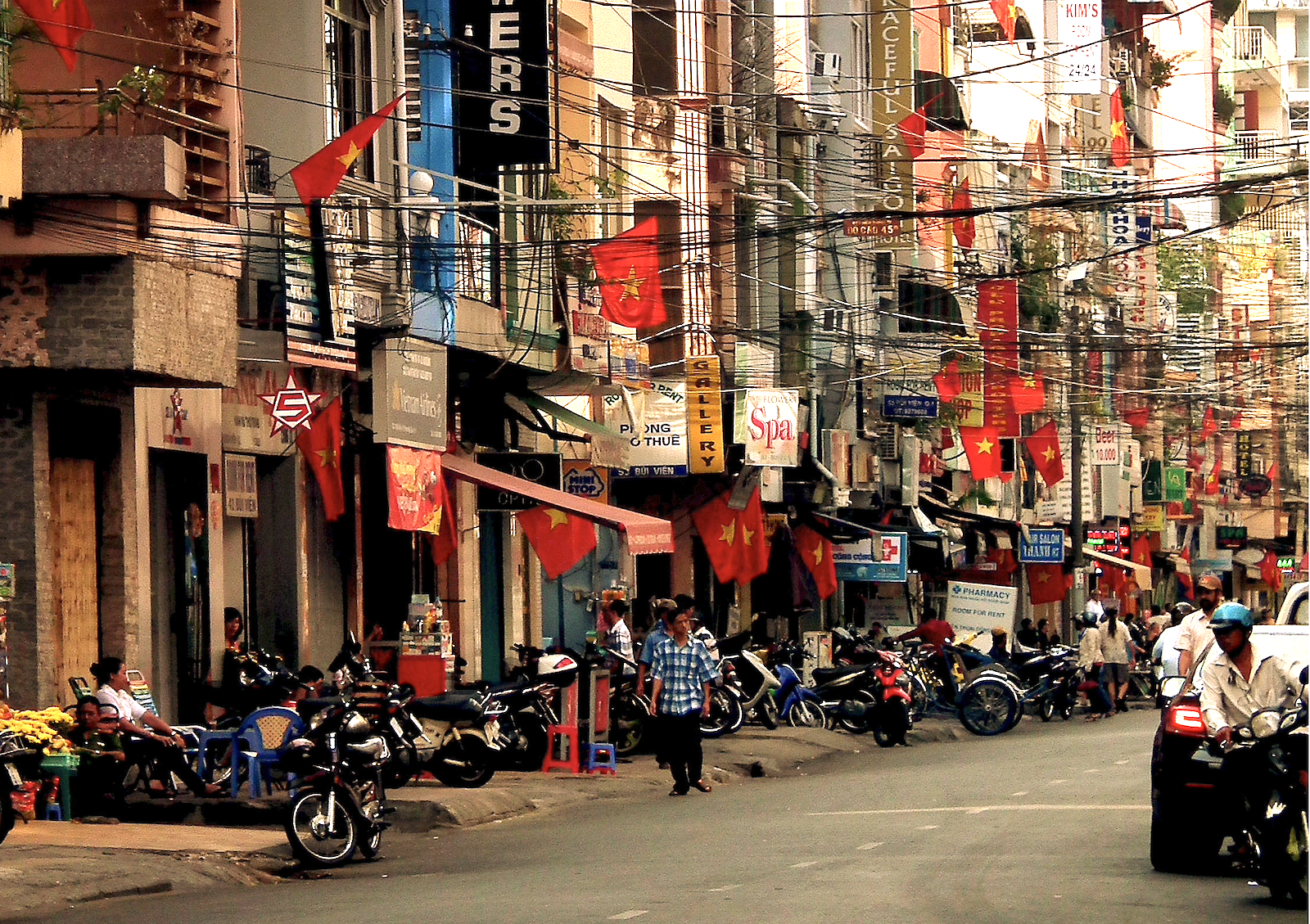
Photograph (cropped) of Ho Chi Minh City by calflier001 via Wikimedia Commons/Creative Commons 2.0