
Few spaces are as hostile as the tobacco harm reduction (THR) policy debate. Lawmakers, media, ideologically-driven researchers, nonprofits and public health bodies demonize the safer nicotine products that can replace lethal cigarettes—distorting or ignoring the science, and launching vicious ad hominem attacks on their opponents.
But amid this toxicity, the THR movement can count Clive Bates among its ranks. A kind of battle-hardened rock star of the field, the British advocate is a formidable operator; without representing any major organization, his no-nonsense attitude, fierce intelligence and wealth of knowledge translate to serious clout.
It’s his energy, too. If you follow THR advocacy, you soon become aware that Bates is everywhere. He’s emailing groups of scientists, consumers and policy wonks to scrutinize the latest studies and global developments. He’s writing policy papers. He’s delivering pithy lines to hapless media interviewers and distilling arguments around the world, debating in Europe or roasting FDA officials in DC.
“I am driven by deep despair and intense frustration that the opportunity to avoid millions of premature deaths is being squandered by a kind of purity cult.”
His allies—and probably also his enemies, if they admitted it—see his impact as remarkable.
“Clive is, without doubt, one of the most important voices in THR,” Dr. Arielle Selya, a behavioral scientist who collaborates with Bates in critiquing new studies, told Filter. “He is truly visionary, with a unique ability to see straight to the heart of complex topics and accurately predict—sometimes decades into the future!—how THR debates and dialogues evolve. Not only that, but Clive has an unparalleled ability to communicate complex ideas into clear and persuasive arguments that THR is plain common sense.”
David Sweanor, who chairs the advisory board of the University of Ottawa’s Centre for Health Law, Policy and Ethics, believes that this “key leader” should take significant credit for the fact that the move from cigarettes to safer alternatives is global and unstoppable, despite all the well-funded opposition.
“His marshalling of data, building of coalitions, critiques of studies and proposed policies, and extraordinary productive capacity have been critically important,” Sweanor told Filter.
Bates has for years run the influential Counterfactual blog about THR, and recently ventured onto Substack. He’s not one to suffer fools gladly, but I wanted to find out more about who he is and what drives him, so I took the plunge. Filter’s interview has been lightly edited for length and clarity.
Kiran Sidhu: How would you describe your current role in THR?
Clive Bates: To be honest, I wish I had no role at all. Tobacco policy is really a simple issue: We have much safer products that will remove most or all of the harms arising from nicotine use, which are mostly caused by smoking tobacco. That’s basically it. It’s over. It’s just a matter of what barriers are placed in the way of a wholesale migration from high-risk to low-risk nicotine use.
So I am driven by deep despair and intense frustration that the opportunity to avoid millions of premature deaths and tens of millions of years of human suffering is being squandered by a kind of weird ideology or purity cult that is obstructing this migration.
The resistance to the simple, obvious idea that much safer products are much better is truly extraordinary. The breadth, depth and ruthless arrogance of the opposition can be overwhelming. So I try to be a beacon for sound science and rational policymaking in the public interest.
I stand for the pragmatism of the problem-solvers and the people who approach this issue with empathy and humility (even if I can sometimes fall short on that myself). I try to present credible policy analysis and engage with the science in the way a policymaker should, grappling with risks, trade-offs, competing goals and unintended consequences.
I coordinate a few networks based on Google Groups listservs. I use conferences to draw my views together into a narrative that informs and inspires others to the best of my abilities. I try to speak to everyone involved and understand their worldview, and that includes tobacco and nicotine companies, but it has become almost impossible to engage the ideologues as they pursue their nicotine-free utopia.
KS: How and why did you get involved in THR?
CB: I became involved soon after I started as director of Action on Smoking Health [ASH-UK] in 1997, having previously worked in the environmental movement for Greenpeace and others. At the time, we didn’t have the amazing range of consumer-friendly smoke-free products we have now, but we did have the basic idea: changing the way nicotine is consumed. We were thinking about possible harm reduction options with NRT and even snus.
[Professor] Mike Russell was still very influential at the time, and all the academics who had studied under him were rising through the universities, several of whom were ASH board members. I felt it was an essential strategy and that we needed to recognise the Swedish experience and adopt a more subtle approach to smokeless tobacco, though snus was already banned in the EU by then.
In 2003, I went off to work for [Prime Minister] Tony Blair’s Strategy Unit and then a procession of senior civil service roles, but returned to tobacco harm reduction in 2013, as the mother of all battles was getting underway over the EU Tobacco Products Directive.
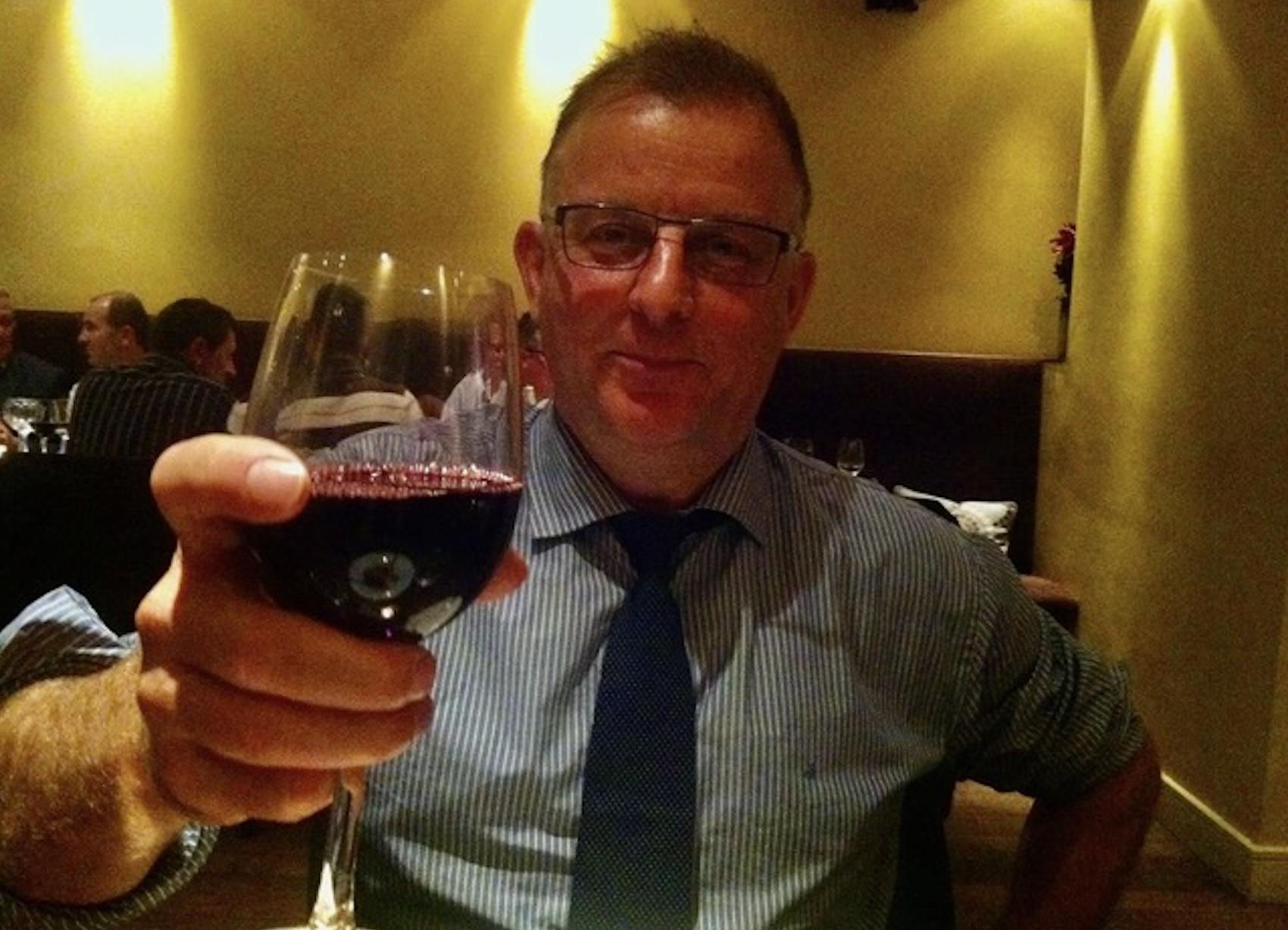
The picture [above] is me celebrating an epic victory for consumers on October 8, 2013, when the European Parliament rejected medical regulation for vapes.
“There are so many lessons to learn from this miserable episode, yet lessons have not been learned, and failures are being aggressively repeated for pouches.”
KS: What was the rationale behind the European Union’s 1992 ban on snus?
CB: The snus ban emerged from a moral panic about Skoal Bandits, a form of oral tobacco that arrived in the UK in the mid-1980s. The arguments would sound very familiar today: the threat to children, nicotine addiction, the industry, high risks and gateway effects.
Tobacco control activists managed to have this banned in the UK, and then the ban was adopted in the EU in 1992. Sweden did not join the EU until 1994, and one condition of its accession was that the snus ban would not apply.
Recent analysis suggests that snus results in about 3,000 avoided smoking-related deaths annually in Sweden. But since 1992, over 20 million EU citizens have died from smoking-related disease.
Suppose we had gone the opposite way and encouraged people who smoke to give it a try, instead of banning it? It is difficult to pin any serious health effects on snus; suppose we’d given people good risk information? Instead of cheering the fake success of a ban, what if tobacco control activists had pressed companies and regulators to introduce more snus brands?
Nicotine pouches could have been invented 20 years ago if the market for them had been shaped by proactive regulators and public health. There are so many lessons to learn from this miserable episode, yet lessons have not been learned, and failures are being aggressively repeated for pouches.
KS: Do your thoughts on THR still align with those of ASH-UK?
CB: ASH has devoted its energies to pressing home the UK government’s Tobacco and Vapes Bill and cheering on other anti-vaping measures, like taxes and the disposables ban. The bill imposes pointless age restrictions on adults, does nothing for the people most at risk, and promotes anti-vaping measures that will protect the cigarette trade.
It’s an incoherent mess driven by poor analysis and political posturing, and, in my opinion, likely to do more harm than good. So we probably don’t see eye-to-eye on that. I don’t see how age restrictions on people born after 2009 once they become adults while cheering on anti-vaping measures and taxes will achieve much for health.
“Bloomberg will reach the end of his days responsible for thousands, maybe millions, of deaths and untold misery.”
KS: Even though vapes have been around for 20 years or so, the disinformation surrounding them has only grown louder. Why do you think this is?
CB: The abstinence-only opponents of realistic nicotine policy need a narrative to defend their stance and to restore their own standing. They are profoundly challenged by safer products—after all, what is the point of tobacco control if there is no harm, and therefore no reason to control things? It would be like coffee control. So they are determined to find harm wherever they look.
The process is self-reinforcing. Most people like to position themselves comfortably in the middle of a consensus among their peers. But since about 2016, a range of wildly inaccurate claims has been introduced by fringe pseudo-scientists and then repeated with less and less hesitation until the wild idea becomes the norm.
The most extreme example of this would be the claim that smoke-free products are as risky or more risky than cigarettes, which now seems to be the position of the European Commission. It is now common to read scientific papers in which the comparable risk claim is taken as given, and the idea of reduced risk is dismissed as tobacco industry marketing.
KS: What is the greatest threat to the success of THR?
CB: Michael Bloomberg and his highly-funded complex of activist-academics, aggressive campaigners, fake civil society organizations and PR hacks—I refuse to call them journalists. Bloomberg will reach the end of his days responsible for thousands, maybe millions, of deaths and untold misery.
A close second would be the politicians. bureaucrats, media, and health organizations that have been so comprehensively played by the rhetoric and money of this overconfident, out-of-touch, elitist New York financial services billionaire.
“We need to get away from THR as a kind of pimped-up smoking cessation treatment, and into the idea that there is going to be a persistent market for nicotine.”
KS: How do you see the future of THR?
CB: One word: inevitable. It is a process of innovation and creative destruction in which the cigarette will become obsolete or a niche product in a diverse market of low-risk nicotine products. It is inevitable because that is what consumers want, it’s better for health and welfare, and a large economic opportunity.
The main questions are the extent to which tobacco control and public health activism slow down this migration, and whether they introduce prohibitions, restrictions and taxes that mean these products are supplied through illicit trade.
We need to get away from THR as a kind of pimped-up smoking cessation treatment, and into the idea that there is going to be a persistent market for the psychoactive substance nicotine. The job of public health regulation is to ensure that demand is met with high-quality, reliable and acceptably safe products in a lawful regulated market.
Photograph courtesy of Clive Bates
The Influence Foundation, which operates Filter, received an unrestricted grant from the Sweanor Family Fund at the Ottawa Community Foundation in 2025. Dr. Selya is an employee of Pinney Associates, Inc. which consults to Juul Labs and Philip Morris International (PMI) on non-combustible nicotine products. She also individually provides consulting services on behavioral science to the Center of Excellence for the Acceleration of Harm Reduction (CoEHAR) through ECLAT Srl, which received funding from the Foundation for a Smoke-Free World (now Global Action to End Smoking). Her commentary in this article is her own and these funders had no involvement. The Influence Foundation has received unrestricted grants from Juul Labs and PMI, as well as grants from Global Action to End Smoking. Joe Gitchell, the CEO of Pinney Associates, has made personal donations to The Influence Foundation. Filter’s Editorial Independence Policy applies.