
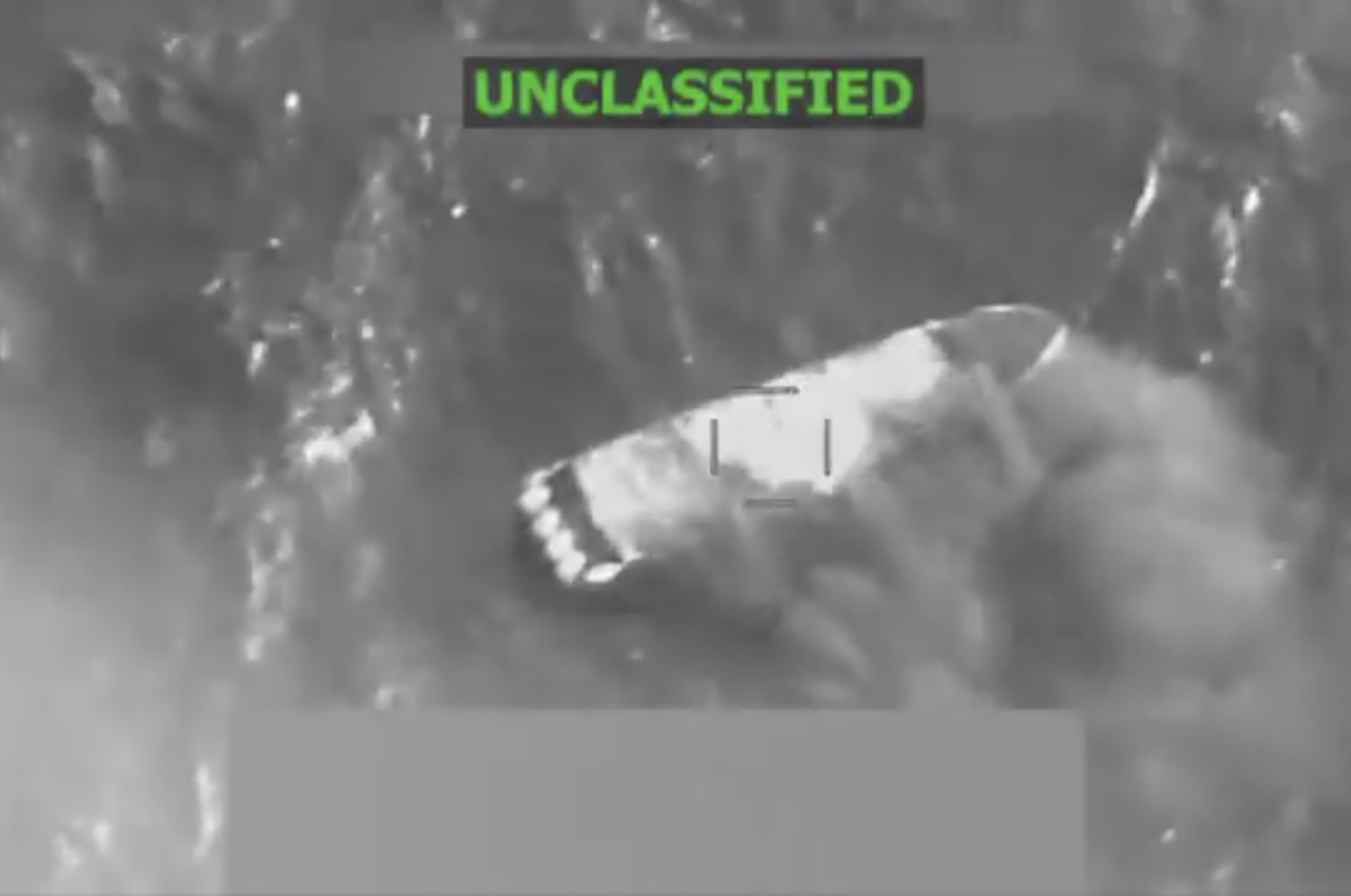
Yet again, like clockwork, “Secretary of War” Pete Hegseth boasted on November 4 about a “lethal kinetic strike” on a vessel in the Eastern Pacific.
“Lethal kinetic strike” is apparently tough-guy talk for killing what many suspect are fishermen. Hegseth claimed, again, that the victims were engaged in “illicit narcotics smuggling,” and as always offered no proof. Two people were killed, raising the death toll from the strikes to 67.
The attacks, which began in September, have been denounced by human rights advocates. The military can’t legally use lethal force against civilians, even if they’re suspected of criminal activity. And according to the 1973 War Powers Resolution, 60 days after the president officially submits a report of military action, Congress must vote to enact a declaration of war or the administration must cease operations. On October 8, Senate Republicans blocked a resolution that would have ended the military attacks without the Congressional authorization of the use of force.
“Americans want fewer wars—not more—and our Constitution clearly grants Congress alone the power to declare one,” said Senator Tim Kaine (D-Virginia). “Yet President Trump has repeatedly launched illegal military strikes in the Caribbean and has refused to provide Congress with basic information about who was killed, why the strikes were necessary, and why a standard interdiction operation wasn’t conducted.”
In a November 3 webinar organized by ReThink Media, Daniel Noroña, advocacy director for the Americas at Amnesty International USA, pointed out that it’s illegal to use the military for law enforcement purposes. Given the history of United States military interventions in Latin America and the Caribbean, he said, these activities, which appear to be escalating, are bound to result in profound “human rights violations.”
“Trump is weaponizing the valid grief [of the US overdose crisis] to escalate the drug war to levels we’ve never seen before.”
For instance Operation Condor, between 1975 and 1983, was a military campaign supported by the US to destroy leftist governments and kill leftist leaders in the region. By one estimate, 60,000–80,000 people died.
“The military should not be tasked with law enforcement, especially if authorities are not protecting against human rights violations,” Noroña said. He noted that the conflict threatens to spiral further out of control if the Venezuelan government strikes back. “It puts human rights in peril. What will happen to political prisoners if the government decides to carry out retaliation?”
John Walsh, director for drug policy and the Andes at the Washington Office on Latin America (WOLA), noted that drug-related deaths in the US are in decline, but the Trump administration is taking advantage of decades of lost lives to pursue geopolitical goals. “Trump is weaponizing the valid grief to escalate the drug war to levels we’ve never seen before.”
You can’t bomb away a thriving illicit market, he continued. “This is a market economy. There are sellers, and buyers, who pay a lot of money.” The deadly—and foolish—strategy threatens to further isolate the US, he said, as Latin American leaders, like Colombia’s popular Gustave Petro, recoil at the attacks.
“It’s not America first. It’s America alone.”
For decades, US SOUTHCOM has collaborated with law enforcement in Latin America in an attempt to disrupt drug markets. But the head of SOUTHCOM, Admiral Alvin Holsey, announced his resignation on October 17, reportedly after clashes with Hegseth over the boat strikes.
“It’s not America first. It’s America alone,” Walsh said. “And the US Navy is really out of its depth here. A drug problem is a societal problem.”
Moreover, he added, there’s the inconvenient possibility that the boats are not linked to US drug issues at all. “The administration continues to provide no evidence that they are not just killing fishermen trying to survive. Fentanyl comes from Mexico. These are not ‘narcoterrorists.’”
Trump’s admiration for former Philippines President Rodrigo Duterte—currently facing charges in the International Criminal Court over his brutal drug war—suggests that we can only expect a violent escalation under similar pretexts. The goal, Walsh said, is clear. “This is a buildup to dislodge [Venezuelan President] Nicolas Maduro.”
“I think so, yeah,” Trump said on CBS News November 1, when asked if Maduro’s days are numbered.
Despite his recent threats of land operations, Trump claimed, however, that he doesn’t think the US is heading to war with Venezuela.
Walsh has major concerns about the administration’s flouting of legal norms. “I think we need to be extra wary, when legal impediments are cleared away.”
“None of the legal criteria have been met.”
Heather Brandon-Smith, legislative director of foreign policy for the Friends Committee on National Legislation, agreed that it’s wildly alarming that the administration is brazenly bypassing Congress.
“The War Powers resolution of 1973, it’s supposed to ensure the president doesn’t usurp war powers,” she said.
On November 2, the Justice Department informed Congress that the administration is not required to seek approval for the lethal strikes. As CNN reported, the office argued that the strikes did not constitute acts of war—because the targets are classified as terrorists, because of the severity of the US overdose crisis, and because the targets had not retaliated against the US military in response.
If the victims were merely fishing, as some of their families have said, then retaliation would be unlikely or impossible.
“None of the legal criteria have been met,” Brandon-Smith concluded.
Image of the November 4 boat strike via United States government
Correction, November 5: This article has been edited to reflect that ReThink Media organized the webinar, not the Drug Policy Alliance as previously stated.