
On May 18, National Institute on Drug Abuse Director Nora Volkow published a blog post highlighting the intersection of injection drug use and HIV—but without any mention of syringe access. Using needles doesn’t put people at risk of HIV; sharing them does.
“Recent HIV clusters in the United States have consistently been associated with overlapping structural, social, and health-related factors,” Volkow wrote, “including housing instability, psychosocial stressors, limited access to care, and injection drug use.”
In the big picture, only about 7 percent of HIV transmissions occur through drug use; the virus primarily spreads through sexual contact between men. Outbreaks, however, do tend to be in communities of people who inject drugs. Recent HIV clusters like those in Maine and West Virginia have consistently been linked with a more specific factor—crackdowns on local syringe service programs. HIV transmission also continues to be disproportionately high in the South, where syringe access is more restricted.
NIDA, a relatively small research agency under the National Institutes of Health, is facing substantial budget cuts amid the ongoing changes to the Department of Health and Human Services. In 2024, during the Biden administration, Volkow wrote a blog post praising syringe service programs as “enormously effective” in reducing HIV transmission and connecting people to care. In the wake of President Donald Trump’s 2025 rejection of harm reduction, it wouldn’t be surprising if the agency increasingly approaches substance use disorder and HIV as a cause and effect. NIDA did not respond to Filter’s request for comment.
Mild neurocognitive impairment from HIV is more common, but that’s not specific to people who use drugs.
“The HIV epidemic is so entwined with the crisis of drug addiction that they are sometimes referred to as a syndemic,” Volkow wrote. “Drug intoxication can impair judgment and increase impulsivity, raising the risk of exposure to situations associated with HIV acquisition and transmission. Drug use can also weaken immune function and interfere with health care engagement—factors that together accelerate HIV transmission and disease progression.”
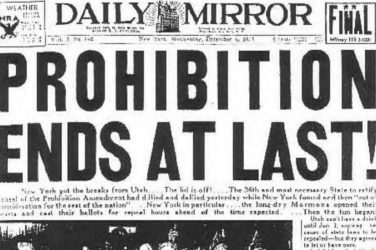
The greatest gift that the drug war gave the US government, besides infinite funding from asset forfeiture, is that it can be used to frame basically any systemic problem as a matter of individual choice. The HIV epidemic doesn’t exist because drugs make people impulsive. It exists because our health care system is homophobic and our legal system is structured to keep certain groups of people—Black people, trans women, drug users, undocumented immigrants—in poverty.
One of the specific research efforts that Volkow highlights is focused on “overlapping biological mechanisms” related to HIV and drug use, basically to show that they damage the brain in similar ways.
“This work is revealing potential targets for new therapies that could simultaneously address addiction and HIV-related brain complications,” Volkow continues. “HIV and drugs interact within specific populations of neurons in ways that can worsen cognitive impairment, reinforce addiction-related circuitry, and complicate treatment and long-term health outcomes.”
HIV-associated dementia has been almost completely resolved with modern antiretroviral therapy (ART) medications, for those who have access to them. Mild neurocognitive impairment from HIV is more common, but that’s not specific to people who use drugs. If we steer the narrative into a sort of brain disease model of HIV, the message we’re sending is that people who experience these symptoms probably use drugs, and thus have only themselves to blame. These will inevitably be the people who are already the most disenfranchised from care; Black trans women in southern states that haven’t expanded Medicaid, for example.
The other research effort Volkow highlights is focused on treatment for both HIV and substance use disorder within the criminal-legal system.
“People involved in the criminal justice system experience high rates of SUD and elevated risk for HIV, yet they often face fragmented care, particularly during transitions such as community reentry—a period associated with heightened vulnerability and disruptions in continuity of care.”
The entirety of someone’s incarceration is a period of heightened vulnerability and disruptions in continuity of care, but if we’re deprioritizing harm reduction research for the free world we probably won’t be introducing the idea into prisons.
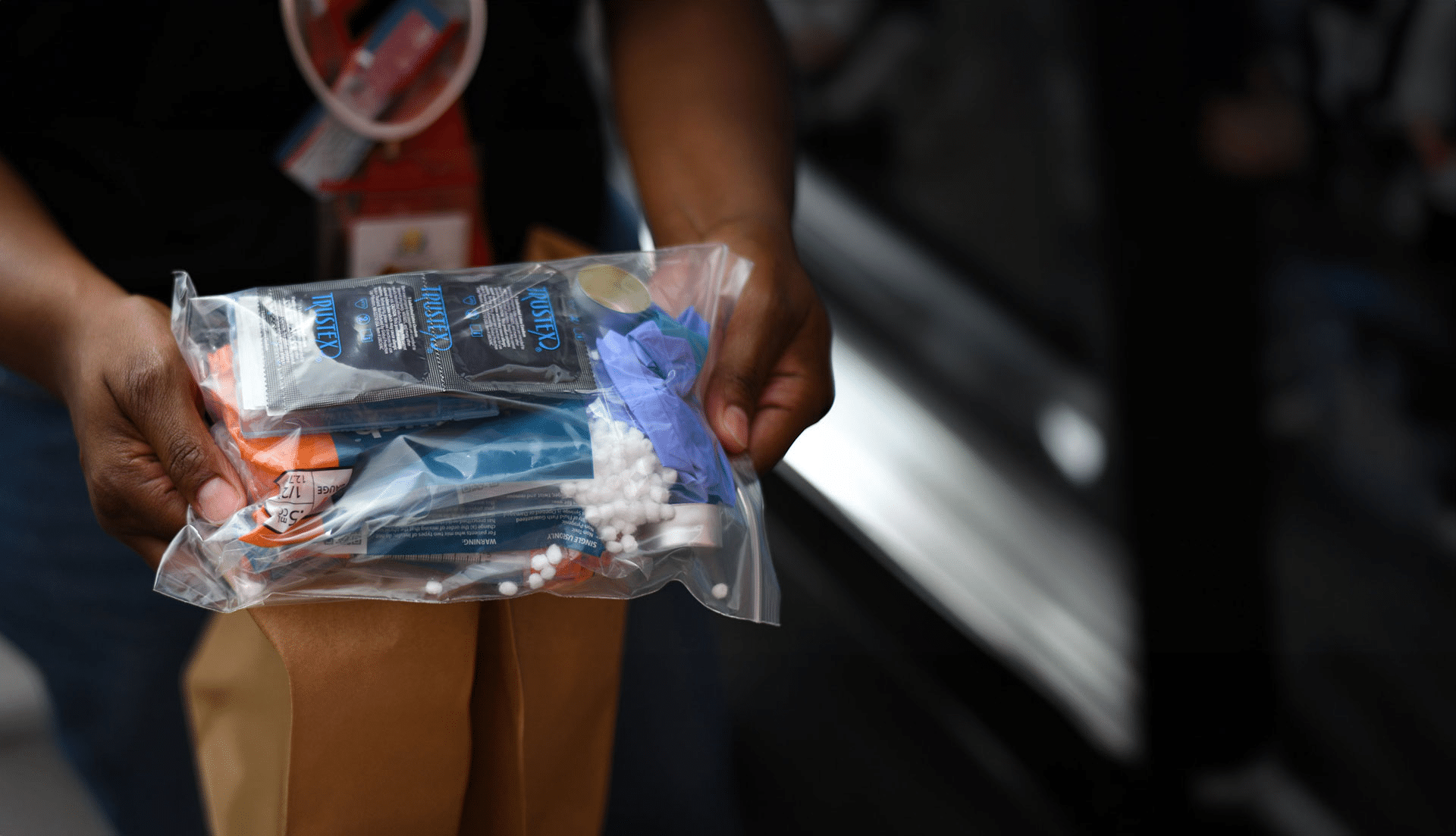
Image via County of Los Angeles Public Health