

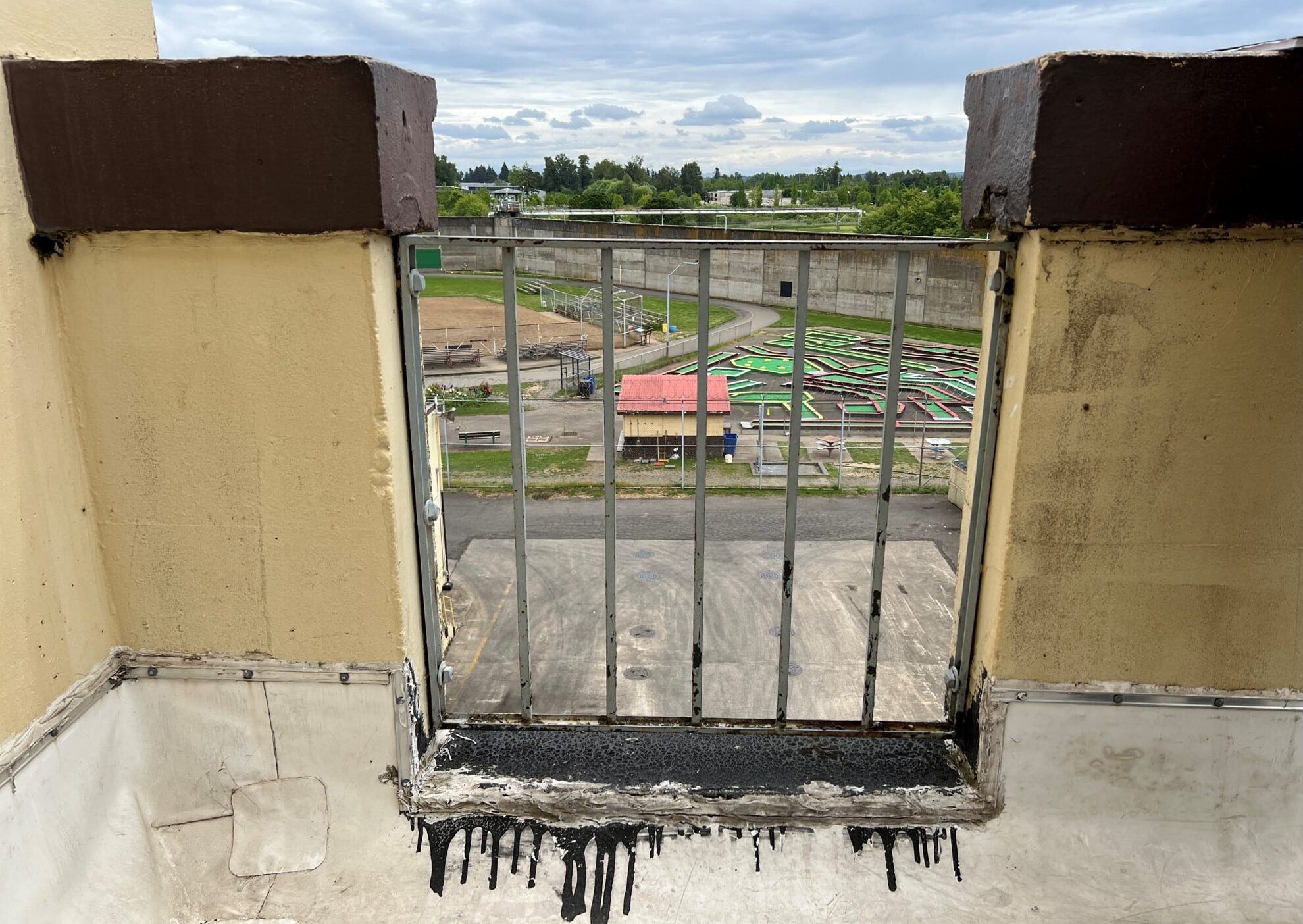
Aliza Kaplan spends most Wednesday nights inside Oregon State Penitentiary, the state’s only maximum-security institution. Kaplan, a law professor and the director of the Criminal Justice Reform Clinic at Lewis & Clark Law School, sees OSP as a monument to how far we’ve shifted toward mass incarceration since the facility opened in Salem in 1866.
“OSP was built so long ago that it was not built for the prison population we have now,” she told Filter. “No one, back when OSP was constructed, could have envisioned that we would double our incarceration rate.”
In 1994, Oregon voters approved a dramatic expansion of mandatory minimum sentencing with Ballot Measure 11. Over the next two decades the Oregon Department of Corrections population grew from around 6,700 people to more than 14,000. Since its peak in 2013 the population has decreased to around 12,000. Kaplan said this still puts enormous strain on the entire system but especially on OSP, which is home to about one-third of the nearly 1,000 ODOC prisoners serving life sentences. Oregon is also among the 17 states that have effectively abolished parole. ODOC data show that more than 1,300 people in ODOC custody are 61 or older.
Though most of the facility’s housing units were built in the 1950s, ODOC has acknowledged that “Oregon State Penitentiary is well beyond its useful life and doesn’t support the level of care needed” for the aging population, estimating a cost of $200 million to bring the facility into compliance with the Americans with Disabilities Act—a figure that “will continue to grow exponentially.” A $3 million feasibility study is underway to begin designs for construction of a centralized health care facility as well as a new facility to replace OSP.
Shannon Wight, executive director of Portland based Partnership for Safety and Justice, is disappointed that the plan to build new prisons is moving forward, when those funds would have been better spent on re-entry support and culturally specific services. She was part of the movement that changed the trajectory of the ODOC population with sentencing reform legislation in 2013, when Oregon was instead preparing to open another prison. In 2017, advocates again held off plans to open a new prisons, this time for the women’s system. Between 2000 and 2007 ODOC opened four new facilities, but has not opened any since then.
Wight was struck by how ODOC framed the feasibility study not as a matter of public safety or the best use of taxpayer dollars, but simply as a study to find the best plot of land for new construction.
“It felt so much like the cart before the horse,” she told Filter.
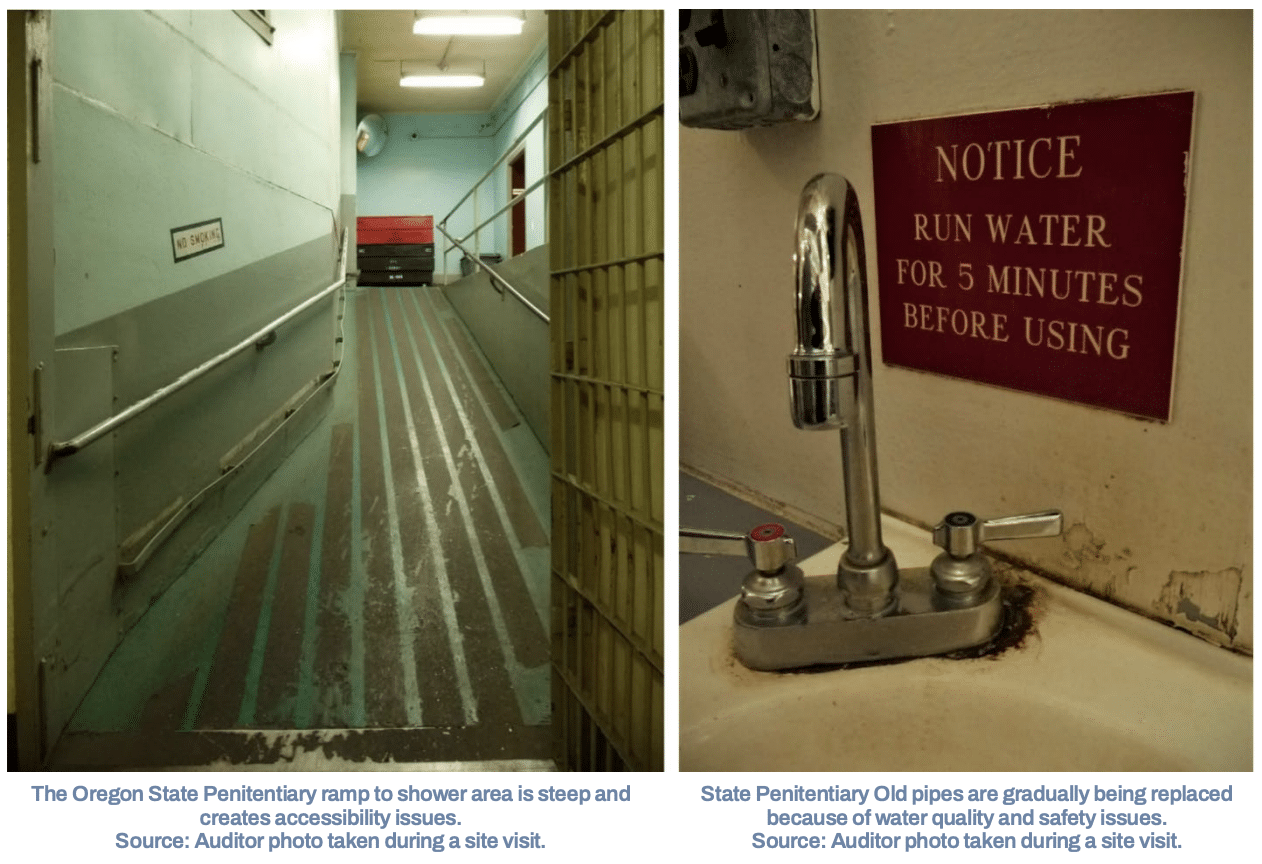
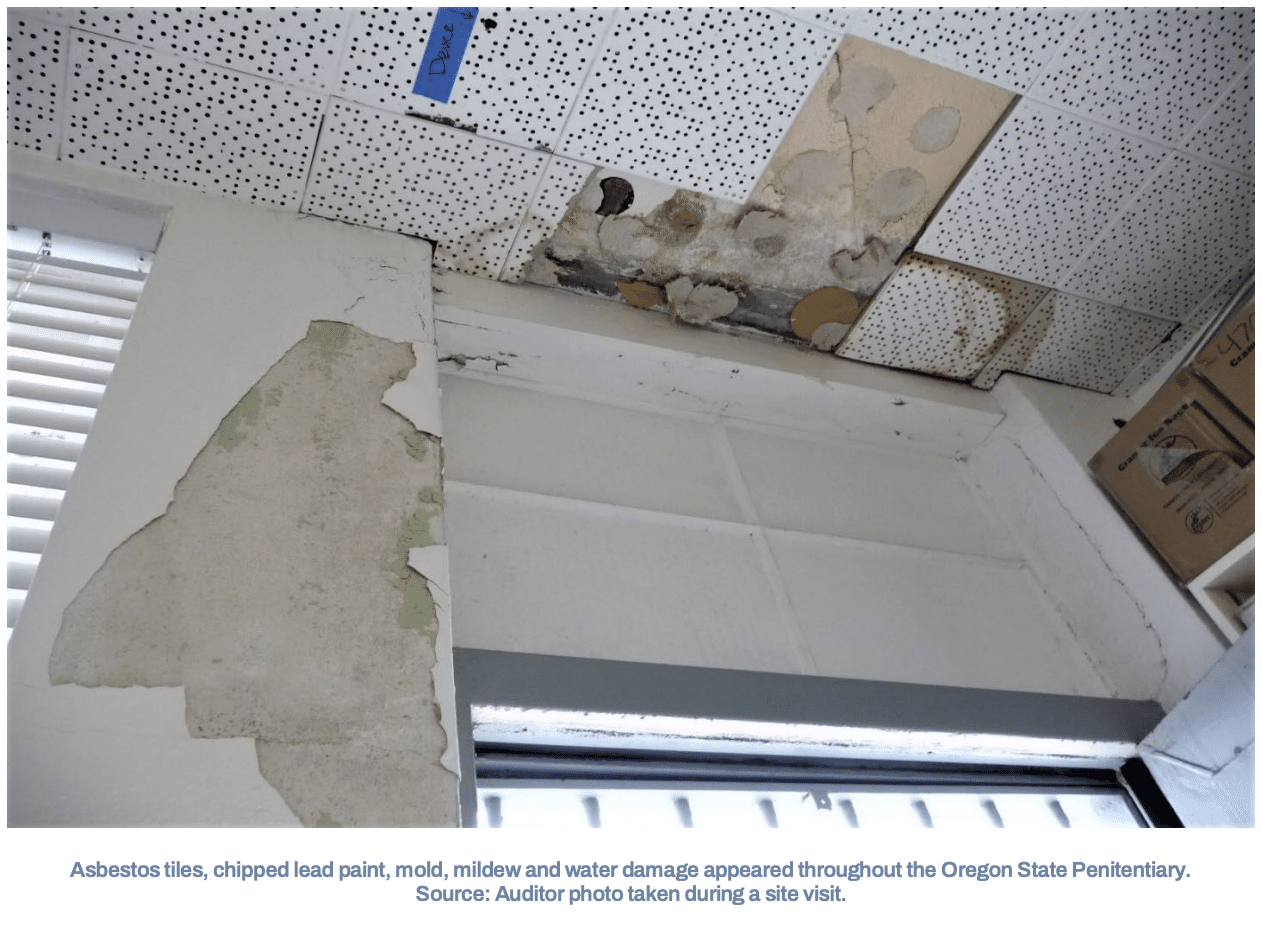
In an Oregon Secretary of State audit released in late July, the proposed centralized health care facility is referred to explicitly as a “centralized geriatric medical facility.” That audit revealed an ODOC maintenance backlog of nearly $861 million, noting that OSP in particular “continues to pose serious safety, health, and accessibility risks to adults in custody” due to “regular emergency failures, including sewer line breaks, boiler outages, and inaccessible critical services.” It recommended that the department “develop and implement a plan” for emptying “unsafe facilities, such as the Oregon State Penitentiary.” The audit references the feasibility study, though without explicitly linking it to the recommendations.
“We’re dealing with the infrastructure issue,” ODOC Communication Manager & Legislative Director Harvey Mathews told Filter.
He said that the department doesn’t want to “expand the carceral footprint or expand on the number of beds,” but is under-resourced. ODOC originally requested $5 million for the feasibility study, which Mathews considers a modest ask.
“They should have about $70-$80 million [in] this first phase of stakeholder outreach and architectural designs and site studies,” he said, explaining that that would be about 10 percent of the estimated cost to replace just OSP, not including the separate health care facility. “But we’re doing this on a shoestring budget for now.”
Wanda Bertram of Prison Policy Initiative has studied the various ways states across the nation pitch new prison construction. She said that even when it’s not a mega-prison that’s explicitly intended to increase bedspace, opening any new facility without examining the sentencing laws that created this strain seems like a very costly, short-sighted and irresponsible approach.
“The criminal-legal system has shown it is completely capable of filling all of the prison space that’s available,” Bertram told Filter. “The very circumstances that apparently caused [ODOC] to want to build a new prison—the aging prison population—still exist.”
Kaplan is participating in an OSP workshop teaching incarcerated peer mentors how to work with prisoners who have Alzheimer’s or dementia, since that portion of the population is increasing both at OSP and across the state. She doesn’t see the slow and costly process of new construction as the right solution. She said the situation cries out for at least an exploration of reforms that would release people with advanced medical needs, rather than spending hundreds of millions of dollars on a geriatric-focused facility. Between that facility and the OSP replacement, the total cost would likely be more than $1 billion.
“There’s people now who can’t walk, who can’t see, who have dementia,” she said. “It seems to me that there might be a better approach.”
Despite the common misconception that prisons are meant to inflict punishment, being in prison is in fact the punishment in and of itself. But Kaplan said this isn’t meant to leave people with Alzheimer’s and dementia “suffering into their old age”; that goes beyond the pale of state-sanctioned punishment.
For her, this is what the feasibility study and plans for new construction don’t address.
“We have an aging prison population that needs attention right now.”
Top image (cropped) via Oregon Department of Corrections. Inset images (cropped) via Oregon Secretary of State.