
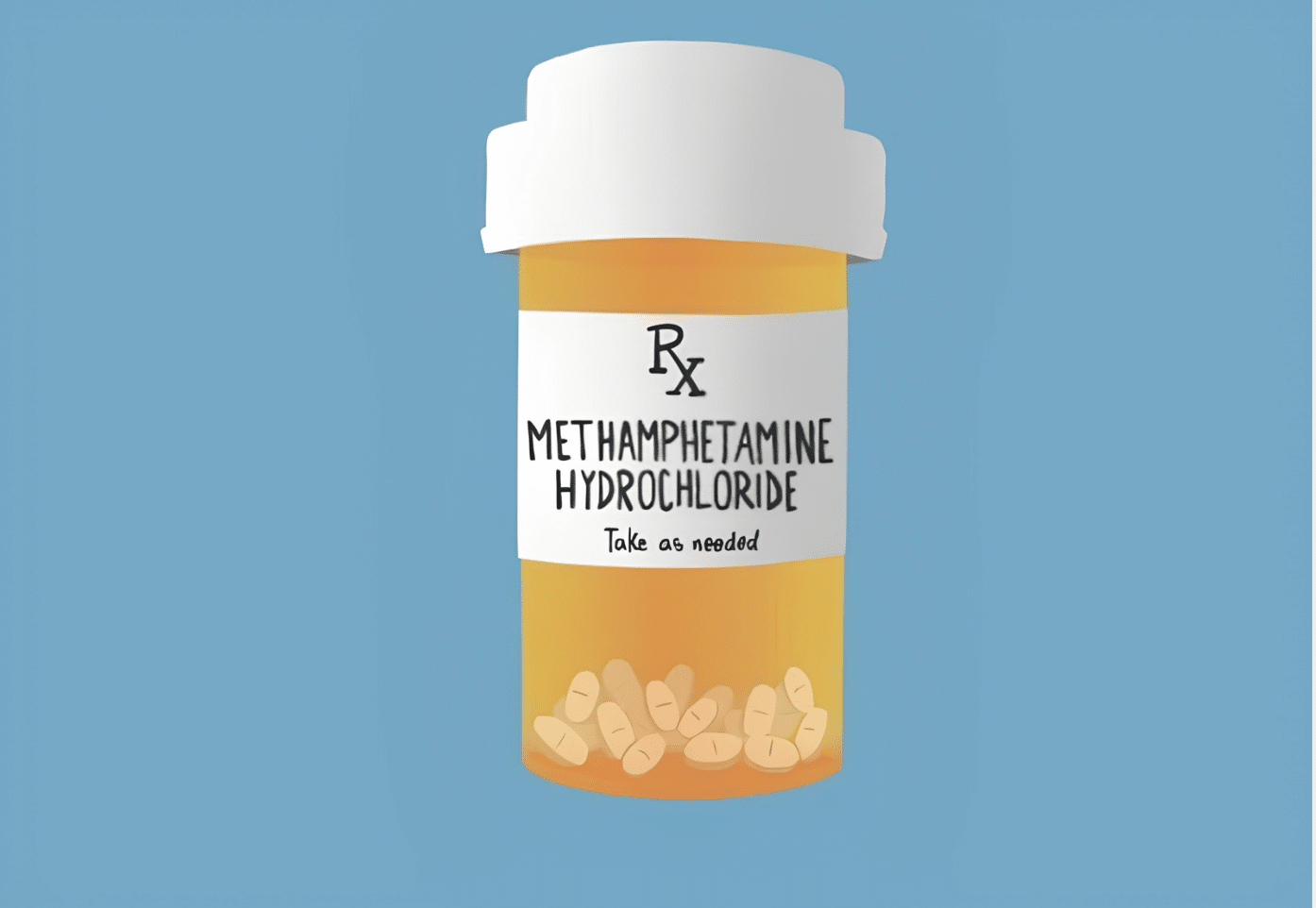
Somewhere between Sam Quinones columns and demolitions of lower-cost housing units, methamphetamine took on the public image of something actually evil. Almost in a supernatural way.
Despite the narrative of a meth overdose crisis, on some level the public understands that people using fentanyl are at risk in a way that people using just meth are not, because it’s not quite okay to openly demonize the victims of a mass death situation. But if you want to openly demonize meth users, that’s okay. And yet, if we take a closer look at meth in the context of the larger unregulated drug supply, we can see that public opinion has gone a little off course.
Most meth overdose isn’t physically harmful; occasionally someone might have a seizure, but it won’t hurt them. The supply is consistent. The supply is pure. The global supply chain is decentralized.
Meth has a withdrawal process, kind of, but nothing gastrointestinal. It’s shelf-stable dry or in liquid for months, probably years. It’s rural but also urban. It’s health care amid an Adderall shortage. It’s working class. It’s gay. It’s trans. It’s pretty. It’s invisible. It’s cheap.
Like it or not, meth is the people’s drug. It’s there for the people who need to stay awake when it’s not safe to sleep, or when their jobs won’t allow them to sleep. It’s there when people can’t afford food. It’s there for the people who can’t access antidepressants. It’s there to facilitate sex work. It’s there to give people the energy to carry their stuff around. It’s there to let people feel alive—or numb, depending—even in the most miserable of circumstances where they’re supposed to feel only bad things.
And the state hates that. You go and make all these laws to ban certain people from every place they could possibly try to get a job, get a home, go to sleep, go to the bathroom, you cut every social support out from under them and chase them out of anywhere they try to rest, but no matter what you do to get them to finally just lay down and die, meth picks them up and keeps them going.
I have some bias. I used meth for three or four years, every day, and while it made a lot of things in my life harder I’m not sure how else I could have managed the things it made easier. Plus when meth causes problems for people I don’t interpret that as the meth being, like, sinister, it’s just a function of whatever else people have going on in their lives at that time. I also never would have met my husband if meth hadn’t kept him alive for the decade or so when the rest of the world was trying to kill him, so even though it’s not part of my life anymore (or his) I default to a warm opinion of anyone who is using it.
People look down on meth like it’s the drug you do when you’ve given up on life, which bugs me because I do not see that at all. I always saw it as something people use to participate. And in pretty much any context, but especially with anyone who doesn’t have housing, it always seems like meth is what people use when it’s hard to keep going, but they want to.
Opioid users hear all day long about how the supply is dangerous because it’s adulterated. Meth users are punished because the supply is pure. Even though consistent purity and potency are traditionally good qualities for a drug supply to have, from a public-health perspective.
“[M]ethamphetamine is less physically dangerous or addictive than heroin or cocaine, yet methamphetamine is now punished more severely than any other drug,” the National Association of Criminal Defense Lawyers wrote to the United States Sentencing Commission in 2025, referring to federal meth sentencing being determined by purity rather than by weight the way it is for other drugs. “Not only do the current methamphetamine guidelines lack a legislative basis, they also lack any empirical justification … sentences now receive massive arbitrary enhancement based entirely on whether the methamphetamine received laboratory testing [to establish purity], something that is obviously beyond the control, and unrelated to the culpability, of any defendant.”
And then there’s police violence, which benefits from the same bias driving the narrative of a meth overdose crisis—once you say someone used meth, nobody questions why they died. They were unarmed and police shot them 10 times? Well, they were on meth. It’s so potent these days.
“We started to see a pattern of kind of irrational, aggressive behavior on the part of the people that were being shot or shot at,” a special prosecutor in a New Mexico told Colorado Public Radio of rising meth use in 2020, describing the case above. “It didn’t make any sense to us.”
Okay.
In 2024, a Black man died after 40 minutes naked in a Wyoming county jail restraint chair, with two straps across his chest in addition to the restraints on his limbs, saying he couldn’t breathe. The forensic pathologist found no evidence of restraint-related death, but instead cited “methamphetamine overdose and the cardiac effects of excited delirium.” Remember excited delirium? The racist and unscientific diagnosis has been rejected by the medical establishment as a valid cause of death, because it was just how cops covered up excessive force. But this is “excited delirium due to methamphetamine overdose.” So it’s different.
Over the past decade the US harm reduction movement has been defined by the overdose crisis, and so services and policies have been designed for people who use opioids, then retrofitted for people who use stimulants.
Which is understandable; opioids are straightforward. We have methadone and buprenorphine, we have naloxone, we have the policy goal of overdose prevention centers and eventually safer supply. We have a clearly defined mechanism of overdose death, and we have a target demographic that—broadly speaking—uses fentanyl in similar settings and for similar reasons.
Stimulants are less straightforward. They interact with a wider range of systems in the brain and body, they produce a wider range of physical and psychological effects, and meth specifically appears in extremely different contexts in different people’s lives—chemsex, sex work, shift work, street homelessness, studying. Daily daytime use, monthly nighttime bingeing. And so on. It’s more difficult to categorize meth users and pin down what common services they need. If they need housing there’s only so much that harm reduction groups can do, and if they need a harm reduction resource other than sterile syringes and fentanyl test strips, whatever it is probably hasn’t been legalized yet anyway.
We’ve organized around access barriers to methadone and buprenorphine for opioid use disorder. But for stimulant use disorder this would require a policy leap more in the direction of safer supply, and so rather than organizing around stimulant agonist medications we just observe that we don’t have any. Instead we have contingency management, the practice of telling meth users that if they do a good job peeing in a cup they will be eligible for Walmart gift cards. And, now that they have something to look forward to, they don’t have to get their dopamine rush from stimulants anymore.
The movement hasn’t known what it’s supposed to offer meth users because it approaches the problem through a fentanyl lens, thinking in terms of meth’s physical effects and risks and harms. When it shouldn’t really be looking at meth, but at the people who use it. Queer communities, Indigenous communities, sex workers, people living with HIV, people living outside, people cycling through the criminal-legal system. The harms that the movement can reduce for meth users come primarily from being overpoliced. And from really bad public relations.
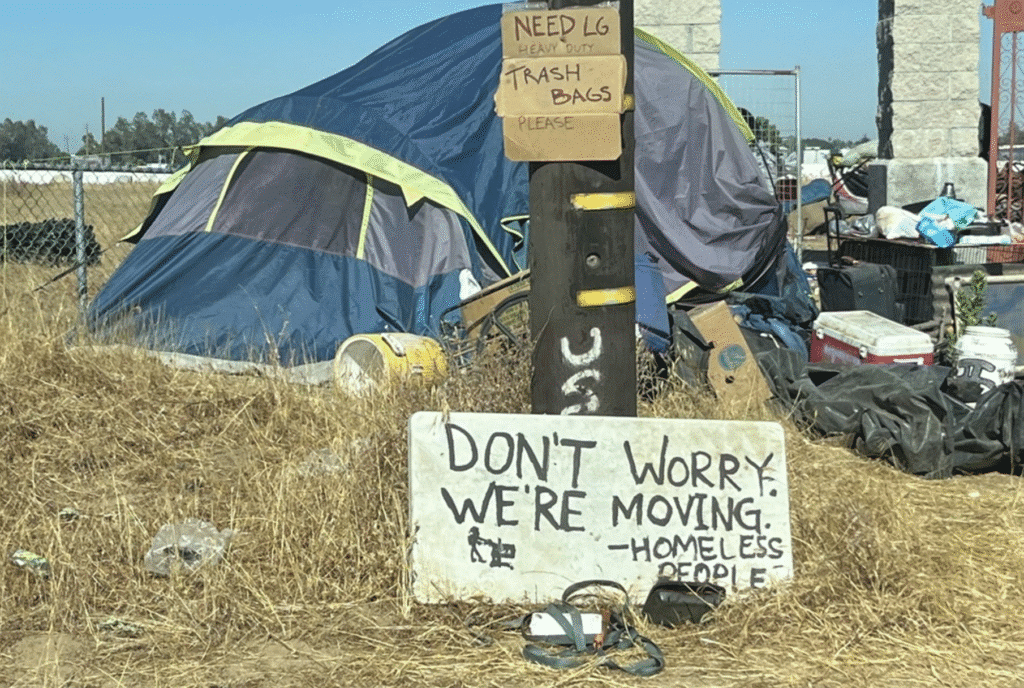
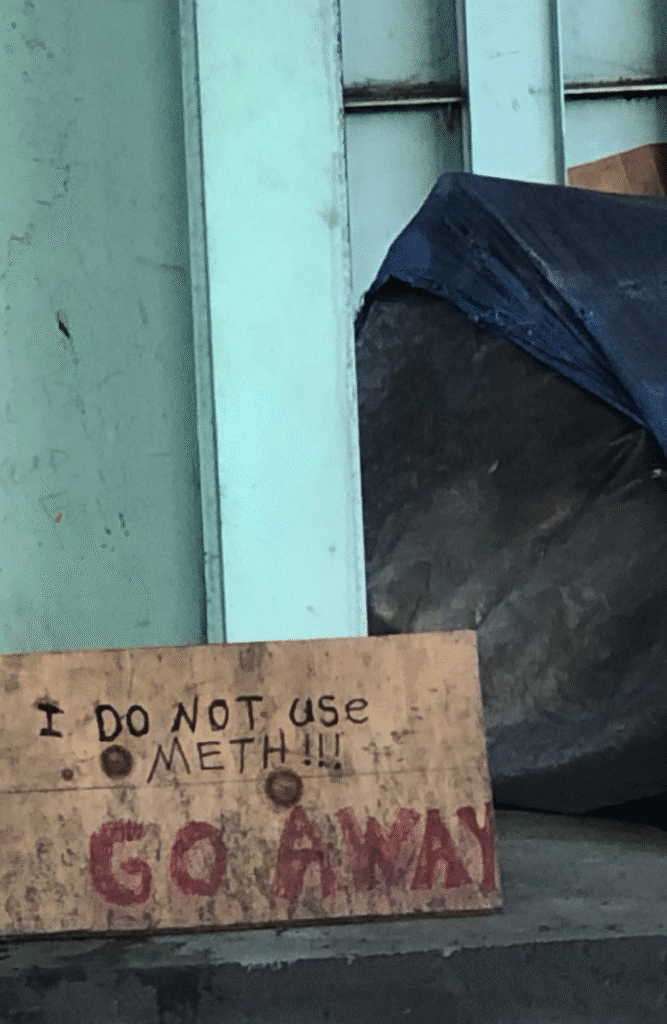
Artwork by Brooke Alexandria Paine. First inset image via County of Fresno. Second inset image (cropped) via Reentry Council of the City & County of San Francisco.