
On October 4, President Donald Trump addressed the United States Navy, praising its role in blowing up yet another Caribbean boat, killing all four people on board. The administration is following new precedent, in that we know nothing of their identities and are expected to just believe “Secretary of War” Pete Hegseth’s claim that they were “narco-terrorists” ferrying drugs.
A total of 21 people have now been killed by a series of at least four US strikes since September 2. The first purportedly targeted members of the Venezuelan gang Tren de Aragua, while the latest was carried out near the Venezuelan coast (though Colombian President Gustavo Petro has said the boat was carrying Colombian citizens). Venezuela is not a major source of drugs arriving in the US; most cocaine originates in Colombia and passes through Mexico.
Nevertheless, Trump boasted of the military’s latest maritime triumph. “In recent weeks, the Navy has supported our mission to blow the cartel terrorists the hell out of the water … we did another one last night,” he told assembled Navy personnel. But he’s worried about running out of victims.
“They’re not coming in by sea any more, so now we’ll have to start looking about the land.”
“Now we just can’t find any,” he said. “They’re not coming in by sea any more, so now we’ll have to start looking about the land because they’ll be forced to go by land.” The president’s comments have been interpreted as signaling that the next phase in the fight against “narco-terrorists” may involve military action on Venezuelan soil.
The administration has ramped up rhetoric against President Nicolás Maduro, of Venezuela’s ruling United Socialist Party. US Secretary of State Marco Rubio recently called Maduro the head of “a terrorist organization and organized crime organization that have taken over a country.” As the New York Times reported, the Pentagon now has 6,500 troops in the region, a major military buildup.
“An airstrike in a sovereign nation’s territory is an extreme escalation,” John Chappell, US advocacy and legal advisor at the Center for Civilians in Conflict, told Filter. “It’ll cause much great harm, increase tensions in the region and result in a far worse military confrontation. Lives lost, many civilians harmed in the process.”
Chappell predicts that the Trump administration will likely use “self-defense” as a legal justification, having laid the groundwork, with the sea strikes, by claiming that drug trafficking is a military attack on the United States.
“The administration has been constructing these legal theories to support these killings. They don’t hold water.”
The legal reasoning leaves much to be desired. “The administration has been constructing these legal theories to support these killings,” Chappell said. “They don’t hold water, in either US or international law.” The theories are rooted in flimsy legal precedent established during the “War on Terror,” he observed, except now, they’re applied to “the new, vaguely defined, made-up term ‘narcoterrorism.’”
“Even if these are drug traffickers, you don’t fight drug trafficking by raining death from above to anyone the president deems to be a drug trafficker,” Chappell said. “The use of force, under US and international law, is supposed to only happen when necessary, for example in an armed conflict. There is no armed conflict here.”
Speaking earlier in the week, Chappell said he hoped that a Senate resolution to “direct the removal of United States Armed Forces from hostilities that have not been authorized by Congress”—S.J. Res. 8, with co-sponsors including Rand Paul (R-KY)—would get enough votes to at least send a message to the administration. On October 8, Senate Republicans narrowly blocked the measure from moving forward, though it did receive 48 votes.
In any case, Trump appears indifferent to legal constraints and eager to ramp up military operations in the region. “There’s no drugs coming into the water,” he told reporters after his appearance at the Naval academy. “And we’ll look at what phase two is.”
“It’s distressing, to say the least,” Sanho Tree, a fellow at the Institute for Policy Studies think tank and director of its Drug Policy Project, told Filter. “Mexico, we thought that would be the place he’d hit first.” There have been past Republican threats to invade that country to go after drug trafficking organizations.
Tree spent the last year in a violent drug cartel. A pretend one. He and other experts, including former White House officials and members of the intelligence community, gamed out different outcomes of a US hit on Mexican trafficking groups, and he’d been put on “team cartel.”
“I would say we won,” Tree said. “Cartels don’t play by the rules, that’s the whole point of being a cartel.” There are many violent ways such actors can retaliate against direct attacks, he pointed out.
“Venezuela sits atop one of the largest oil reserves in the world. They want regime change.”
As for potential land operations in Venezuela, he doesn’t see the goal as difficult to suss out. For one thing, it’s unlikely that Tren de Aragua would be the real target. “They’re minor threats, bit players, has-beens,” he said. “But suddenly we’re supposed to believe that they’re Al-Qaeda?”
The true target, he believes, would be a precious commodity that’s motivated US military misadventures around the globe.
“Venezuela sits atop one of the largest oil reserves in the world,” Tree said. “They want regime change.”
A land incursion would be a disaster, he believes. “These amateurs should be disabused of the notion that they can simply do regime change, put in a puppet and take the oil.”
Tree observed that the topography of Venezuela—jungles and mountains—is not what you’d want when you’re fighting a counterinsurgency. Technological change, such as access to cheap drones, would also make it easier than ever to blow up oil pipelines, say, a tactic used by FARC in Colombia.
Tree is no fan of Maduro but thinks Venezuelans should decide their own destiny. “There’s a rule articulated by Colin Powell, which he himself did not follow, called ‘The Pottery Barn rule.’ It’s, ‘You break it, you own it.’”
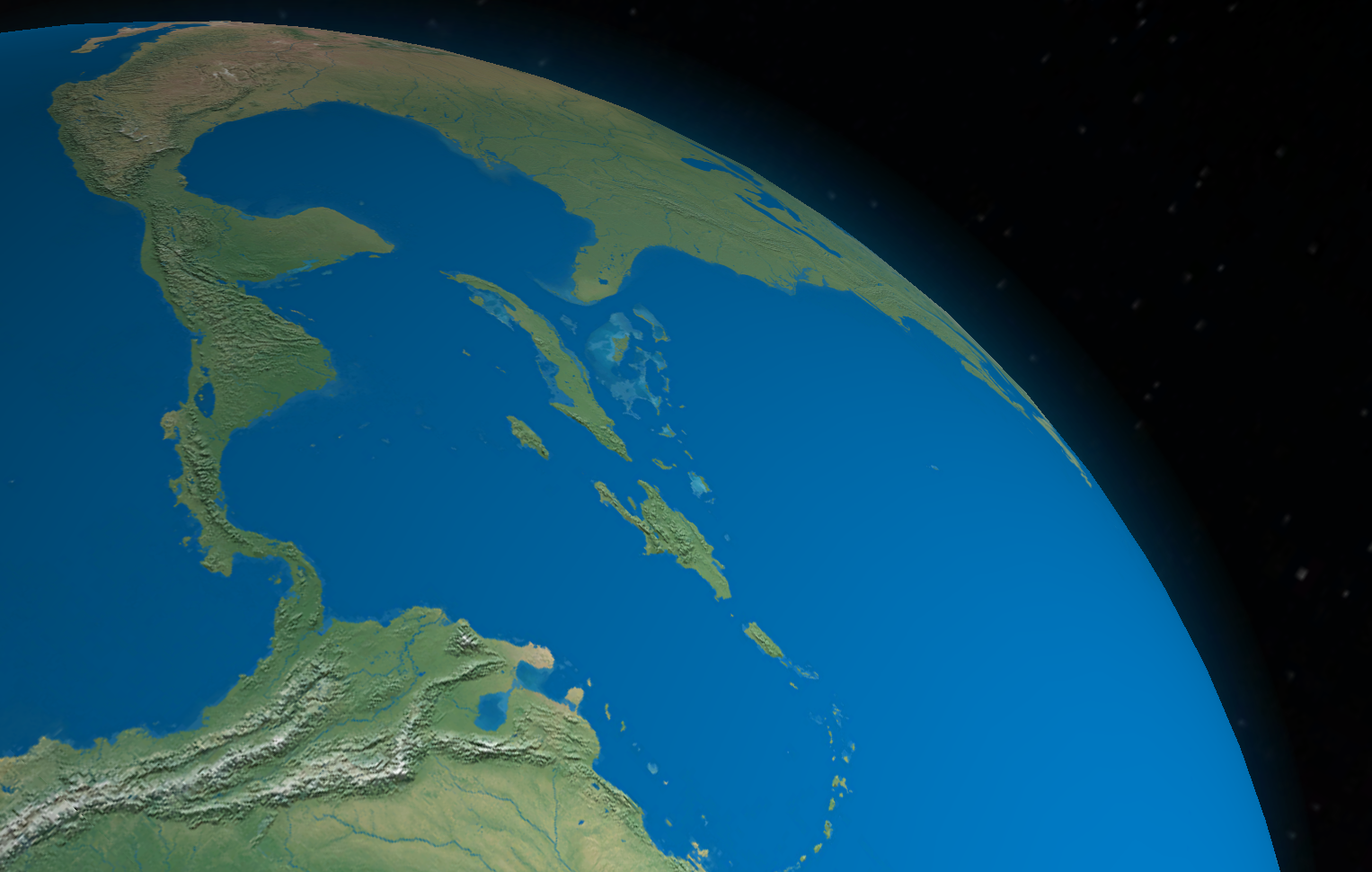
Image by Przemek Pietrak via Wikimedia Commons/Creative Commons 3.0