
South Central Correctional Facility is one of six Tennessee Department of Correction (TDOC) prisons with a supportive living unit (SLU) for people diagnosed with mental or behavioral health conditions. These units are supposed to be in restricted areas, physically separating those prisoners from the general population. But that’s not the case at South Central, which unlike the other five SLU prisons is privately operated by CoreCivic.
“If we house severe and chronic mentally ill inmates within a secure housing unit,” TDOC states in a 2023 program inventory describing SLU, “then we will ensure this population receives necessary clinical services in a safe environment, minimizing mental health decompensation and protecting this population from exploitation and harm.”
In December 2024, the 128 residents of South Central’s SLU were told that they were being temporarily moved out of their building and into a general population unit, while construction crews changed out the doors and installed a new locking system. After they moved in January 2025, they learned their new housing was permanent.
SLU residents were distraught to be moved to a general population building, but afraid to write grievances. Almost all of them have been classified as mental health Level III, which means they can only be housed in the SLU. But Level II prisoners, who are considered more functional and less vulnerable, can be housed in either the SLU or in general population. They’re scared to death that if they rock the boat, they could be reclassified as Level II and kicked out of the unit entirely, and left to fend for themselves in general population. They’ve seen it happen before.
Stephen Mayes, 53, was willing to take the risk. His release date is in 2026, so he’s in a less vulnerable position than others who might be facing retaliation for much longer. Grievances can’t be filed collectively, and grievances filed by multiple people about the same issue would be consolidated anyway. So it made sense for everyone to get behind a single grievance.
“I almost died while on suicide watch, because of negligent staff,” Mayes told Filter. “I don’t want others to suffer this daily inhumane treatment. Change has to start somewhere. If not me, then who?”
One resident said he’s worried about hanging onto his sobriety. Several have been placed on suicide watch.
On December 17, 2024, Mayes filed a grievance against the warden, describing how, per TDOC policy, Level III prisoners can’t be mixed with general population because they’re especially vulnerable to harm. The grievance moved through the first two levels of the process as expected. If a resolution still hasn’t been reached and the grievance is brought to the third and final level, policy requires that administration respond within 25 days. Mayes and the other 127 SLU residents have been waiting for that response since January.
Everyone at South Central reached by Filter agrees that this is unheard of. Grievance timelines are audited, so usually great care is taken to make sure that responses are issued on time. A facility can very easily fail an audit otherwise. I worked as a grievance clerk for five years, and in that time I saw the occasional response that was late by a couple of days, but never more than that.
Mayes has spoken to the grievance chairperson, and been told they’ve sent multiple emails about the situation, but that’s all they can do. He’s written letters to the people in charge of state-wide TDOC mental health treatment, explaining how dangerous it is for Level III prisoners to be housed like this, but received no response.
Grievances are the first step toward filing a lawsuit, though it rarely comes to that. But you can’t file a lawsuit until the entire grievance process has been completed, and administration has denied your final appeal. So even though more than 100 people are being improperly housed, in violation of policy, Mayes can’t escalate the issue to the courts because the grievance hasn’t actually been shot down. CoreCivic, TDOC and Warden Grady Perry did not respond to Filter’s request for comment.
When everyone was first moved, administration had promised that a sergeant would be posted at the gate of the new unit to regulate movement, so that only residents wearing arm bands would be allowed inside. That “gate officer” lasted a month. Since then, gang-affiliated prisoners have been entering the unit at will.
“We used to have staff that really cared and tried to help,” one SLU resident told Filter. “They all left because they couldn’t stand the system. We are just sitting ducks now.”
So many people go to solitary confinement these days that there isn’t anywhere to put them anymore.
One reason the SLU is supposed to be segregated from general population is that many mental health prisoners are easy targets to rob and victimize. Substance use disorder is also common, so gang-affiliated prisoners come into the unit with drugs to sell, too.
The SLU normally has access to mental health programming like yoga, music therapy and group counseling, and many residents had come to rely on those as part of their routine. After the move, those classes were canceled; the new building doesn’t have space for them. One resident told Filter he’s worried about hanging onto his sobriety. Several have been placed on suicide watch.
“We were thriving before we moved,” another SLU resident remarked. “Now we are broken. Worse than I thought we could ever be.”
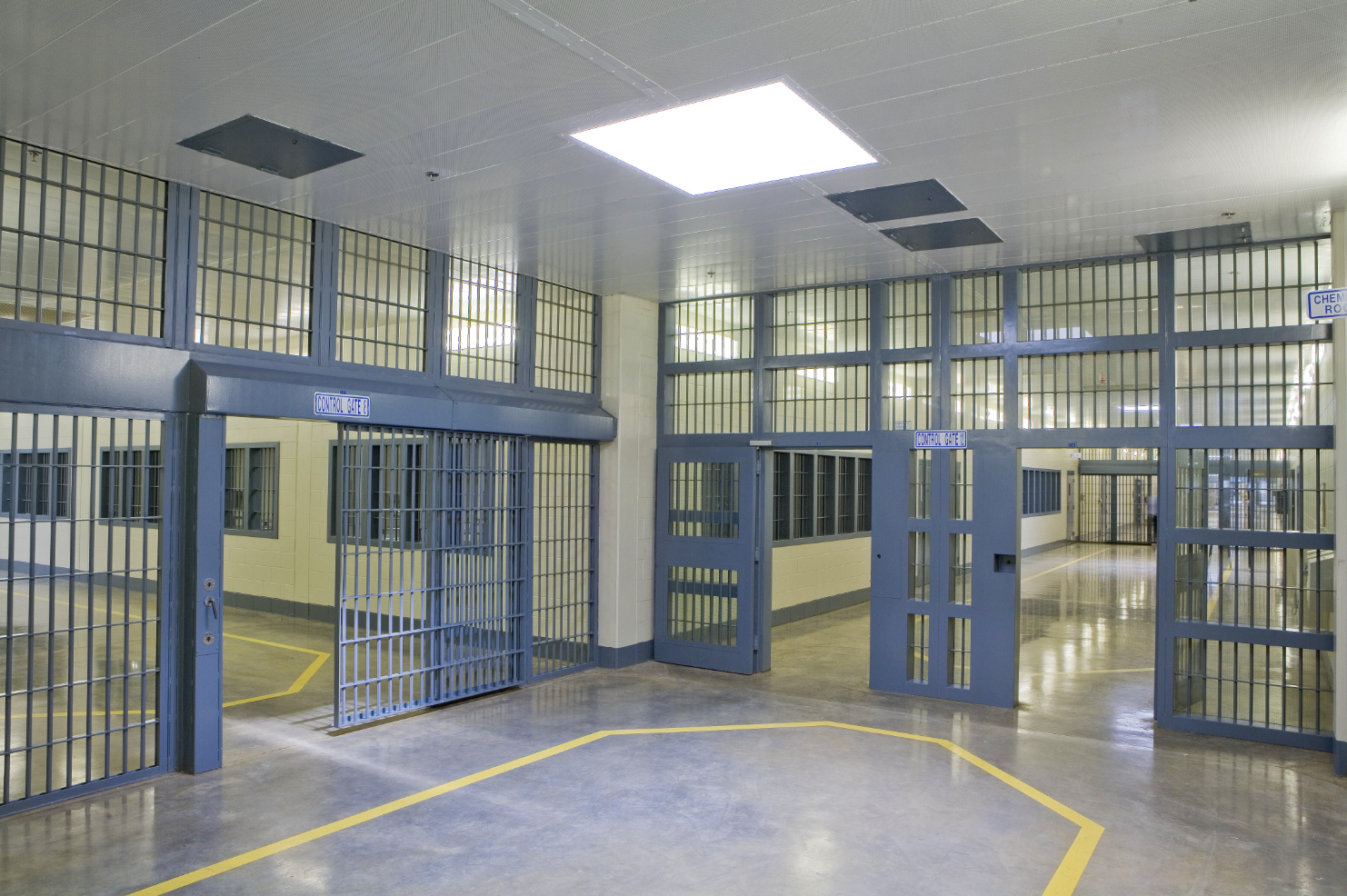
The entrance to the unit is a sally port with two gates about 20 feet apart—so once the first gate is closed behind you, you’re in the “holding pen” area until the second gate is opened. This way staff can screen each person and make sure they really live in that unit. But it takes two officers to do this. Right now there’s only one, and people can just push past them because the second gate isn’t utilized anymore. So a great deal of harm could be reduced by posting just one additional officer at the gate, the way it was for the first month or so after the move.
But beyond that, resolving the grievance would require more than a quick fix. So many people at South Central are in solitary confinement these days—in protective custody, or on suicide watch or being punished with administrative segregation—that there isn’t anywhere to put them anymore. All the secure housing is full. So the old SLU building is an extension of the segregation unit now.
Image via Arkansas Department of Corrections