

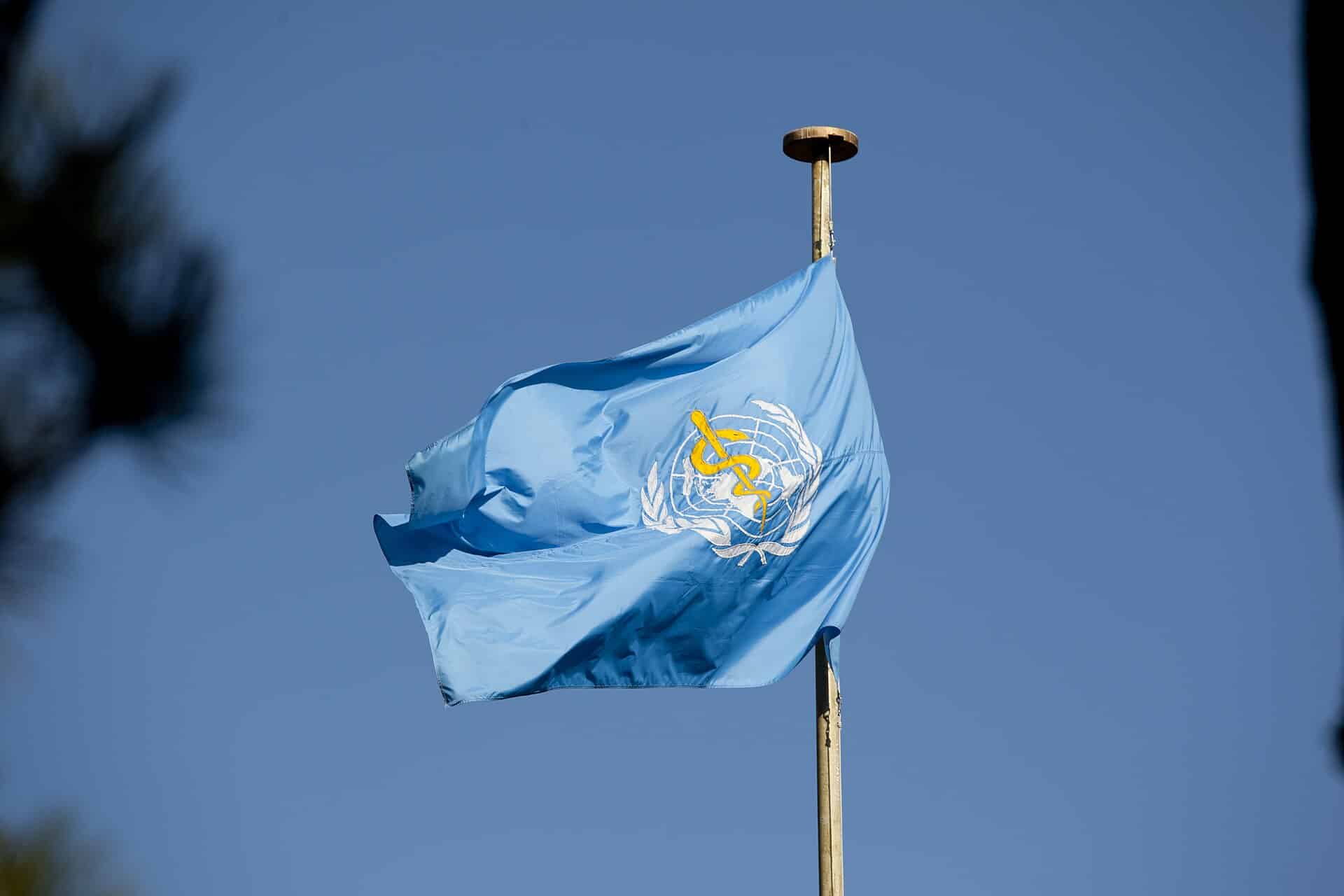
Three former World Health Organization directors say the goal of reaching a global smoking rate below 5 percent by 2040 is achievable—if safer nicotine products are fully embraced. Their words are a clear rebuke to the WHO’s anti-tobacco harm reduction stance.
The three ex-directors penned an analysis, titled “Smoke-free nicotine products can accelerate the end of the smoking era,” which was published in Nature Health in late April.
“Despite two decades of progress under the World Health Organisation (WHO) Framework Convention on Tobacco Control (FCTC), smoking remains responsible for more than seven million deaths each year,” it begins, “and declines in prevalence are slowing in many high-burden countries.”
Tobacco harm reduction must be integrated into the FCTC, it argues, to make the international 2040 goal “a realistic, measurable and equitable target.”
Robert Beaglehole, professor emeritus of public health at the University of Auckland, New Zealand, and a former director of the WHO’s Department of Chronic Diseases and Health Promotion, is one of the authors. The original objective of the global FCTC treaty, he explained, was to reduce tobacco-related harms using three strategies: addressing supply, demand and harm reduction. But of these, he said, harm reduction has been “neglected.”
“In some policy debates, tobacco control objectives are framed increasingly in terms of nicotine elimination.” Their conflation goes against “decades of evidence.”
“According to the WHO and the FCTC, the marketing of ‘harm reduced’ products by the tobacco industry undermines their theoretical potential to reduce harm,” Beaglehole told Filter. The policy focus on the products has therefore often been on companies “recruiting new markets, especially youth.”
“In some policy debates, tobacco control objectives are framed increasingly in terms of nicotine elimination rather than eliminating exposure to smoke, and potentially conflate nicotine use with the harms of smoking,” the analysis notes—a conflation that goes against “decades of evidence.”
Meanwhile, Beaglehole said, “Despite widespread endorsement of the FCTC, implementation of the key measures has been limited and smoking rates are declining only slowly.”
This, combined with an aging and growing world population, means the 2040 goal will not be reached unless there’s a radical overhaul of the current FCTC, the analysis suggests. The current model of increased taxation and demand-reduction measures only goes so far. But safer nicotine products offer a “historic opportunity” to finally end the epidemic of smoking-related deaths.
Countries that have adopted tobacco harm reduction policies demonstrate this. The analysis points to Japan, which has halved smoking by embracing heated tobacco products, and Sweden, which has a smoking rate below 5 percent because of snus and nicotine pouches.
Many public health institutions “believe WHO and follow its guidance.” Others have been captured by the same philanthropic actors.
New Zealand is a particular case in point, the authors note. Its adoption of FCTC measures saw smoking rates decline gradually. Only after 2018, when the country allowed broader access to vapes, was the country able to achieve one of the lowest smoking rates in the world at 6.8 percent.
Yet in 2025, New Zealand’s lifesaving progress was smeared with a “Dirty Ashtray” award from the WHO’s NGO allies during the 11th Conference of the Parties (COP11) to the FCTC. The award is meant to shame countries deemed to have implemented policies that are adverse to public health.
Beaglehole said it’s hard to pin down why public health institutions remain reluctant to integrate harm reduction into tobacco control strategies, but “many believe WHO and follow its guidance.” Others have been captured by the same philanthropic actors—like billionaire Michael Bloomberg—that heavily influence the WHO, he added.
Along with former WHO directors Ruth Bonita and Tikki Pang, Beaglehold calls in the Nature Health commentary for a “risk-proportionate regulatory framework.”
While combustible tobacco should be subject to restrictions and taxes reflecting its “harmful nature,” they write, “Smoke-free alternatives should be regulated to ensure product safety, restrict marketing to youth, minimize environmental harm and prevent uptake among non-smokers”—but, critically, “without undermining their capacity to displace smoking.”
Concerns about youth vaping should be seen in the context, Beaglehole said, of smoking rates being at an all-time low in countries such as the United States, Canada and New Zealand. This has happened, he said, “without any robust evidence of a ‘gateway’ effect; youth vaping rates are declining in many countries.”
Derek Yach told Filter that “sadly,” the 2040 goal was too ambitious and represents “magical thinking.”
Derek Yach was a fellow director at the WHO with the authors of the paper, and later the founding director of the Foundation for a Smoke-Free World. He called the publication of the Nature Health commentary “very significant,” though he does not share all of the authors’ optimism.
Yach told Filter that “sadly,” the 2040 goal was too ambitious and represents “magical thinking.”
China, India, Indonesia, Russia and the US, account for 50 percent of all people who smoke or use tobacco, Yach explained. Of those countries, only the US, “with some reluctance,” facilitates THR. The others either ban vapes and pouches or are in a “regulatory void,” with no sense of urgency or NGO advocacy to change this. Tobacco use is actually increasing in Indonesia and India, he added.
The authors look at countries like Sweden and New Zealand, Yach said, but, “There’s zero chance the countries above—or other large countries where male smoking rates are extremely high, like Jordan, Ukraine and Turkey—are going to take a serious look at Sweden or New Zealand.”
“They might look at Japan and [South] Korea, where smoking rates have been cut as heated tobacco took off,” he suggested, “or Pakistan, where what could be the start of a serious movement suggests increased pouch use is underway among previous toxic oral tobacco products users—or the United Kingdom, where vape use now exceeds smoking.”
“I am hopeful that in the end the evidence will prevail and the politics will come into line.”
The paper stresses that achieving the 2040 smoke-free goal relies on “combining established FCTC measures with wider access to regulated smoke-free nicotine alternatives.” However, FCTC leadership have so far shown no signs in flexibility.
What the WHO got right is some of the basics of its MPOWER measures: tobacco tax above inflation, banning cigarette advertising, supporting quit programs, and youth smoking prevention, Yach said. “All this makes sense and has had an impact, albeit a slow one, that has stalled.” However, the WHO’s refusal to embrace tobacco harm reduction despite the evidence, and to adopt regulations proportionate to the risks of different nicotine alternatives, has been a disaster for global public health.
Beaglehole remains sanguine. “As a public health physician, I am optimistic, despite the proceedings of COP11 last November,” he said. “I am hopeful that in the end the evidence will prevail and the politics will come into line. The new WHO director-general in 2027 may be more sympathetic to harm reduction; who knows?”
Photograph by United States Mission Geneva via Wikimedia Commons/Creative Commons 2.0