


The federal Supplemental Nutrition Assistance Program (SNAP) will not issue November benefits to the 42 million people who rely on it to buy food. The lapse in funding arrives at the same time as substantial changes to SNAP eligibility, which will affect groups that are particularly vulnerable to overdose and continue the Trump administration’s assault on people without stable housing.
SNAP benefits are 100-percent federally funded by the Food and Nutrition Service under the United States Department of Agriculture, which is currently not disbursing that funding due to the government shutdown that began October 1. The USDA could tap into contingency funding, but has not given any indication it will do so, and the reserve wouldn’t be enough to stop November benefits from being disrupted anyway.
SNAP costs about $8 billion a month. However, despite pervasive misconceptions about public benefits, SNAP participation has been shown to create jobs and significantly bolster the economy.
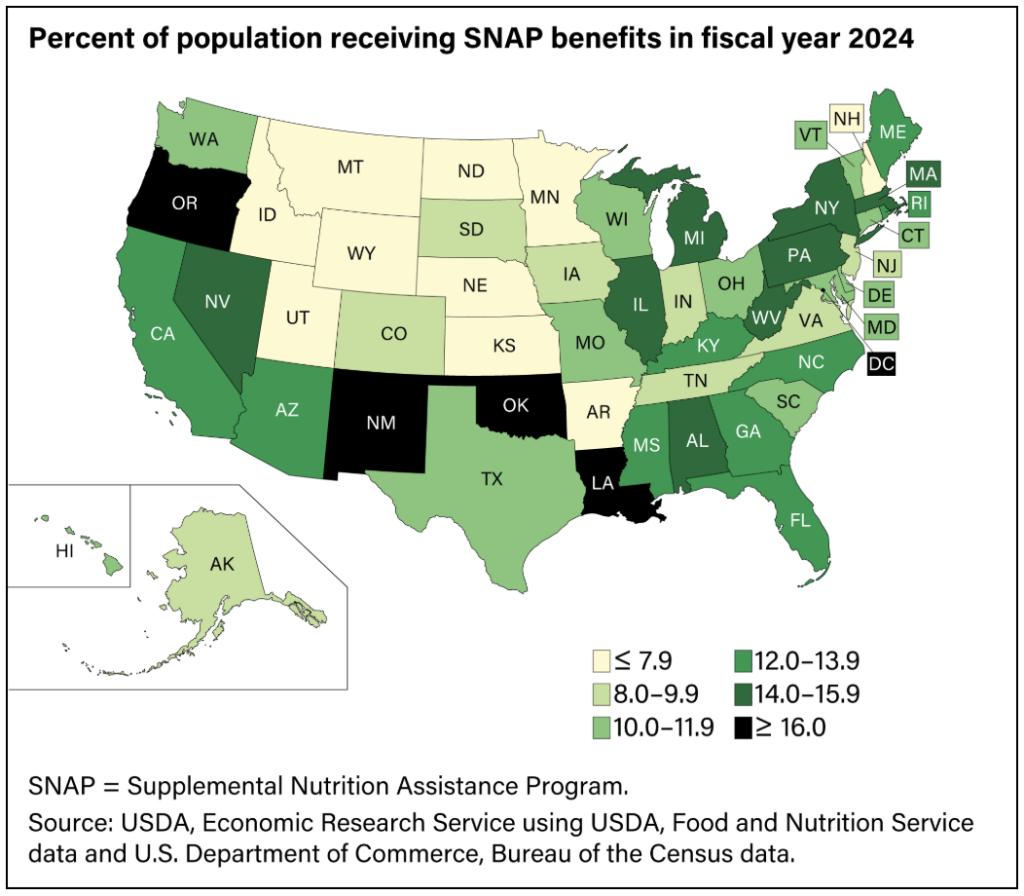
Nearly 42 million people—about 12 percent of the US population—use SNAP. The program provides people living under the poverty line a monthly allowance, based on their income and living situation, to buy basic groceries. For example, a single adult making $20,000 a year could receive a maximum of $298 per month in SNAP benefits. A family of four living on $41,000 a year could receive a maximum of $994 per month. More than one-third of SNAP beneficiaries are children.
Some SNAP participants will feel the impact on November 1, while for others it will hit later in the month. Funds are disbursed to an Electronic Benefit (EBT) card that reloads once a month, and each state has its own schedule for disbursing the benefits. In most cases a participant’s EBT card will reload on a certain date each month based on where they live and the first letter of their last name.
November 1 is also the deadline for states to begin full implementation of new requirements from Public Law 119-21, AKA the “One Big Beautiful Bill Act” signed into law July 4.
SNAP requires able-bodied adults without dependents (ABAWD) to work a minimum of 20 hours a week; if they don’t, benefits are capped at three months within a three-year period. ABAWD can also lose benefits if they turn down a job offer or voluntarily decrease their hours, or can’t provide the required documentation to prove that they’re working.
But those requirements have exemptions for certain groups that face higher barriers to employment. People who are over age 54, or who are responsible for dependents under age 18, have not been subject to the ABAWD work requirement. Nor have veterans, people who are currently homeless, and young adults transitioning out of foster care.
After November 1, the upper age limit will be raised from 54 to 64. Caretakers will no longer be exempt if their children are over 14. Veterans, people without housing and young adults leaving foster care have been removed from the exemption entirely. All these groups represent people disproportionately impacted by the drug war and vulnerable to overdose.

Beginning in 2028, the federal government will also require some states to cover up to 15 percent of the costs. Those states will inevitably explore more ways to restrict access to the program.
The current government shutdown is the fourth time Congress has failed to pass a budget with President Donald Trump in office, and if not resolved by November 5 will become the longest shutdown in US history.
Participants in the Women, Infants and Children (WIC) program are on the brink of losing those monthly benefits as well. A much smaller USDA program than SNAP, WIC has never before lapsed during a government shutdown, but the National WIC Association is currently $300 million short of what would be needed to remain operational through the first half of November. Funding for the Low Income Home Energy Assistance Program (LIHEAP) is also on hold. LIHEAP helps families cover monthly gas and electric bills so their homes have heating and air-conditioning.
Medicaid, Medicare, Social Security and Supplemental Security Income benefits are unaffected by the shutdown in terms of funding, though services may be interrupted due to staff in those departments being furloughed.
Top image (cropped) via Delta County, Colorado. Inset graphics via United States Department of Agriculture.