
It happened on an ordinary afternoon; the kind of day when sunlight falls softly on the house, when nothing feels dangerous or out of place. I was at work when I got a text from my wife saying to call her right away.
“I’m so sorry, honey,” she said. “This is what I found by the street. I’ll send you a picture.”
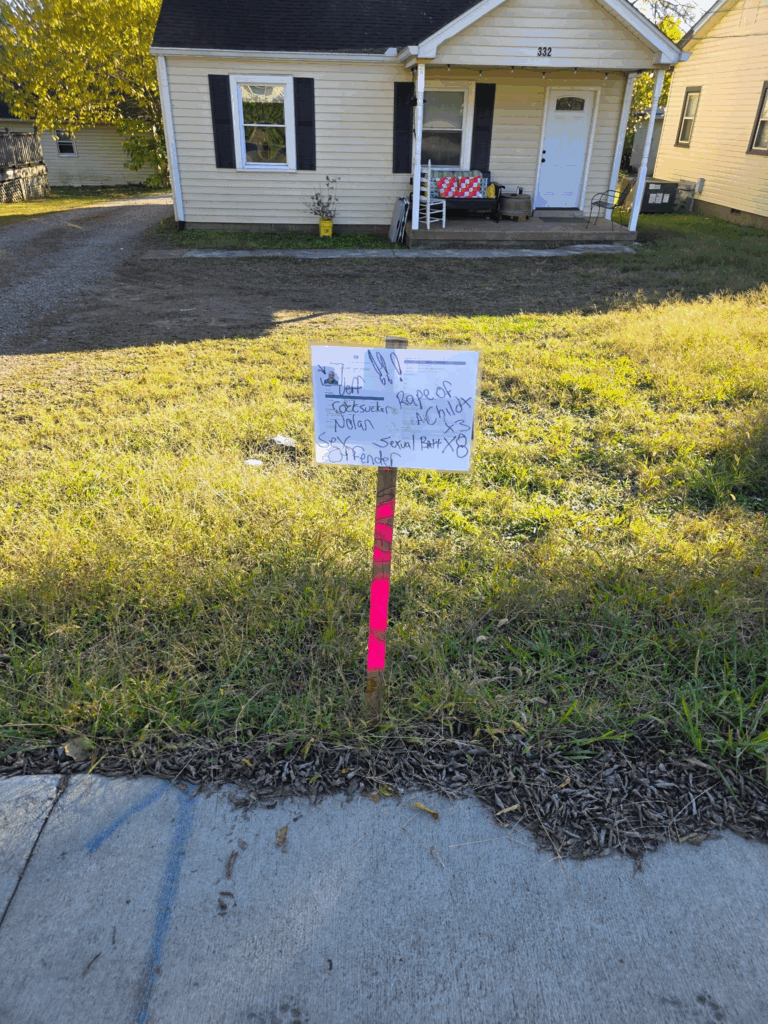
For a split second before I got the picture she texted me I thought one of our cats had been hit by a car. I braced myself, but wasn’t at all prepared for what I saw instead. Someone had printed out my photo and profile page from the Tennessee sex offender registry, laminated it, stapled it to a wooden stake and planted it in my front yard. With slurs scrawled across in permanent marker. For everyone to see.
The first thing I felt wasn’t anger. It was shame. Not of who I am today but of who I was back then.
It felt like a home invasion, and they didn’t even enter my house. Or like a curse, like the past itself had come walking up our driveway; a version of me from 16 years ago that doesn’t exist anymore. Outwardly I brushed it off, telling my wife the person who did this didn’t deserve our energy. But the sight of my face on that sign cracked me open.
The first thing I felt wasn’t anger. It was shame. Not of who I am today but of who I was back then. Over the past 16 years, 10 of which I spent in prison, I’ve worked to repair what I can and rebuild my life on honesty and accountability. But the registry is designed to freeze you forever as a single moment in time—often your worst moment.
Later that night I did feel anger. I was thinking about how much malice someone must have in their heart to do something like this. But as I sat with that feeling, I realized something uncomfortable, but honest: Maybe whoever did this did it because they were a survivor of sexual abuse.
One way or another, they were probably hurting from something and hadn’t received the support they needed to heal.
In the six years since I completed my sentence and began life on the registry, I’ve learned that it fails everyone—survivors, perpetrators and the public. It does nothing to improve public safety. And though it follows us the rest of our lives, it’s not designed for survivors or perpetrators to receive long-term trauma-informed care. It doesn’t provide anyone with healthy outlets for difficult emotions. It doesn’t encourage healing and rebuilding. What it does encourage is public shaming, harassment and reliving the trauma at every turn. So people numb the pain and isolate, or they lash out.
Protecting the public from dangerous repeat predators is a fine goal, but that’s not what the sex offender registry does.
I reported the incident to my parole officer. They were sympathetic, but didn’t have much to say. They told me I could file a police report about the trespassing, but I wasn’t interested in doing that. When I talked to my treatment group, they suggested I could put up a “No Trespassing” sign, but that didn’t feel right either. I didn’t want to make myself or anyone else more involved in the criminal-legal system. I didn’t want more signs in my yard. So that was that.
Survivors deserve safe spaces to process the trauma inflicted on them. People who have caused harm deserve the chance to rehabilitate themselves and rejoin their communities. But fear never leads to healing.
If the information on the registry were only accessible to law enforcement and were proven useful to public safety in that context, I would support it. Protecting the public from dangerous repeat predators is a fine goal, but that’s not what the sex offender registry does. It’s bloated with people who are not high-risk for victimizing anyone, and it’s increasingly become a tool used to criminalize low-income, vulnerable communities. And it creates a culture of paranoia and vigilantism—one that offers the public a false sense of security, if any at all. Public shaming is not public safety.
After the sign of my past shame was staked in our yard, I realized you can’t control other people’s reactions. But you can control yours.
Top image via State of Ohio. Inset image via Jeff Noland.