

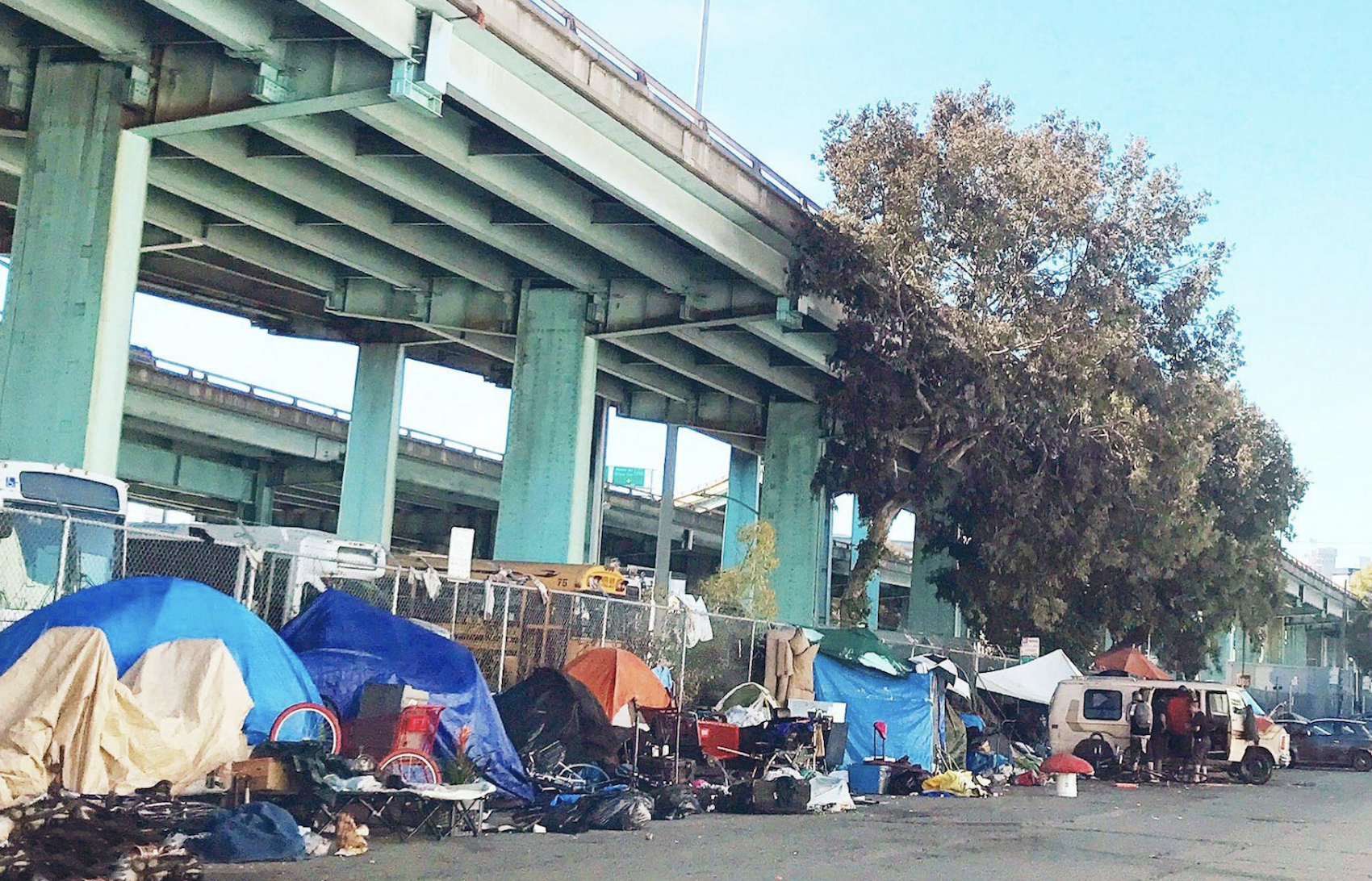
On January 7, San Francisco Mayor Daniel Lurie (D) announced imminent plans to open Rapid Enforcement, Support, Evaluation and Triage (RESET), a facility that will receive people arrested for public drug use and hold them for up to 23 hours while staff connect them to treatment. It appears to be the city’s first involuntary sobering center.
Gazetteer SF reported that the center is tentatively expected to open in March or April, as renovations are still being completed. The building is next to the Hall of Justice, which includes the county jail and headquarters of the San Francisco Sheriff’s Office. The sheriff’s office will be supervising the center, and have two deputies posted there 24/7.
“As long as I’m mayor, it will not be acceptable to deal drugs or do drugs on our streets,” Lurie stated in his announcement. “We are making a fundamental change to San Francisco’s approach to the fentanyl crisis. Instead of cycling through jails and emergency rooms, those using drugs on our streets will have a chance to enter treatment and our law enforcement officers will get back on patrol more quickly. San Francisco’s families deserve clean and safe streets and we’re going to be relentless in delivering that.”
This new law enforcement sobering center marks a fundamental change in San Francisco: If you do drugs on our streets, we will arrest you. And with this new resource, we will give you a real chance to enter recovery. https://t.co/iXxeFWGbie
— Daniel Lurie 丹尼爾·羅偉 (@DanielLurie) November 12, 2025
Lurie, who in the past year has shuttered vital harm reduction programs and defaulted on a campaign promise to add 1,500 new shelter beds, has been building up the previously unnamed center as an innovative jail-alternative pilot since November 2025. Its purported function is to free up law enforcement resources, by allowing officers to arrest and quickly drop people at the center rather than taking them through a longer traditional booking process.
But what RESET represents is a shift toward arresting people in San Francisco for using drugs, when up until now the focus has been on arresting people for selling drugs. The city has other facilities that are similar, including a “police-friendly” crisis stabilization center that Lurie’s office opened in 2025, but they are voluntary.
Lurie’s announcement described arrest as a prerequisite for transport to RESET, where people will remain until staff deems them “able to care for themselves.” However, it appears that the process will be to detain people without filing charges, essentially on a 23-hour hold. They’ll reportedly sit in one of about two dozen reclining chairs while counselors and case managers work to connect them to treatment, which could range from methadone or buprenorphine to placement at other treatment or shelter facilities.
#sfsheriff is launching a Rapid Enforcement, Support, Evaluation, and Triage (RESET) Center to get drug users off #SanFrancisco streets. #publicsafety #lawenforcement #leadership #help #sobberingcenter pic.twitter.com/bUJUWmV3qi
— SF Sheriff’s Office (@SheriffSF) January 8, 2026
While everyone at RESET will arrive involuntarily, they can choose whether or not to accept the treatment referrals. Unless they’ve been taken to the center multiple times, in which case they can be sentenced to jail. They can also be jailed if they try to leave RESET on their own recognizance.
Sheriff Paul Miyamoto stated in Lurie’s press announcement that RESET will be “a tough-love approach that balances accountability with compassion … not a drunk tank.” He also told Gazetteer SF two days earlier that from his perspective as sheriff, “it’s like a big drunk tank that’s not in a jail.”
Both Miyamoto and Department of Public Health Director Dan Tsai described RESET as an “effective” public health approach, a claim that doesn’t seem to be based on anything. Aside from the fact that the center is not yet open, its strategy appears to be to target people without housing and detain them for a few hours, after which they’ll either be sent back out in withdrawal and potentially at heightened risk of overdose; or coerced into a treatment program despite the resounding evidence that this is the opposite of effective; or, if they’ve already been through this cycle too many times, moved to the jail next door.
Image via City and County of San Francisco