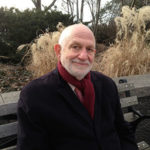


After director Rob Reiner and photographer Michele Singer Reiner were found stabbed to death in their Los Angeles home December 14, the couple’s son Nick Reiner became the sole suspect and was soon arrested. A familiar media narrative quickly emerged, centering on 32-year-old Reiner’s well-documented history of drug use and psychiatric treatment. This narrative trafficks in sanist and ableist stereotypes.
On December 19, TMZ reported that Reiner had previously been diagnosed with schizophrenia, quoting anonymous sources who said a recent medication change had made him “erratic and dangerous” and “out of his head.” They also claimed drug use was worsening the symptoms.
Dozens of news outlets, social media influencers and public figures amplified the moral panic. Many continued to rely on anonymous sources who claimed to have intimate knowledge of Reiner’s mental state. In September, Rob Reiner had said that his son hadn’t used drugs in six years, but more attention is being paid to the anonymous sources describing the younger Reiner as “a ticking time bomb” who spent his parents’ money on drugs with no remorse.
Reiner made his first court appearance December 17, and is currently being held without bail as he awaits an arraignment pushed back to January 7, 2026. He did not enter a plea, and his attorney told press that the case involved “very, very complex and serious issues” that would have to be “thoroughly but very carefully dealt with and examined.” Speculation abounded that Reiner’s attorney planned to pursue an insanity defense, which could reduce the charges from first-degree murder to second-degree manslaughter.
Reiner’s mental state at the time of the killings has not yet been determined, and such an assessment will likely take months. But unsubstantiated conclusions have gone viral.
“Dr. Drew” Pinsky took to cable news to promote Al-Anon and advocate for long-term confinement and criminalization. A commentator in City Journal opined that people who refuse help should be either institutionalized or “incapacitated through the criminal justice system.” California Governor Gavin Newsom’s CARE Court, marketed as the solution to houselessness, is already falling wildly short of expectations. Yet the author of a Sacramento Bee op-ed still uses the Reiner killings to argue for expanding the failing court’s powers to compel treatment.
Such rhetoric aligns with the Trump administration’s law-and-order approach to street homelessness, escalated by his July executive order targeting harm reduction and other social services for people deprived of housing and health care.
As media analyst and co-host of the Citations Needed podcast Adam Johnson put it in 2021, whenever crisis and tragedy strike we will see pundits and politicians use them to “empower, embolden and—most importantly—fund preexisting carceral and militaristic responses.”
Over the past decade, popular films have increasingly depicted mentally ill characters as violent. News coverage of mental health also tends to focus on violence, and link it to schizophrenia in particular.
The media and entertainment industries have long drawn on pre-existing templates when depicting drug use or mental illness. But over the past decade, popular films have increasingly depicted mentally ill characters as violent. News coverage of mental health also tends to focus on violence, and link it to schizophrenia in particular. The complex realities of interpersonal violence are drowned out by the relentless demonization of drug use and psychiatric disability. Demonization generates clicks, which generates more demonization.
In reality, people who experience psychosis, or visible symptoms of mental illness in general, are far more likely to be targets of violence than they are to be perpetrators. This includes police violence, but the media narrative around mental illness has legitimized warped policy priorities that elevate carceral, punitive approaches over investments in housing and community care. Schizophrenia diagnoses, meanwhile, are applied in such racist and punitive ways that advocates have called for abolition.
In their 2015 semi-autobiographical film Being Charlie, Nick and Rob Reiner discussed a misplaced faith in the rehab industry. A “tough love” approach had led Michelle and Rob Reiner to send their son to 18 different facilities, including a wilderness camp in Utah, before realizing that these facilities were in fact harmful.
“The program works for some people but it can’t work for everybody,” Rob Reiner told the Los Angeles Times in 2015. “When Nick would tell us that it wasn’t working for him, we wouldn’t listen. We were desperate and because the people had diplomas on their wall, we listened to them when we should have been listening to our son.”
“We were so influenced by these people,” Michele Reiner added. “They would tell us he’s a liar, that he was trying to manipulate us. And we believed them.”
BJ Courville, an attorney who has covered celebrity conservatorships on her YouTube channel, dedicated a recent livestream to deconstructing the narrative surrounding the Reiner killings. She critiqued the articles describing long-suffering parents of a son who refused the best help money could buy.
“A lot of times what y’all are calling help, ain’t help,” Courville told her viewers. “Controlling someone else’s medical decisions isn’t freaking help.”
The media’s reductionist coverage of violence as solely a function of untreated drug use or mental illness is now perpetuating that same coercive system that the Reiners, and countless others, have said failed them. It will support the expansion of involuntary treatment policies that primarily target people who are Black, Brown, disabled, unhoused, trans or immigrants.
The Reiner family’s tragedy reflects a larger, collective tragedy: the continued eagerness of the media and pundit class to exploit rare, horrific acts of violence to further entrench the state’s carceral reach.
Images of Michelle, Rob and Nick Reiner via Wikipedia