
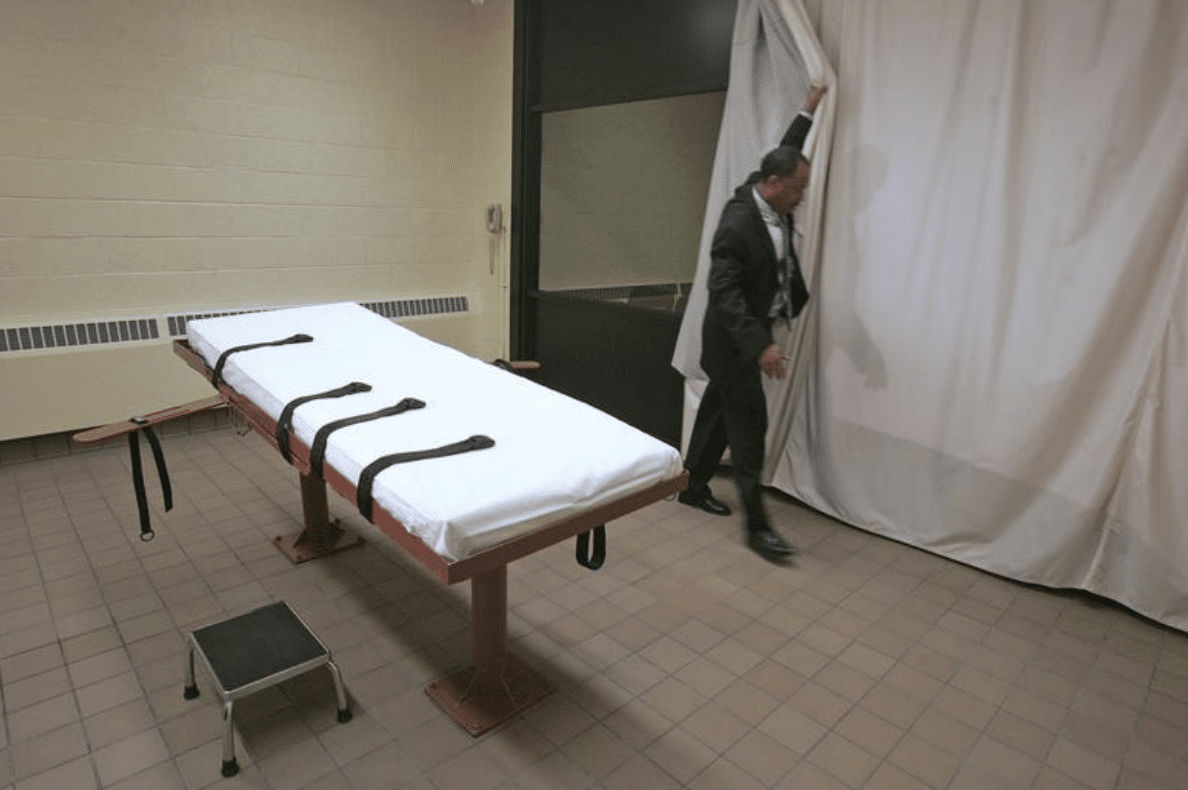
In April, the Tennessee Supreme Court temporarily blocked a ruling that would allow journalists to witness more parts of the lethal injection process, rather than just a 10- or 15-minute window.
A coalition of media organizations had sued for the right to witness steps like the preparation of the syringe, and for the curtains to remain open from the moment the condemned person enters the execution chamber until they are pronounced dead. It is not clear where the ruling will stand on May 21 when the state plans to execute 57-year-old Tony Von Carruthers, who has maintained his innocence for 30 years.
“This is an important first step toward more transparency in executions in Tennessee,” Reporters Committee for Freedom of the Press attorney Paul McAdoo said of the initial ruling, according to the Tennessean.
News outlets fight hard for transparency around executions. Personally, I wonder if this is more about voyeurism than newsworthiness.
Executions were once public spectacles, and news coverage of them is still rooted in that perspective. Do journalists need to watch the syringe being prepared and administered in order to determine whether the punishment was carried out humanely? I am sure that it was not.
The death penalty is not an event; it’s a process. People condemned to death spend decades in tortuously restrictive conditions prior to execution. Where is the news media during this time? And a larger question: Where is the fight for transparency on behalf of the 20,000-plus people in Tennessee Department of Correction (TDOC) custody, who are also hidden from the public?
Only a handful of prisoners are executed each year; the number of in-custody suicides and homicides the state allows to happen is significantly higher. Where is the media coalition to object to that?
In 2025, 158 people died in Tennessee state prisons.
Media organizations often portray themselves as “watchdogs” over government processes. But since the 1974 rulings in Pell v. Procunier and Saxbe v. Washington Post Co. the Supreme Court has held that the First Amendment does not grant the press any more access than the general public has when it comes to prisons. And for the most part, the press accepts this.
TDOC does not allow media to bring cameras inside prisons. Outside journalists are not allowed to interview prisoners in person, nor can they speak by phone unless a prisoner adds them to their list of approved phone numbers, which is capped at 10.
TDOC policy offers one exception: Outside journalists “may request an interview with an unspecified inmate on a specific department program or topic.” TDOC will then hand-pick the prisoner who goes in front of the media to talk about the approved topic. It’s like having a hostage read a prepared statement from their captors. Yes, I am being treated well. The food is good. The programming teaches me a lot.
In addition to executions, news outlets are also eager to cover war, to report and photograph the horrific violence so that the public can make an informed decision about whether to support what the government is doing in their name. There is war inside prisons right now.
In 2025, 158 people died in Tennessee state prisons. At South Central Correctional Facility, the CoreCivic-run prison where I’ve been housed for the past decade, there is currently a 20-person Special Operations Response Team (SORT) team deployed because of the out-of-control gang violence.
People are being subjected to rape, torture and organized violence on a daily basis, but the media does not crusade for greater access to witness it and show it to the public, and so the public does not really understand.
Our lives should be at least as important as our deaths.
Image (cropped) via Washington Courts