
A mandate to ban nicotine vapes was enshrined in Mexico’s constitution in early 2025—a step described as “essential” by President Claudia Sheinbaum. About a year later, on January 16, newly published amendments to the General Health Law took effect, banning the manufacture, importation, distribution and advertising of vapes, though this doesn’t formally extend to possession.
The effects are already being felt—including by prospective international visitors for the summer World Cup, who are being warned that trying to bring vapes into the country for their personal use could result in “confiscation, detention, and fines reaching up to $12,500.”
The impacts on Mexicans’ health and safety will be further-reaching.
Though vapes have been restricted for several years in Mexico, it’s been something of a gray area amid legal back-and-forth over politicians’ ban attempts, with some shops obtaining the right to sell the products through court orders. This latest move ends the uncertainty. People who break the law could face not only large fines but a prison sentence of up to eight years.
“Many of the vendors who operated in the gray market have closed, making it very difficult for people to get their products.”
An estimated 13.7 million people smoke tobacco in Mexico; around 40,000 die of smoking-related causes each year. Miguel Garcia, a tobacco harm reduction advocate based in Mexico City, fears for fellow Mexicans who use safer nicotine products to avoid smoking, as their access is squeezed.
“Many of the vendors who operated in the gray market or sold through websites have closed their shops, making it very difficult for people to get their products,” he told Filter. “It’s a given that an ordinary citizen who was involved in the informal trade will stop doing so for fear of losing their freedom with up to eight years in prison.”
It isn’t only traders who could face enforcement threats, however.
Renata Demichelis Ávila is the director of human rights advocacy group Elementa DDHH in Mexico. Though the General Health Law ostensibly permits personal possession and use, she explained, it fails to define it. Article 479 of the law establishes specific personal-use quantities for other substances but not for nicotine vapes, creating what she termed a “legal vacuum.”
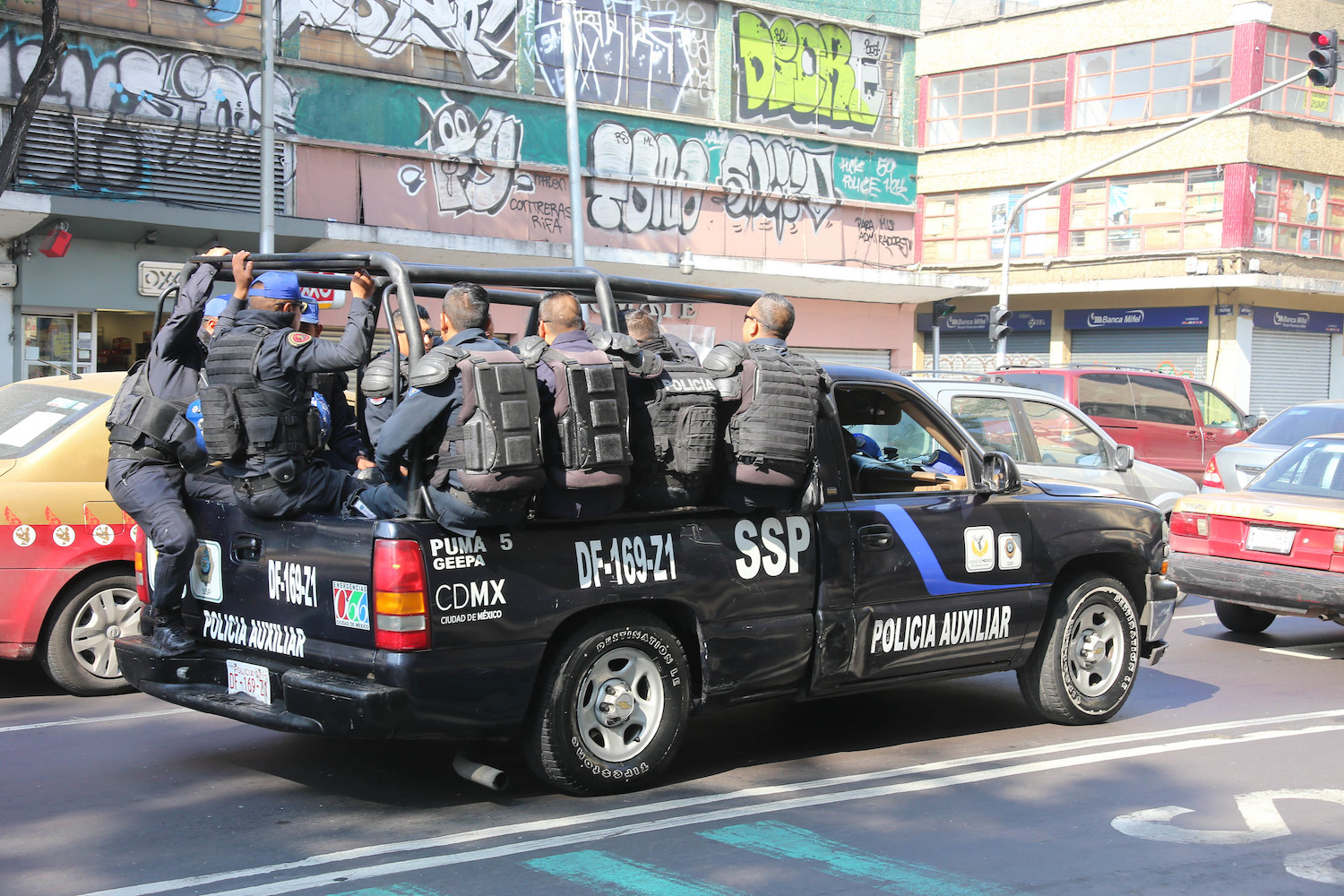
“The legal vacuum places users at serious risk. It is likely that people who use vapes will be stopped, detained or extorted.”
“Without a definition of personal use, enforcement is left to discretion, which significantly increases the risk of arbitrary actions by authorities,” Demichelis Ávila told Filter. “Personal use may be technically legal, but the lack of legal clarity leaves users vulnerable to abuses.”
“It is important to note, by excluding consumption and possession from the ban, the government’s narrative focuses on production and commercialization rather than explicitly criminalizing users—although in practice, the legal vacuum places users at serious risk,” she elaborated. “It is likely that people who use vapes will still be stopped, detained or extorted under [this] pretext.”
In other words, people who rely on vapes face a bitter choice: Run the risk of being targeted by law enforcement, or run the risk of returning to cigarettes.
The prohibition “reproduces and deepens well-documented patterns seen in Mexico’s drug policy; arbitrary detentions, extortions, police harassment,” Demichelis Ávila said. “That said, the greater risk lies not in mass criminalization of users, but in the structure of the market itself.”
Sanho Tree, a fellow at the Institute for Policy Studies, called Mexico’s vape ban “a gift to illegal non-state groups.”
Even before the ban was formalized, a significant slice of Mexico’s vape market was controlled by the powerful drug-trafficking networks known as “cartels,” which employ threats, violence and abductions to protect their revenue. Prohibition tightens this grip.
Sanho Tree, a fellow at the Institute for Policy Studies in Washington, DC, and director of its Drug Policy Project, called Mexico’s vape ban “a gift to illegal non-state groups.”
Banning vape sales simply hands them the whole market. “If the demand remains, illicit sellers will seek to maximize profit,” he told Filter.
That profit is lucrative, when around 2 million people in Mexico vape and the 2022 market was estimated at $1.5 billion—money that will only increase the networks’ power.
“Vapes are legal across the border in the United States and they’re not a major target of [US] law enforcement,” Tree noted.
That reduces the transnational networks’ risk, and gives rise to a situation that flips the drugs-arriving-from-Mexico narrative beloved of US politicians: vapes crossing the border into Mexico.
“It shifts the issue from a public-health approach to a punitive, criminal framework—one that Mexico already knows is ineffective and dangerous.”
The takeover of Mexico’s vape market by illicit actors means, among other things, that unregulated products will be sold without consumer protections, and that people might have to put themselves in unsafe situations to buy vapes.
Age checks are unlikely to be a priority for vendors operating outside the law—which is ironic, when Mexico became the eighth Latin American country to ban vapes in the name of protecting youth.
In that context, Garcia has further worries. “We fear, probably in the near future, people who lack ethics and values will not only offer vaping products, but will offer their menu of all the illicit products they already sell,” he said.
Mexico has endured a devastating drug war for decades, and its leaders should need no reminder of the downstream consequences of prohibition.
“It shifts the issue from a public-health approach to a punitive, criminal framework—one that Mexico already knows is ineffective and dangerous,” Demichelis Ávila said. “We’ve seen prohibition’s real effects; it doesn’t eliminate the market.”
Instead, it merely “reshapes it,” paving the way for more exploitation and violence.
Photograph by Paul Sableman via Flickr/Creative Commons 2.0