

The Office of National Drug Control Policy (ONDCP) has released the 2026 National Drug Control Strategy, the first one under President Donald Trump’s second term. Though the wide-ranging federal roadmap to “defeat the scourge of illicit drugs” devotes a lot of space to nitazenes, kratom, 7-OH and other relatively recent additions to the supply, the biggest threat the ONDCP wants the public to know about seems to be marijuana.
Though the 2026 Strategy does not mention the recent rescheduling of medical marijuana, nor the ongoing process to potentially reschedule non-medical marijuana, it makes many dubious claims about the plant’s risks and harms. This includes heavily conflating medical marijuana with high-potency THC as well as with synthetic cannabinoids, both regulated and unregulated.
For example, the ONDCP suggests that the public can better understand “some of the medical risks associated with cannabinoids” by looking to the FDA labeling for dronabinol (Marinol), a synthetic cannabinoid prescribed for severe nausea that hasn’t responded to other treatments.
“The label warns of neuropsychiatric adverse reactions, cardiovascular instability, seizures, substance use disorder, and paradoxical symptoms such as nausea and vomiting,” the Strategy states. “Reviewing these official warnings may help individuals better understand the potential dangers of medical or non-medical marijuana use.”
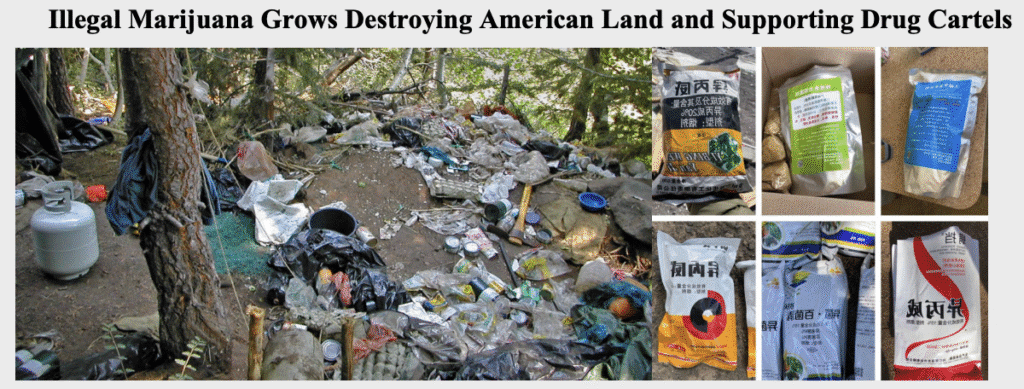
The Strategy also claims that marijuana legalization has been largely taken over by “Chinese criminal groups.”
The previous Strategy was released in May 2024, under the Biden administration. In that version the focus on marijuana was minimal, and largely related to racial disparities in the criminal-legal system. These have now been replaced by warnings about cancer, cognitive impairment, scromiting—”due to the associated screaming and vomiting”—fungal pathogens, pesticides, pediatric poisonings, money laundering, “poly-crime involving human trafficking of exploited laborers,” youth suicide and, above all, drug-induced psychosis.
“The varying legal status of marijuana across the United States notwithstanding, it remains a fact that there are Americans who are suffering from addiction and side effects of marijuana and its associated products such as psychoactive derivatives of hemp or other high-THC products, and they deserve help,” the Strategy states. “Cannabis-induced psychosis, if diagnosed and addressed early, may mitigate the potential impact on progression towards schizophrenia or other severe mental illness.”
Cannabis-induced psychosis is a narrative that dovetails conveniently with the administration’s “Treatment First” model for people trying to access housing services, but also with its ongoing fearmongering about youth substance use.
The Strategy leans heavily on misleading claims that adolescent marijuana use, “particularly of high-potency products,” leads to schizophrenia and bipolar disorder. By contrast, the 195-page document says almost nothing about methamphetamine, which for years has been the go-to for scaring the public about drug-induced psychosis. Cocaine is mostly mentioned in the context of Coast Guard seizures.
“It is critically important to identify people who are experiencing psychosis for the first time, as it may be related to drug use,” the Strategy states. “Additionally, convergent evidence from multiple sources suggests that cannabis exposure increases the risk of psychosis, and the prevention of marijuana use could serve to reduce the prevalence of psychosis, in addition to reducing cannabis use disorder and other consequences.”
In 2019, New Yorker writer Malcolm Gladwell wrote a wildly irresponsible article cherry-picking data about youth schizophrenia prevalence to suggest that marijuana use was often the cause, and ever since that belief was brought into the mainstream lawmakers have made similar claims about marijuana without acknowledging that correlation is not causation. For example, the Strategy states that drug use is associated with suicide, and that in one study of toxicology reports from the suicide deaths of people under age 25 the most common substance detected was marijuana—”more than alcohol or any other drug.” In no way does this show that marijuana is associated with suicide.
Top image via California State Auditor. Inset graphic via the White House.