
Public attention to violence against women tends to surge in response to major events and movements, then recede just as quickly. Official recognition of women who use substances as a key population, however, is relatively new. In late 2024, the United Nations released a report on behalf of the Women and Harm Reduction International Network (WHRIN), highlighting this longstanding omission and committing to ending the severe and often overlooked violence experienced by women and gender-diverse people who use drugs. It is important that nations follow suit within their own efforts to eliminate violence against women.
Emerging evidence suggests that violence perpetrated against women who use and inject drugs may be worse than previously expected. In our recent investigation, “Violence Against Women Who Inject Drugs,” published in JAMA Network Open in March, my colleagues and I found that experiencing violence was nearly universal for women who inject drugs in Melbourne, Australia. Eighty-two percent had been assaulted at some time. Nearly 2 in 5 women had been sexually assaulted.
Australia is often seen as a world leader in harm reduction, with strong systems to reduce drug-related harm and social supports that can help people access income, housing, and services for domestic and family violence. However, as with many high-income countries, women who use drugs are invisibilized in policies to end violence against women. Despite facing much higher risk of abuse than other marginalized groups, they are not recognized as a key priority population in Australia’s 10-year plan to end violence against women and children.
Women described major barriers to engaging in care. They feared stigma from their health care provider—or, more frightening still, that their children would be put at risk of removal.
While much violence is suffered alone and women are often reluctant to access medical care in the aftermath, nearly one in four women who inject drugs, according to our paper, presented to the emergency department due to assault over a 10-year period. Most of these women had severe enough injuries to be admitted to hospital.
Only one in three women reported accessing medical health care after an assault, however, and this was typically contact with a counselor. In in-depth interviews, women described major barriers to engaging in care for their assault. They feared stigma from their health care provider about their drug use, for example—or, more frightening still, that their children would be put at risk of removal.
Women who inject drugs are also often marginalized in other ways, and sometimes lack access to a phone or money for transport to engage with violence services that they need.
This all heightens vulnerability when drug acquisition in unregulated markets and use under prohibition can be weaponized against women as a method of control. In these circumstances, control of access to methamphetamine, which is commonly smoked in Australia, may play a particularly sinister role in sexual coercion, according to past research.
My colleagues and I have been following up on these issues. In research examining violence against people who smoke meth, which has not yet been published, we found that two in three women reported recent assault over an 8.5-year period—at an average of six separate occasions of recent violence. Nearly one-third of women reported that the person who used violence against them was a current or ex-partner. One in six of the women had presented to an emergency department after being assaulted.
Women who use substances rarely conform to society’s perspective of the “perfect victim.” Public and institutional ideals about who is believable, deserving of sympathy or worthy of protection are often shaped by entrenched stigma towards people who use drugs.
In many countries, responses to violence against women still fail to account for how stigma, substance use, and gendered power intersect.
When a woman is known to use drugs, signs of abuse can be dismissed, minimized or interpreted through criminality and disorder, rather than vulnerability. Consequently, violence towards this population is somehow seen as expected or even deserved. Alternatively, women are at risk of being misidentified as the primary aggressor in an abusive situation.
For many women, children become a powerful tool of coercive control. Partners can threaten to report drug use and manipulate child protection or custody fears. Women may stay in dangerous relationships, avoid health care or withdraw from support services not because they do not need help, but because seeking it, or disclosing the complete context of their situation, can be too high-risk.
The invisibilization of women who use drugs is also reflected in drug and violence policy. Resourcing and attention are more likely to be paid to those groups identifiable within formal policy documents and commitments. In Australia, harm reduction policy does not adequately address the issue of violence and ending-violence policy does not adequately identify people who use substances. And Australia is unlikely to be unique.
In many countries, responses to violence against women still fail to account for how stigma, substance use and gendered power intersect, leaving some of the most vulnerable women outside of public discourse, unsupported and alone.
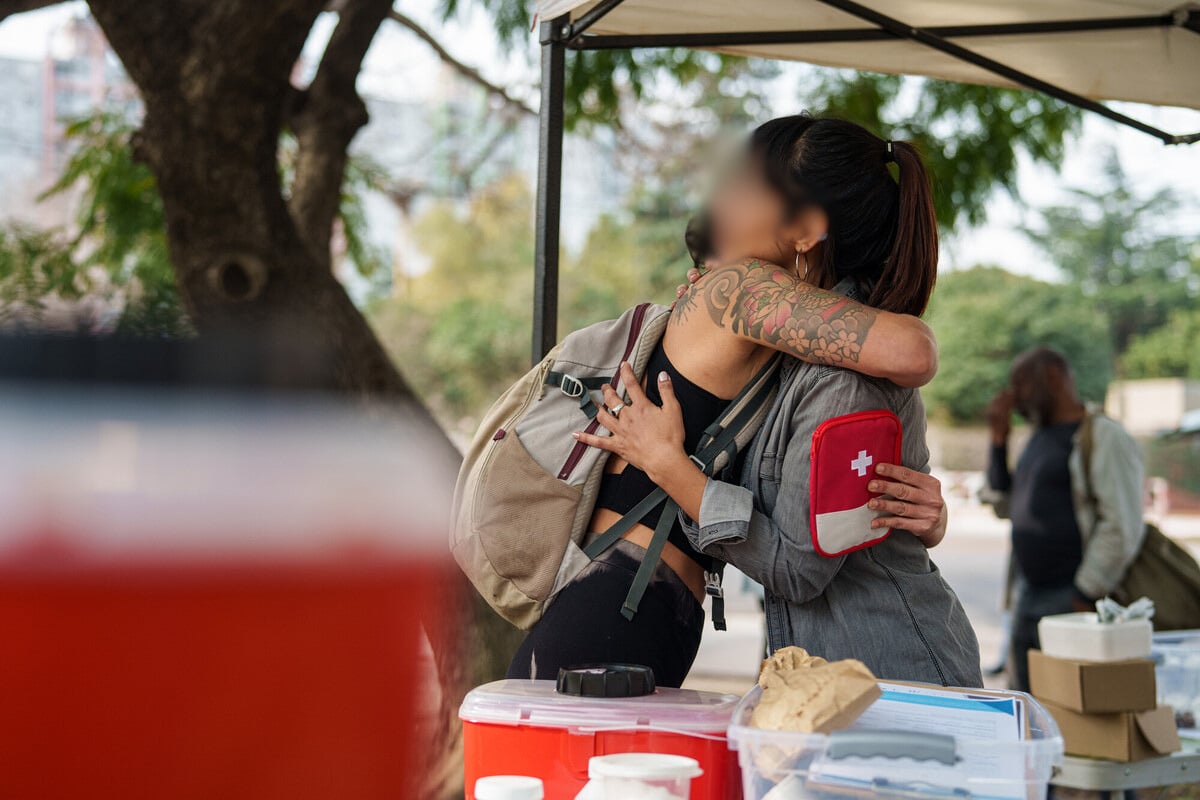
Photograph (adapted) via the CDC