
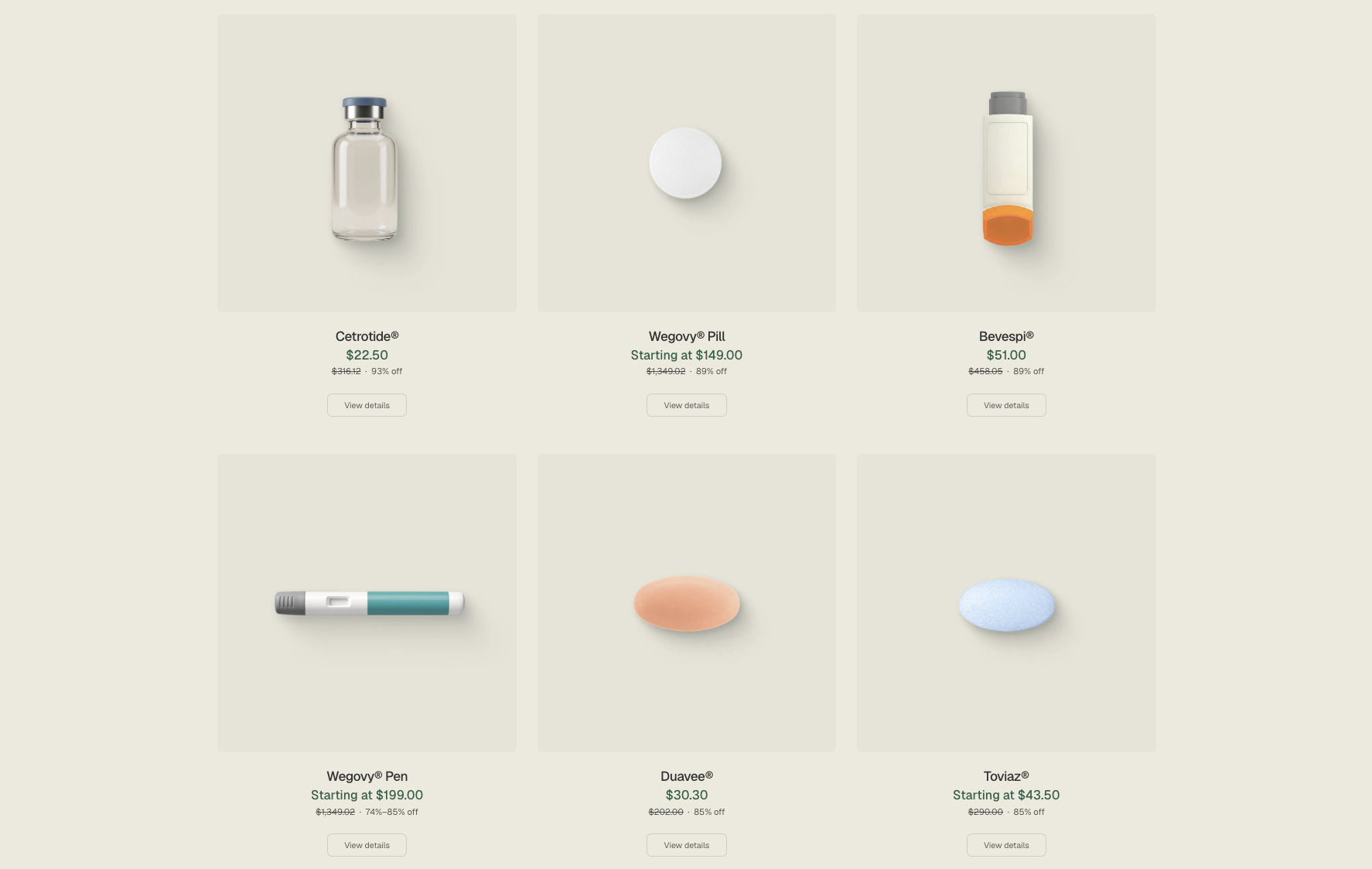
On February 5 President Donald Trump launched TrumpRx.gov, a direct-to-consumer website listing pharmaceutical medications at reduced prices that the administration has negotiated with manufacturers. The discounts are only available to patients paying out of pocket, and several prohibit participation by anyone enrolled in public health insurance.
“Through the website, patients will be able to access large discounts on many of the most popular and highest-priced medicines in the country,” states a White House fact sheet, “paying prices in line with the lowest paid by other developed nations (known as the most-favored-nation, or MFN, price).”
In May 2025 Trump issued an executive order titled “Delivering Most-Favored-Nation Prescription Drug Pricing to American Patients,” in which he pledged to tackle “global freeloading” by pharmaceutical manufacturers that inflated United States prices in order to subsidize discounts that they offered to foreign markets. The order did not mention that medications in other countries often cost less because those governments actually regulate their market rather than leaving it up to manufacturers—or more specifically, pharmacy benefit managers—to set the prices.
TrumpRx was subsequently announced in September 2025. Since then, the administration has built up the launch by announcing a series of deals with certain pharmaceutical companies for certain drugs that would be getting discounts. The February 5 launch includes 43 medications from AstraZeneca, Eli Lilly, EMD Serono, Novo Nordisk and Pfizer, which according to the White House were the first five companies to agree to the MFN pricing. More are promised in the coming months.
Four of the medications are only discounted for patients not enrolled in government-funded health programs like Medicaid.
Most TrumpRx discounts work via coupons. Of the 43 listed medications, 31 have coupons on the website that patients can present to their pharmacies. These include nicotine partial agonist Chantix; nicotine replacement therapy Nicotrol; chronic obstructive pulmonary disease inhaler Bevespi; antidepressant Pristiq; and HIV antiretroviral Viracept.
“This is an out-of-pocket price,” the website states on the page for each medication. “If you have insurance, check your co-pay first—it may be even lower.”
Another three medications have coupons but are described as specialty drugs “available only by mail-order,” which isn’t necessarily the case. Their TrumpRx coupons, however, can only be redeemed through one of the mail-order pharmacies listed on the website.
Another four have coupons that patients can only access by agreeing to terms and conditions that state they are not enrolled in Medicaid, Medicare or any other government-funded medical or prescription benefits program; that they won’t seek any reimbursement through private insurance; and that they will not count the costs toward their deductibles.
Manufacturer direct-to-consumer website already offer discounts to patients paying cash.
The rest of the medications don’t have coupons; the discounts can only be accessed through their manufacturers’ direct-to-consumer websites. These websites generally already offer discounts to patients paying cash.
The TrumpRx website revolves around pointing out cost differences between the MFN prices and “original” prices, but the latter are wholesale prices that are always vastly greater than what any patients pay using public or private insurance.
It’s likely that in many cases, the MFN prices are still higher than the price of insurance copays. Some of the medications are also available as generics that are cheaper than the brand-name versions from the manufacturers participating in TrumpRx.
The White House has also previously claimed that its MFN negotiations with manufacturers would result in savings for state Medicaid programs—which already receive substantial rebates from manufacturers. Some analysts have speculated that these deals may end up increasing costs and decreasing access for Medicaid patients.
Image (cropped) via TrumpRx.gov