
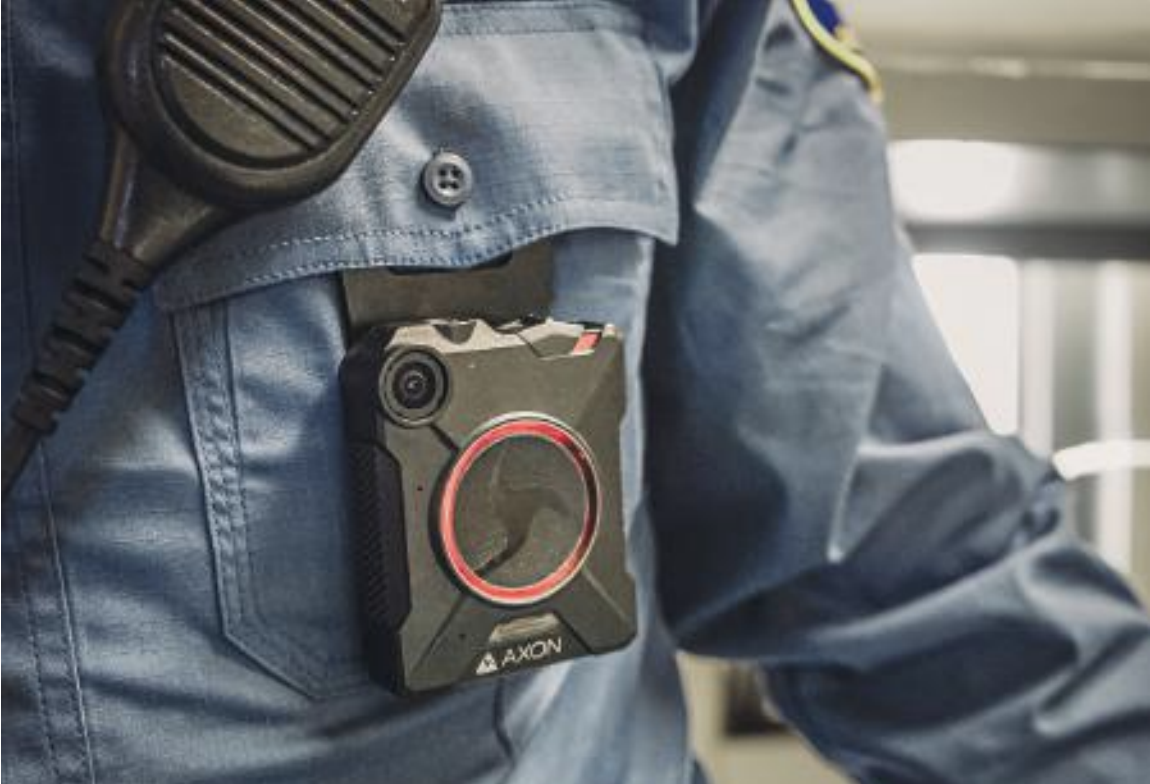
Tennessee’s GOP-supermajority legislature seems to have found a bipartisan idea it can support: body-worn cameras for corrections officers in the state’s prison system. If enacted, a pair of bills would require the Tennessee Department of Correction (TDOC) to study the cost of body cams for “correctional officers and employees of prison contractors” at Trousdale Turner Correctional Center, and file a report by July 1. But there is a major obstacle: TDOC Commissioner Frank Strada.
Senate Bill 1820 was filed in late January with 27 Republican and six Democrat cosponsors, and accompanied by House Bill 1718, which began with 19 Republican cosponsors and has since picked up two more. Both are in committee, but there has been no movement since early February. However, officer body cams are currently a very hot topic in TDOC.
Many prisoners and officers alike feel that the cameras would make them safer, which everyone is desperate for. The only people who seem not to like the idea are gang-affiliated prisoners who currently run things, and Strada who thinks body cams would be too expensive.
“Any technology we deploy in our prisons [must be] not only well-intentioned, but workable in a correctional environment, legally defensible under Tennessee law and fiscally sustainable over time,” Strada said after a January Senate hearing where he expressed very strong opposition, according to the Tennessean. “I think the body-worn cameras, in some ways, is a deterrent because if staff feel their camera is going to be used to discipline them for everything they might not want to work for that company or agency.”
In late 2025, local prosecutors got the legislature’s attention with reports of all the cases they were getting from Trousdale, the state’s largest prison and notoriously its most violent, or at least it used to be; recently TDOC has been moving around enough prisoners and resources that the prison with the worst reputation is now South Central Correctional Facility, where I’ve been housed for the past decade. Trousdale and South Central are two of the four TDOC prisons that are privately operated by CoreCivic.
“I haven’t read anything that talks about needing body cameras to protect officers from getting assaulted,” one South Central officer told Filter. “If the lawyer is prosecuting a case, the action has already happened. Do stuff to prevent it.”
A second officer told Filter that they’re not opposed to body cameras but think the interest in them is just for show—that politicians and administration alike know they can’t get the gangs under control, so they’re just ignoring the problem and saying whatever makes them sound like they have a plan. Meanwhile there’s no way to separate violent prisoners from the rest of the population and not enough staff to provide backup or complete any objectives.
“If these politicians really wanted to help, they would ask the people doing the job,” they said. “No one has ever asked me or anyone I know that does this job what we need to be safer.”
In addition to those quoted in this article, Filter reached another five officers who asked to speak only on background. Everyone thought body cams were a good idea, saying that they needed all the help they could get and that prisoner behavior would probably improve if cameras were rolling right in front of them. They also felt that body cams would be a useful layer of protection if they needed to recount something in an incident report. Their main concern was that hopefully the body cam vests would not be too heavy, as they already work 12- or 16-hour shifts while carrying a lot on their utility belts.
Strada did not respond to Filter’s request for comment as to whether his stance reflected any discussions with officers on the ground.
Strada has a different plan: an AI-powered command center in Nashville where officers will monitor security cameras in real time.
In the past two years new security cameras have been installed throughout all Tennessee prisons, including the outdoor spaces. But the footage can be blurry or too far away to help prosecutors make their case beyond a reasonable doubt. This is what led to prosecutors calling for body cams at Trousdale.
Corrections departments in Massachusetts, Minnesota, Oklahoma and many other states have equipped officers with body cams at some or all facilities, describing them as necessary for transparency and the safety of both prisoners and staff. Even CoreCivic is on board. Newly appointed CoreCivic CEO Patrick Swindle has expressed support for body cams in TDOC, estimating that a pilot at Trousdale would cost $350,000, according to Tennessee Coalition for Open Government.
Strada has a different plan: an artificial intelligence-powered Centralized Security Intelligence Center in Nashville, where around 26 officers will be stationed 24/7 using the AI to monitor TDOC security camera feeds in real time.
“We’ll be able to see when something is alerted, we’ll be able to see it right then and there,” Strada said in January, according to the Tennessean. “Those staff will be dedicated just for those purposes.”
Absurd! Even if every assault-in-progress were detected—TDOC has proposed $8.6 million in technology upgrades to support this plan—that does not help the person getting shanked halfway across the state. When an officer radios for help, it’s already doubtful that backup will respond to a call even from within the same facility. How are the Nashville staff going to be faster? What resources are they supposed to mobilize? They need boots on the ground, not AI in Nashville.
One senior officer told Filter that they have family members who work in law enforcement and have worn body cameras, and they’re in favor of corrections officers wearing them as well. Everyone tends to behave better—that is, less violently—when they’re on camera. A command center in Nashville will not make gang-affiliated prisoners think twice before they threaten or assault an officer, but body cameras might.
“Maybe they could at least have officers working in high-risk critical areas wear them,” the senior officer suggested, expressing doubts that administration would cough up the funds for much more than that.
This has worked in other states. In 2022 the Ohio Department of Rehabilitation & Correction became the first to use officer body cams statewide, rolling them out first to “specifically identified prison posts.” In 2024 the New Jersey Department of Corrections was the second to get body cams in every facility, giving them to officers “on a regular basis … in accordance with their duty assignment.”
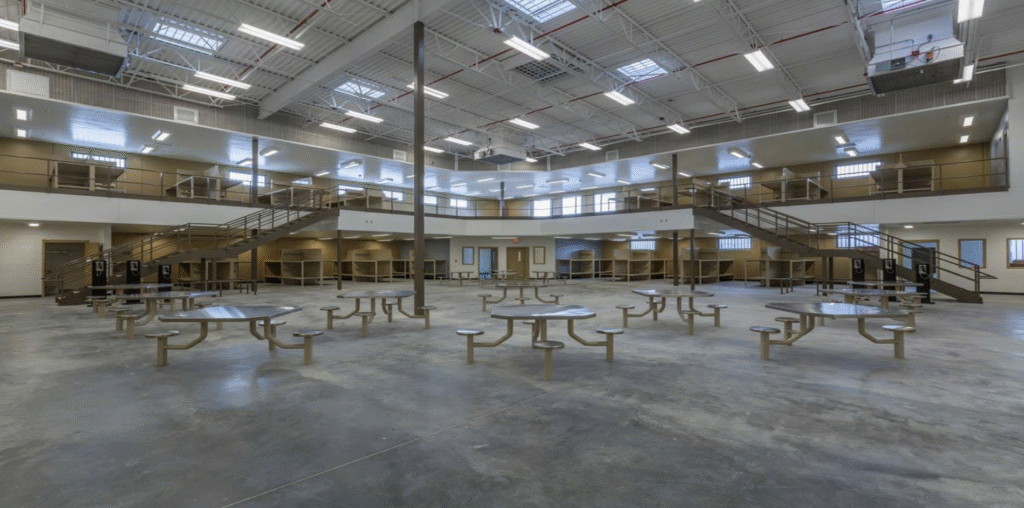
Trousdale Turner Correctional Center
A lot of prison violence happens very quickly. Many assaults would go unrecorded if body cams weren’t turned on at all times, but that would create an impossible amount of footage to be processed later. In addition to $6 million for a statewide rollout of the cameras and related equipment, Strada estimated it would cost up to $3 million each year just to respond to all the public records requests, though it’s not clear whether these estimates are accurate. Other states have been able to use federal funding to help with equipment rollout, and there are various ways of recovering costs associated with public records requests.
Prisoners reached by Filter would want the body cams recording as much as possible because they believe this can also help with officer transparency.
Boyd*, a recent arrival at South Central, was robbed and assaulted by gang-affiliated prisoners moments after he got to his assigned living unit. He struggled out to find a yard officer and begged them for help, even to go into protective custody. He was handcuffed and walked back to his unit.
“I felt like I was walking to my death,” he told Filter.
Because protective custody cells were full, Boyd’s only other option was to go on suicide watch, which he did a few days later. It’s a miserable experience, but he got lucky in that once it was over he was released into a slightly less-violent living unit.
Boyd has no way to prove he reported the assault and was taken right back to where it happened. Officers will deny these kinds of incidents because they don’t want to deal with the paperwork, or because they’re in the pocket of the prisoners responsible for the assault. Boyd’s parents called the facility and spoke to a staff member, who suggested that prisoners often lie.
Something similar happens when officers report assaults or other incidents to administration. On a daily basis, I see officers give orders that gang-affiliated prisoners laugh at and ignore, when they aren’t outright threatening them with shanks. There is a strong sentiment among officers here that higher-ups don’t take them seriously.
“I don’t think my superiors believe some of the shit I encounter every day,” another South Central officer told Filter. With a body cam, “I could at least have evidence to prove it.”
The issue of officer body cams isn’t just about what can be prosecuted in court. Their mere presence could help protect prisoners from being ignored by officers, protect officers from being ignored by TDOC and protect everyone vulnerable from gang-related violence, whether directly or indirectly.
The more body cams record the injustices of day-to-day prison life, the more bits and pieces will find their way to the public. Prisoners, officers, private contractors, prosecutors and TDOC leadership including Strada all know that the system is failing. One way or another, most of them have something to gain by bringing that to light.
*Name has been changed for source’s protection
Top image (cropped) via New Jersey Department of Corrections. Inset image via State of Wyoming Legislature.
Kastalia Medrano contributed reporting to this article.