
It used to be that if someone in the custody of the Tennessee Department of Correction (TDOC) stabbed another prisoner, they’d be sent to maximum security to live behind a door with a food flap. It’d be at least five years before we saw them walk back into general population. Times have changed.
Every single week at South Central Correctional Facility, the privately operated CoreCivic prison where I’ve been housed for the past decade, we see someone back on the compound not long after they shanked one of us. One man here in his 70s was recently stabbed in the head, and the person who did it was back in the unit within days.
Meanwhile, the new “tough on crime” stance is to bring criminal charges against people who are already in prison, for things that used to be handled through the prison disciplinary process. Tennessee even has a bill in committee to add more prosecutors to the districts with state prisons in them.
Maybe it looks good on paper to take someone with a violent conviction and get more time added to their sentence, but often we’re talking about people who already have life sentences. And now instead of using prison disciplinary proceedings to separate them from general population for our safety, they’re left in minimum- and medium-security housing.
In reality, the classification system has been all but abandoned.
The prison classification process is supposed to remove violent prisoners from general population and place them in restrictive housing, and allow them to slowly work their way back down with good behavior.
Classification works off a point system that factors in different aspects of your prison record, as well as things like prior felony convictions. Minimum-security prisoners have six points or less. Medium-security prisoners have between seven and 16 points. Anyone with 17 points or more is in maximum security or close security (the next level down) and not housed in general population.
For a long time now my points have been -2. In theory, a single non-violent infraction would still move me to medium security, and a violent infraction would move me to close security. But in reality, this system has been all but abandoned.
Back in 2011, TDOC got a new commissioner: Derrick Schofield. He decided that the department should start reclassifying prisoners from maximum security to close security. Close-security prisoners were reclassified as medium-security. This was done to cut down on staffing costs: Maximum-security prisoners are each kept isolated and require constant supervision, whereas in general population, there’s just two officers for each unit of around 250 prisoners.
The result was disastrous. In 2011 there were more than 1,000 maximum-security prisoners in TDOC, and by 2012 half of them had been reclassified. It caused an outpouring of violence against prisoners as well as against staff. Even wardens were injured. Because of Schofield, many of the long-time officers quit, leaving inexperienced new hires to take over.
TDOC has never recovered from Schofield’s policies, even though the man himself stepped down in 2016. He took an executive vice president position with GEO Group, the country’s largest private prisons operator, where he still works to this day.
A gang-affiliated prisoner can smack an officer in broad daylight, get cuffed and hauled off, and be back before the end of the day.
In the past four years, hundreds of cases have been prosecuted against people incarcerated at Trousdale Turner Correctional Center, the state’s largest and most notoriously dangerous prison. Almost all resources at the local district attorney’s office are tied up in these proceedings despite the fact that they rarely result in convictions. Trousdale is also operated by CoreCivic.
Though I don’t condone this, there was a time when if a prisoner laid a hand on an officer they’d beat the hell out of him. Now, a gang-affiliated prisoner can smack an officer in broad daylight, maybe get handcuffed and hauled off for show, and be back in general population before the end of the day.
Earlier in 2025, Al* was stabbed five times during a robbery by gang-affiliated prisoners in his living unit. The three attackers were taken to administrative segregation, and the leader faced criminal charges. Then a few days later, all three were released back into the unit.
“When I saw the guy who kept plunging that shank into my body walk back into the unit,” Al told Filter, “I knew I was a sitting duck.”
The leader went to court, took a plea deal, and now his life goes on more or less the same.
Every day at South Central, transport vans go out taking people to their court appearances. That requires two gun-qualified transport officers every time. There are usually around four transport officers who work here, but they also have their regular duties and can’t always be tied up with court proceedings. So what happens is that one of the other gun-qualified staff members will get pulled off their post.
If it’s one of the two unit officers, half the unit gets locked down in their cells until the transport comes back. Or often, it’s the recreation officer because he’s gun-qualified, and as a result we almost never get yard or gym time because he’s not there to supervise. He also operates the only barbershop.
Things like that are not significant on paper, but they become very significant when they suddenly affect hundreds of people. And it all just makes the facility more violent, compounding the fact that violent prisoners are no longer removed from general population.
Since 2012, the number of maximum-security prisoners has hovered somewhere over 500, and held more or less steady before peaking at 549 in 2022. Then in 2024 it dropped sharply, to 401 prisoners. In 2025, it dropped to 284.
Imagine if your next-door neighbor stabs you, gets arrested and then a few days later is right back at home with no reason not to stab you again. It’s common sense that this would be not just an unsettling situation, but an unsafe one.
Most people here are not trying to hurt anyone, but have no protection from those who do intend to cause harm. We don’t need to reinvent the wheel—just use the classification system that already exists. It would make the prisons safer as well as more rehabilitative, rather than just being human warehouses, because the violence would have a chance to end.
*Name has been changed to protect source
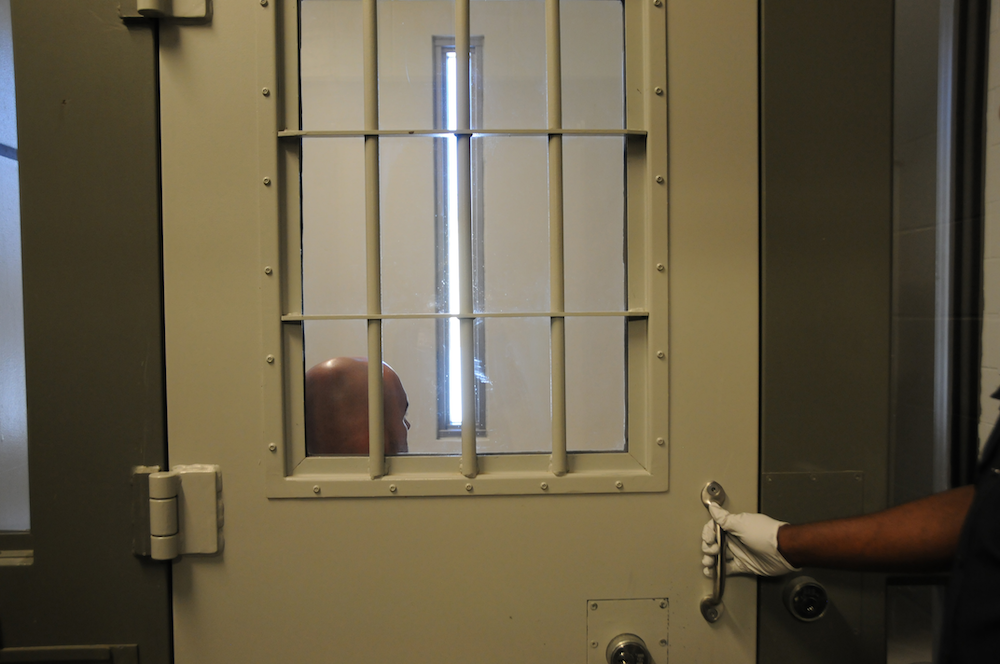
Image via Minnesota Department of Corrections