

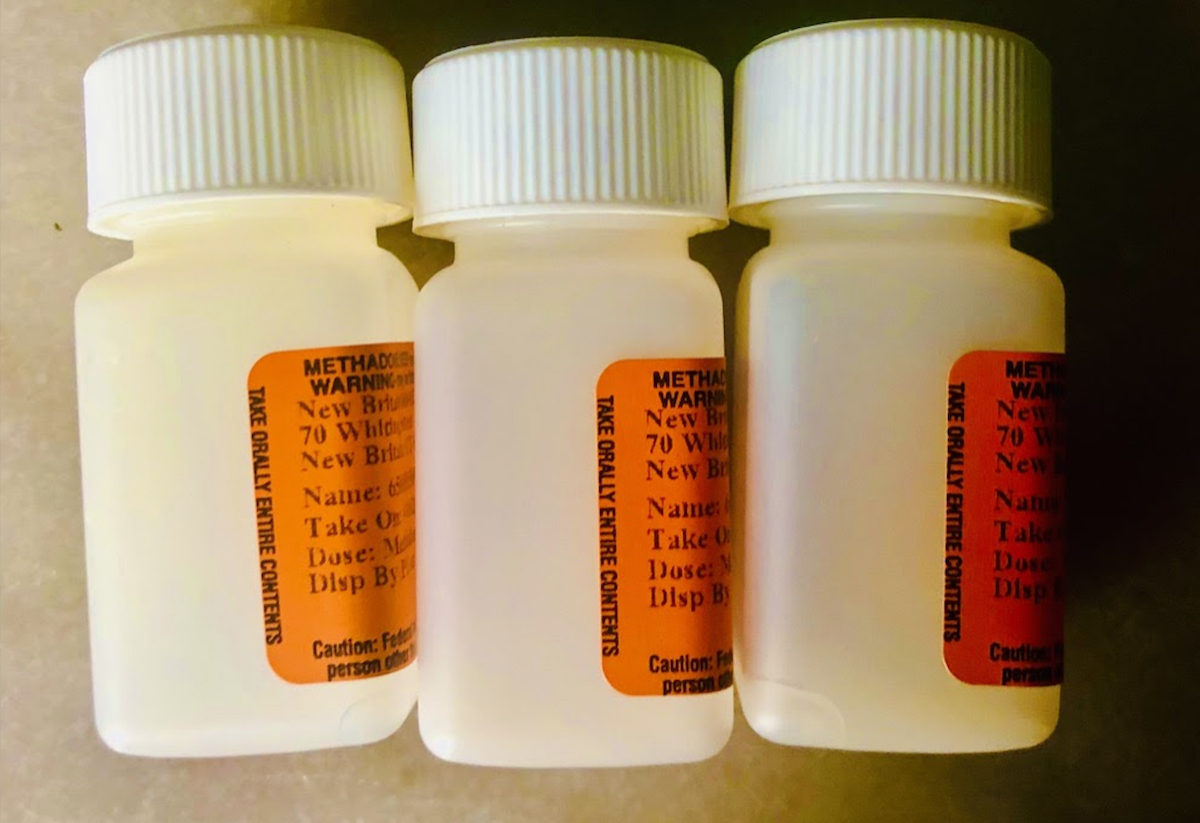
Methadone and buprenorphine are widely prescribed and considered gold-standard medications for opioid use disorder (MOUD). Yet despite their proven benefits, plus growing political support that has expanded access, many people in need struggle to enroll and stay in treatment.
A new study published in the Journal of Substance Use explores people’s challenges in accessing these life-saving drugs—including inaccessible clinic locations, mistreatment by staff, insufficient doses, confusion over dosing schedules and a host of other obstacles.
Together, these challenges made it hard for people to stay in treatment, with the requirements around MOUD causing, as one participant put it, “more stress than you know.” Many participants felt forced to take treatment into their own hands, supplementing their prescribed doses with heroin or methadone obtained from unregulated sources.
The majority of participants were either unable to start treatment or left their program early.
The researchers interviewed 36 people seeking methadone or buprenorphine treatment in Chicago, most of whom were Black or Latino. Roughly one-third of the participants got into a treatment program and stayed in it, but the majority were either unable to start treatment or left their program early.
Methadone in the United States generally requires a strict schedule of daily in-person visits to the clinics (also known as opioid treatment programs) that have a near-monopoly on dispensing the tightly regulated drug. This in itself, together with the carceral, punitive nature of many clinics, represents a major barrier to care—and explains why advocates have called for the methadone clinic system to be abolished in favor of pharmacy pickup, as practiced in other countries.
Within the confines of the US clinic system, the study showed how transportation is a big obstacle.
“Even in a place as busy as Chicago, methadone clinics are few and far between, and they have very limited dosing time,” lead author Dr. Jodie Dewey, a research scientist at Chestnut Health Systems’ Lighthouse Institute, told Filter.
When having a truly local methadone clinic is rare, the cost of securing transportation for daily visits adds up quickly, especially for patients who have to take multiple buses or call an Uber. Dewey estimates that a typical round-trip clinic visit in Chicago costs $10 to $20. In rural areas, it would likely be far more.
But perhaps even more costly is the time involved. Long travel times to clinic locations, combined with unpredictable wait times, imposed significant burdens on people who may have jobs, families and other pressing responsibilities. And then there are unpredictable waiting times at the clinics themselves.
“You just don’t know how long it’s gonna take,” Dewey explained. “Are you gonna get to the clinic and it’s gonna take five minutes? Or are they backed up and you’re gonna be waiting for two hours?”
“People don’t wanna go to [those] clinics because they don’t feel respected. It’s a very policed kind of environment. They don’t feel safe.”
Many participants who made it to clinics experienced negative encounters with staff that discouraged them from participating in treatment. They described being spoken down to, being denied medication for being late by minutes, or being “disciplined” for missing doses—punitive policies that led some to drop out of treatment altogether.
While not all clinics were structured this way, participants who received treatment in rigid, punitive environments often felt discouraged from coming back.
“People don’t wanna go to [those] clinics because they don’t feel respected,” Dewey said. “It’s a very policed kind of environment. They don’t feel safe.”
Others reported receiving dosages too low to manage withdrawal symptoms, and being unable to increase them quickly due to rigid clinical procedures.
“It could take days and maybe even weeks to move people between their milligrams,” said Dewey. “That might just take too long.”
To bridge the gap between doses or to make up for missed visits, some patients turned to heroin or “diverted” methadone. One woman described keeping extra methadone doses in her fridge because “it takes the edge off” when she can’t make it to the clinic. One man continued to use heroin to supplement his 20 milligram dose of methadone, which he knew from experience “wasn’t gonna hold me, because it’s not as potent.”
Buprenorphine (Suboxone) is often hailed as a solution to these problems. Burprenorphine dispensing isn’t clinic-based, and it is administered in two-to-four week increments of take-home doses, eliminating the need for daily travel. However, the participants who were prescribed buprenorphine described experiencing a whole new set of problems, largely due to the timing of these self-administered doses.
“You have to wait till your withdrawal symptoms are so bad you just almost can’t take it,” Dewey explained. “It’s not just uncomfortable—it can be excruciating.”
One woman tried to “contact the pharmacy to see if I had any more refills and they said I didn’t, so I guessed I wasn’t supposed to take any more.”
The ubiquitous presence of fentanyl in Chicago’s drug supply made determining the right time to take buprenorphine particularly challenging. Several participants noted that fentanyl, as compared to heroin alone, dramatically altered when and how they experienced withdrawal. As one explained, “[Y]ou have to actually be, they say, without heroin for 24 to 48 hours [before dosing], but with everything they puttin’ on it, it got to be a longer wait.”
Once the initial 30-day prescription ran out, many people weren’t sure how to proceed. One woman tried to “get in contact with the pharmacy to see if I had any more refills and they said I didn’t, so I guessed I wasn’t supposed to take any more.”
Without clear guidance from medical providers or follow-up communications to confirm next steps, the study reported that running out of take-home doses was the “biggest challenge to staying in treatment” for people taking buprenorphine.
Coupled with the confusion around when to dose and how much to take, these challenges indicate that buprenorphine’s hands-off delivery is not currently a perfect alternative to methadone’s clinic system. Better guidance at critical points throughout the treatment process, from honing an initial dosing strategy to transitioning off the medication, could help many more people experience fuller benefits.
Despite federal efforts to loosen MOUD regulations in recent years—including take-home doses for methadone and telehealth appointments for buprenorphine—the study illustrates how many patients still find the processes disempowering and opaque.
Dewey emphasized that behaviors many health professionals would label as “non-compliant” should be taken as understandable responses to systemic issues, not mistaken for lack of interest in recovery.
“There’s all these barriers that seem really simple—like these transportation issues, or just the way someone is treated in a clinic,” Dewey said. “Something as simple as, you know, you didn’t acknowledge me, you didn’t humanize me. Nobody wants to feel that way.”
Dewey emphasized that behaviors many health professionals would label as “non-compliant,” such as supplementing doses with heroin or leaving treatment early, should be taken as understandable responses to systemic issues, and not mistaken for lack of interest in recovery.
“People are heavily engaged in their recovery, but it’s just not working 100 percent for them,” Dewey said. “They have to find these other workarounds to keep themselves comfortable enough so they can stay and remain engaged.”
Being forced to resort to those workarounds, however, makes it difficult for many people to achieve their individual goals. Leaving treatment also often means losing access to a broader web of support surrounding treatment programs, like housing referrals, case management and access to food or health care.
By centering people’s experiences with MOUD access and highlighting some of the specific challenges they face, Dewey hopes that her research will guide improvements to treatment systems.
“When people are having challenges … let’s meet them where they’re at and figure that out,” she urged. “How do we deliver better systems? How do we deliver treatment that people need in a way that makes sense?”
That shift will require new policies, but also a cultural change in how providers view the people they serve—not as problems to be managed, but as partners in care.
“We’re not just passing paperwork, we’re not just signing off on things,” Dewey said. “We’re working with people. And hopefully you’re there because you care about people.”
Photograph by Helen Redmond