

During my nearly 30 years of incarceration in the Tennessee prison system, there has always been a need for protective custody (PC). Prisoners “check in” into PC housing, which is physically separated from the general population, when it’s too dangerous for them to remain in their current housing. It’s like witness protection, except your name doesn’t change and everyone still knows where you are.
There used to be three main reasons someone would go to PC: You’d just come into the prison system and your case had gotten a lot of publicity; you’d been assigned to a facility where staff or other prisoners had personal connections to a victim in your case; or someone had physically attacked you or made a verifiable threat to do so.
But today, PC is completely different. Because of the understaffing crisis, gangs have so much control in prisons that gang-affiliated prisoners are not letting other members of the population live in their assigned cells. That’s the main reason people go to PC now.
When Joe* began his sentence about five years ago, gang-affiliated prisoners wouldn’t let him live in his assigned cell. At first he tried sleeping on the floor in another cell that already had two people. He told Filter that the first night, an officer making rounds simply shined his flashlight in, counted three people, and kept walking. Officers receive the same type of intimidation from gangs that non-affiliated prisoners do.
But soon, Joe was told he’d have to pay protection fees or he’d be hurt. His family paid over $3,000 during his first year in prison so that he could exist unharmed, but that wasn’t sustainable.
Joe contemplated suicide. But he decided if he could just hang on, maybe things would be better one day. So he checked into PC. He spent the next several years there until he was recently released into general population at South Central Correctional Facility, where I’ve been housed for the past decade or so.
When people leave PC, they’re transferred to a different facility before they rejoin general population. This isn’t enough to keep people safe, because gangs will simply put the word out to affiliated prisoners at the other facility. It helps somewhat, but Joe is traumatized and constantly looking over his shoulder.
PC is a prison within a prison.
Back when facilities were more adequately staffed, mediations would be held for situations like Joe’s. But there is no longer any attempt at conflict resolution, due to lack of resources.
This facility used to not house anyone on PC. Now PC is an entire living unit of 128 people, and there’s a waitlist of people filling up the segregation cells until they can get a bed.
Life is more restrictive in PC. It’s a prison within a prison. Everything happens inside the unit of 128 people. They’re allowed out to their own recreation area when there’s enough staff to supervise, which is maybe once or twice a week. Anyone taking Adult Basic Education—studying for the GED—does so in their cell; there’s an instructor, but they just hand out packets. At this facility we don’t have vocational programming or things like that, but in PC people wouldn’t be able to participate even if it was available.
Food is taken to them in the unit. The quality and quantity of the food is the biggest complaint from people in PC here. Kitchen workers are very hard on them, giving them the worst food. It’s a mentality left over from the days when people who went to PC had snitched on someone. People are allowed to order commissary and make the same purchases as in general population, but most don’t have the money for that because very few people in PC have jobs. The only jobs available are cleaning the living unit, and “Inmate Helpers” who push wheelchairs and things like that.
The second-biggest complaint is loss of laundry. Laundry has to be sent out, and it’s common for the general population workers assigned to the laundry room to take items belonging to people in PC, since there’s not much they can do. So a lot of people are washing things by hand in their cells. The cells are double-bunked, just like in general population.
Paul* corresponded with Filter from within PC, where he’s been for about six months. Like Joe, he was extorted by gangs after receiving a cell assignment he had no control over.
“You don’t have to have done anything against them,” he told Filter. “You’re just a big dollar sign.”
It’s not uncommon for gangs to send people to check into PC, to follow someone who’s sought refuge.
Paul said that even though he’s in PC, he doesn’t feel safe. It’s not uncommon for gangs to send people to check into PC, to follow someone who’s sought refuge from them. Often it looks too suspicious for someone affiliated to check into PC themselves, so gangs will pay someone not affiliated to do it. Generally someone who’s never getting out of prison, who needs money or can be threatened. Paul recalled one officer telling him that if he didn’t want to be scared, he shouldn’t have come to prison.
He expected to be scared in prison, he told Filter. But he did not expect to fear for his life every day.
When someone checks into PC, they first go into a segregation cell for up to 10 days while staff evaluates their case and determines whether PC is warranted. But because PC is always full now, people are stuck in segregation even though their investigation is done, waiting for someone in PC to be transferred out or for their sentence to end. There are currently about 30 people here in this situation. Some have been stuck in segregation for months.
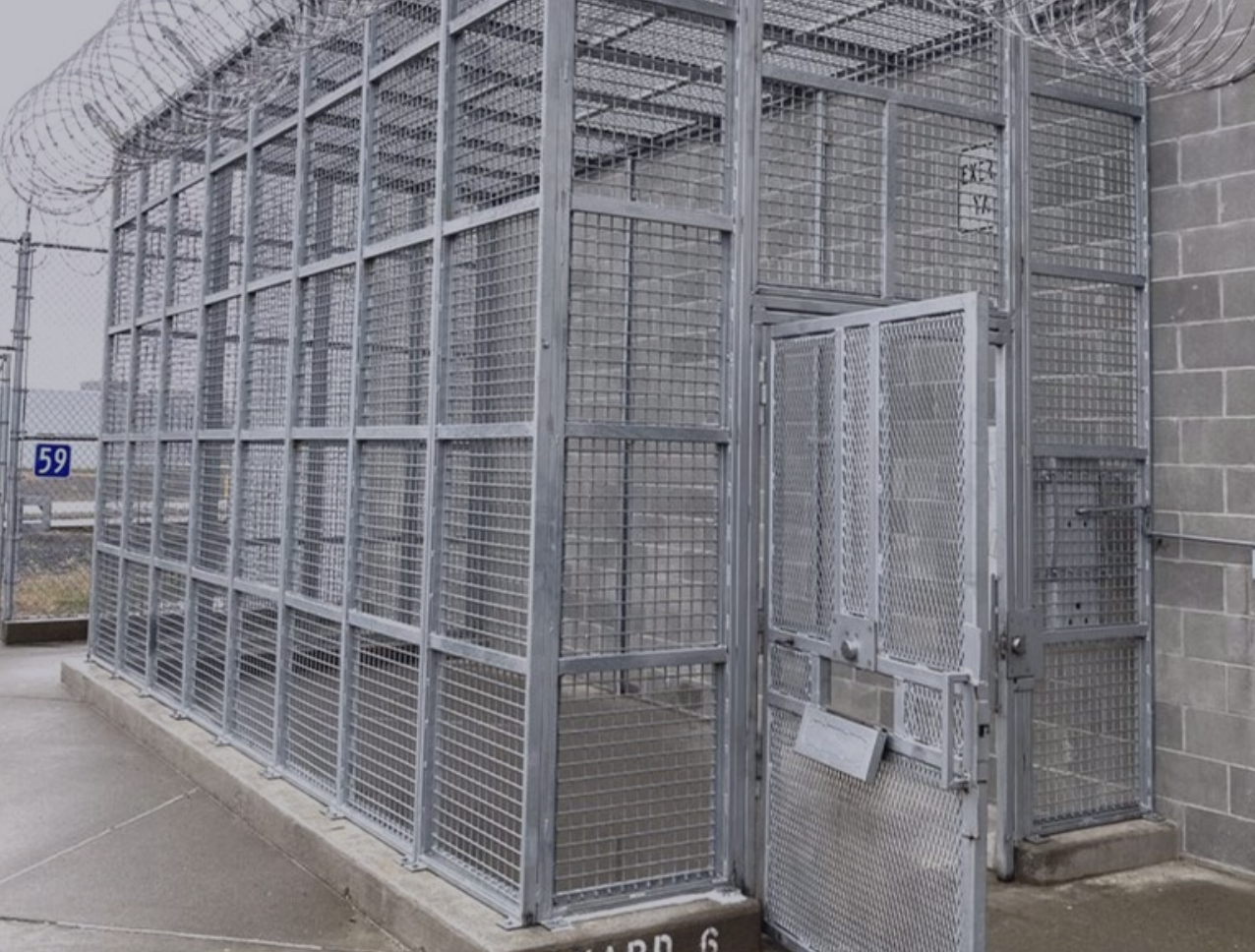
Because segregation is designed to be punitive, those cells have no electrical outlets to plug in a TV or a tablet. People aren’t able to order food from commissary, even if they can afford it; just hygiene items. There are no visits. For recreation, there are about eight cages like dog runs where people are escorted for an hour, three times a week, if there’s staff available to do so.
Meanwhile, gang-affiliated prisoners who would once have been moved there due to violent conduct are staying in general population.
*Names have been changed to protect sources
Image (cropped) via Washington Office of the Corrections Ombuds