
Three decades ago when I began my prison sentence, corrections officers worked eight-hour shifts. Some did the work well and some didn’t, like at any job. But back when they stayed for more than a couple of months before quitting, they learned our names and listened to our stories. They often took an interest in our lives and helped us be engaged and motivated.
Today, officers here at South Central Correctional Facility, a medium-security Tennessee prison privately operated by CoreCivic, are scheduled to work 12-hour shifts. But they routinely find themselves working for 16 hours, or even longer. They’re exhausted when they arrive and more exhausted when they go home. Even if they do keep working here long enough to learn our names, they don’t have the energy to care about us. They’re just trying to survive prison themselves.
Filter spoke with five South Central officers of different ranks and genders about what the job is like day after day. All requested pseudonyms. They shared a strong sentiment that they are not appreciated by administration, nor do they receive any kind of support as they navigate a chaotic, unstructured and extremely dangerous job. The long hours and stress take a toll on their families and personal relationships.
In particular, not being able to leave at the end of a 12-hour shift is making the job unsustainable. The Tennessee Department of Correction and CoreCivic did not respond to Filter’s requests for comment.
“I hate this goddamn place. I don’t hate the inmates. I hate the assholes who … sit in offices and leave at 4 every day.”
CO Avery told Filter that they “dread” coming in to work, and have to talk themselves into it each day.
“Twelve [hours] turns into 16, your day is over, your month is over, your life is over,” Avery said. “You can’t enjoy your day off cause you’re worried and anxious about going back to work … when you have to call in sick, they treat you like you’re lying.”
All officers have realized that prison is a dog-eat-dog world where neither their peers nor superiors have their back. They feel sneered at if they reveal that they’re struggling, particularly by the salaried, higher-ranking staff members.
“I hate this goddamn place,” CO Taylor told Filter. “I don’t hate the inmates. I hate the assholes who bully and manipulate the staff who are in the trenches, risking our lives while they sit in offices and leave at 4 every day.”
Here and in corrections departments around the country, the problem is not hiring new officers. The problem is keeping them. There’s no shortage of young folks excited to find a job paying well above minimum wage, with hefty signing bonuses and great benefits, no experience required. As soon as each class of one or two dozen cadets graduates from their six-week training course, the next begins. Then the graduates walk to their first post, the door shuts behind them, and they realize they’re alone supervising 128 prisoners or more with only a radio as backup.
Prisoners here are stabbed or otherwise assaulted multiple times a week, and officers are injured about once a month. One by one the officers stop showing up to work.
“The training is nothing like the real job. They talk about all the support you’ll have from the ‘team,’” said CO Chris, using air quotes. “I realized I was the only officer [for] over 250 inmates. So short-staffed that if I needed help, who would come? Inmates running around with butchers [knives]. I’m at their mercy. Before the ‘team’ arrived I’d be dead.”
A veteran, Chris said that there is nothing here resembling the real kind of teamwork found in the military. There’s no loyalty, no sense of duty, no appreciation for anyone who manages to do the job well.
“It’s a good job for overtime, but I can’t handle 16-hour days,” CO Sam told Filter. “My partner told me if I didn’t quit he was gone. I’d rather be on food stamps than continue working here.”
Officers stay longer than 12 hours because they physically cannot leave.
Officers who refuse to stay longer than 12 hours can be fired or suspended for abandoning their post. But often they stay because they physically cannot leave. They don’t have gate keys to let themselves out, so they’re trapped until someone shows up to relieve them.
Sam said that even after 16 hours when relief finally does show up, they’re frequently left standing at the gate for 30 minutes or more waiting to be let out.
“I don’t know what can be done,” Sam said. “Everyone is swimming in a shit pool … corruption is everywhere, staff and inmates. How can you fix something that is broken into a million pieces?”
Sam, who started working as a CO about six months ago, had quit by the time of this article’s publication.
“We need an entire shakeup from commissioner on down,” Taylor said. “It makes no sense how they run this place. My kid could do a better job, and he can’t write yet.”
Nationwide, staffing in state prisons is has dropped by an estimated 10 percent since before the COVID-19 pandemic. But this figure does not reflect the impact of constant turnover, and how much more dangerous and isolating the job becomes when no one knows or helps each other.
“I thought I would be more of a mentor or motivator, but all I am is an oppressor,” Avery said. “I feel dirty when I go home.”
CO Jordan told Filter that in 2025 they worked so much overtime they doubled their pay, but they also had to start taking high blood-pressure medication.
“You come in thinking you’ll work your 12-hour shift, that already sucks. Then they hold you over another four hours or more,” Jordan said. “My kids are sleeping when I get home … that breaks my heart.”
For the most part, when not responding to stabbings, their 16-hour days consist of locking and unlocking doors. No one seems to feel that the long shifts are worth the pay. Wages doubled with overtime don’t help anyone see their partner who misses them, nor tell the babysitter what time they’ll be home.
What changes would make the job more sustainable?
“A commitment from supervisors that I’ll work a regular 12-hour shift,” Jordan said. “If extra help is needed, get a salaried employee to cover. Surely one of the wardens know how to turn a key.”
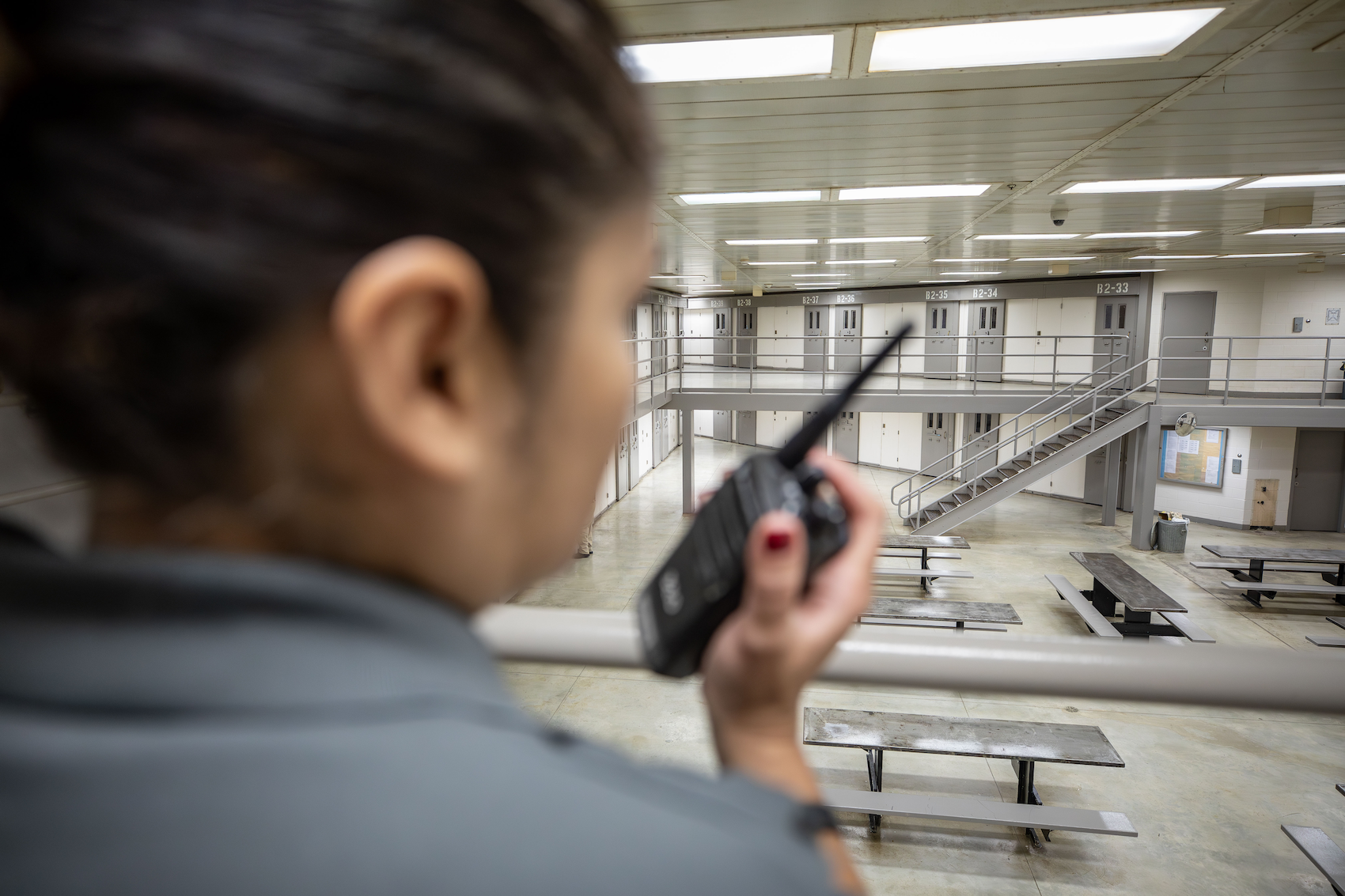
Image via Pennsylvania Department of Corrections