
With Dr. Melody Glenn’s new book—Mother of Methadone: A Doctor’s Quest, A Forgotten History, And A Modern-Day Crisis—Dr. Marie Nyswander is finally getting her flowers. Along with Drs. Vincent Dole and Mary Jean Kreek, Nyswander (1919-1986) was one of the pioneers of methadone maintenance, which has helped millions of people around the world stay alive. In the male-dominated world of science and medicine, her contributions have often been overlooked or downplayed. Glenn wants to set the record straight that Nyswander was a visionary, trailblazing doctor who fought the drug warriors and fundamentally changed the world of addiction medicine.
In Mother of Methadone, the author invites readers into Nyswander’s personal and professional life and details the many barriers she faced during her career. Glenn tells the little-known history of how the Federal Bureau of Narcotics, the forerunner of the Drug Enforcement Administration, drove doctors out of addiction treatment with threats and imprisonment. These “narcotic agents” harassed and threatened Nyswander while she was researching methadone at Rockefeller University. She didn’t back down.
Glenn was looking for a woman mentor and found one in Nyswander. She weaves her story of becoming a certified addiction doctor with key moments in Nyswander’s life. As an emergency department physician, she treated numerous patients with opioid use disorder (OUD) and found it extremely frustrating. They never seemed to get well, and Glenn ended up “blaming the victim.” She admits to accepting many of the stigmatizing ideas about people who use drugs, and it bothered her.
Glenn’s journey to become certified involved many of the same obstacles Nyswander confronted decades earlier. How much have things really changed?
When she discovered the work of Nyswander, who had a tremendous amount of respect and empathy for drug users, it was a lightbulb moment. And there was a highly effective and safe OUD medication, methadone, that cut the rate of overdose deaths by over half. Glenn also learned about buprenorphine. In the book there is a powerful passage where she gives a very sick patient buprenorphine, and a few hours later he’s feeling great and wants to leave the hospital. Glenn is elated.
Glenn’s journey to become certified in addiction medicine involved many of the same obstacles Nyswander confronted decades earlier. This makes Glenn wonder, How much have things really changed?
For two years she worked in an opioid treatment program (OTP, or methadone clinic), and witnessed how methadone changed her patients’ lives for the better. But at the same time the culture of cruelty made it difficult for them to stay in treatment. In the emergency department (ED), Glenn worked to create a modern addiction service that welcomes people who use drugs and offers OUD medication.
The book describes how she waits for hospital management to approve a press release promoting their upgraded addiction services. They never do. Glenn receives an email, “…are other ED’s in town doing this or are our teams the only ones. If so, does EMS [emergency medical services] know we are providing the service – will they bring all suspected OD/addiction patients to us because of the service? There is concern that if we announce this publicly we will become the city’s primary resource for substance abuse.”
Like that would be a bad thing! Glenn was furious.
This medical NIMBYism operates throughout the United States health care system. Hospitals love to promote their expertise in every field from liver transplant to sports medicine, but addiction? Not so much. It’s pure discrimination.
“I had to keep one foot planted in the grass roots of harm reduction, listening to users’ priorities and paying attention to their solutions.”
The final chapter of Glenn’s journey, perhaps the most important, involves her becoming a harm reductionist. In Tucson, she hooks up with Sonoran Prevention Works, and risking arrest, hands out sterile syringes and other harm reduction supplies.
“With the help of harm reduction, I would grow more comfortable walking the narrow line between working from within the system and from outside it,” she writes. “I did not want to squander my opportunity to advocate from within the house of medicine, as my professional credentials gave me access and credibility in a way that many people who use drugs did not have. But, to appropriately steer my actions, I had to keep one foot planted in the grass roots of harm reduction, listening to users’ priorities and paying attention to their solutions.”
Mother of Methadone should be read by physicians and other health care providers if they, like the author and Dr. Marie Nyswander, aim to practice addiction medicine with empathy and humanity. Filter’s interview with Dr. Melody Glenn has been edited for length and clarity.

Helen Redmond: How did you get interested in methadone and Dr. Marie Nyswander?
Melody Glenn: In 2020 when I went to interview for a position as a physician at the methadone clinic, I realized I had some stigma about methadone, and I felt that it wasn’t just me; there was probably a whole cultural stigma against the medication in our society.
What’s the history of this? Has methadone always been stigmatized ever since its origins? So I went to the archives. I started looking in the New York Times Time Machine, in databases for old newspapers and medical journals. The stigma has been there since the beginning. Then I ran across an article in the Journal of the American Medical Association marking the 40th anniversary of methadone maintenance treatment. There was a picture of Dr. Nyswander and Dr. Vincent Dole, and the way it described her just really drew me in. She was very charismatic and charming and rebellious, and defied mainstream medicine to push addiction medicine forward.
Some people claim that methadone maintenance is just as influential and remarkable as the discovery of antibiotics, which I think is accurate. Overdose kills so many people every year, and here we have a very effective treatment—it’s just underutilized. Instead of opioid maintenance, treatments are abstinence-based and predicated on the idea that addiction is a moral failure or maybe even evidence of psychopathy. Nyswander and Dole believed that addiction was a medical disease for which they had a successful treatment. For a few years methadone rode this wave of success, and even though there was stigma there was also a lot of support, more support than I would say it has now. Nyswander had articles about her published in the New Yorker and then Vogue, and that’s just not something you see very often.
“The founder of methadone maintenance hated the regulatory clinic system. So why don’t we listen to her?”
HR: How has Nyswander impacted your work as a physician?
MG: She’s become a mentor. Despite the fact that almost a century spans between our careers, we share a lot of similarities. Neither one of us learned much of anything about addiction during our medical training, had many female mentors or intended to become an addiction physician, and we fell in love with methadone. We both found addiction medicine as a way to practice social justice and faced persecution from regulatory authorities because of it. We often felt like we were fighting the entire establishment all by ourselves.
So it just felt so rewarding and encouraging to see that someone else had been through this and thrived. Whenever I feel like I’m swimming upstream, I think of all that Nyswander went through and all she accomplished. She could very easily have given up, but didn’t, and the world is better because of it. Dr. Nyswander also helped me envision a world beyond methadone clinics. The founder of methadone maintenance hated the regulatory clinic system. She thought that any doctor should be able to prescribe it from any kind of clinic. So why don’t we listen to her?
HR: You mention the doctor-as-savior trope in the book. Can you unpack that?
MG: I’m definitely trying to avoid it but it’s hard. If you yourself are not doing that, everyone else wants to put you into that role. When you look at medical stories, it’s so common to find ones in which the doctor comes in and saves the day. A community was lost until some visionary doctor appeared and guided them to become the hero. The doctor is effectively stripping the patients and communities of their agency.
It’s an inaccurate narrative because nobody works in isolation, and nobody’s success is solely attributable to their own hard work. I think it’s morally wrong. I believe the doctor’s role should be to listen, amplify and support the community in which they are working, offering some technical assistance along the way. How can you make the world a better place without falling into the Savior role? Writing this book was a way for me to envision a different path forward, trying to really write the anti-savior narrative. In the end, harm reduction really provided those answers. Working with a group of people, you’re part of a team and they have expertise too.
“The majority hate the overly strict rules, the carceral environment that effectively turns methadone maintenance into a form of chemical handcuffs.”
HR: In the book you document that Nyswander was a critic of the methadone clinic system. Can you outline some of her criticisms—and if you share them, having worked in an OTP?
MG: I have a quote in the book which I think it’s so perfect, where Nyswander goes on this rant about the methadone clinic. She wants the medication to be delivered in every kind of clinic and hospital, and for any physician to be able to prescribe methadone— obstetrics, surgery—instead of leaving methadone to federally licensed clinics.
Referring to her stable patients she said, “It’s just absurd for them to be stuck in a methadone clinic. I’ve had patients for 17 years. They’re better rehabilitated than you and I. There has been no drug use for 17 years and there is no reason in the world why they couldn’t have a month supply, six months supply. Many of my patients get four weeks of medication, they travel, no problem. It’s absurd to keep them in the clinics as part of keeping them isolated and keeping the finger pointed on them and reminding them of what unreliable people they are.”
I thought it was so beautiful how she put it. Methadone clinics are carceral, restrictive. Although I do have some patients who enjoy the structure of the methadone clinic, they appreciate the resources that are offered, I would say the majority have the opposite experience, where they hate the overly strict rules, the regulations, the carceral environment that effectively turns methadone maintenance into a form of chemical handcuffs. For the people who like the clinic, they can go, but the other people who are more stable really should have other options.
HR: Why are physicians so reluctant to work with people who use drugs, for example by prescribing buprenorphine? How can that change?
MG: I really think it’s a trifecta of stigma, overregulation and history. The 1914 Harrison act effectively removed addiction treatment from the purview of medicine. Doctors stopped treating patients and thought addiction is not a medical problem, it’s something better handled by incarceration or by behavioral health. Doctors haven’t learned anything about addiction. Medical schools weren’t teaching it and residencies weren’t either.
There’s overregulation. Back when there was the X-waiver, there were so many doctors who didn’t want to get waivered because they thought it must be really difficult and dangerous, and if there’s extra regulation I don’t want to be part of that. Now, more and more medical schools and residencies are teaching doctors how to start buprenorphine and methadone, they’re showing that there is treatment for addiction to opioids that in the past we just saw as really hopeless. But lots of programs are still neglecting to teach the philosophy of harm reduction, of meeting people where they are and supporting any positive change. Until we incorporate the harm reduction component, I think the stigma will remain. I also think medical institutions need to make sure that people who use drugs are at the table.
“I went out to join harm reduction activists. They’re doing the things that need to be done instead of just pandering to the status quo.”
HR: Why were you willing to get arrested for handing out sterile syringes?
MG: I got to this breaking point. I had a difficult situation with my hospital and the administrators. Despite all the work I had been doing to get doctors and the hospital onboard to improve the services we offer to people who use drugs, I felt like they would never actually care about the humanity of people who use drugs and never really offer what we need to actually get there all the way. I guess it was very slow going—small, incremental changes—and the longer our health care system took to implement change, the more lives would be lost.
I was sort of tired of waiting, so I went out to join some of the harm reduction activists who are taking these steps to make the world better for people who use drugs, even if it’s illegal. They’re doing the work. They’re doing the things that need to be done instead of just pandering to the status quo. I needed to do something that was going to make a difference. I started to work with a harm reduction organization and went out into the field to learn from them. I wasn’t trying to get arrested, and I was hoping that wouldn’t actually happen. I was just feeling so frustrated. It reminded me of the stories that I had heard of the early activists during the HIV/AIDS epidemic where they’re frustrated that the FDA is taking forever to approve antiretrovirals. And I thought of the movie Dallas Buyers Club and they just take it into their own hands.
HR: You got in trouble with the Michigan Medical Board. What happened?
MG: I was working for this startup in California and living in the Bay Area. One of our nurse practitioners in Michigan had recently resigned and she had a handful of patients, and I refilled their prescriptions because I was worried if I didn’t they might relapse. We had an attorney who said it was fine, no problem. I was able to do telemedicine for these patients even though I had never seen them and I didn’t have a Michigan medical license.
It was my first time prescribing anything in that state and it was just a bridge prescription. We could have them come to Ann Arbor another time, because lots of patients live very far away in the Upper Peninsula. It’s not easy for them just to drop everything and go to Ann Arbor and see a new provider. I was trying to look in the prescription drug monitoring program in Michigan, and it said you can’t because you don’t have a Michigan controlled substance license.
“The Michigan Medical Board accused me of prescribing ‘prison heroin’—that’s what they referred to buprenorphine as.”
I didn’t know that I needed this “special license” to prescribe opioids in another state; nor did our attorneys. We quickly called the pharmacies and tried to cancel the prescriptions, but three of them had been filled. Then the attorney reached out to the Michigan Medical Board anonymously, self-reported, and asked is there anything we can do about this? The person at the Board said the fact that you’re self-reporting and you’re so concerned tells us there’s nothing to worry about. We only go after the people who are really problematic, and so it’s okay.
And then weeks later, coming up on my due date for my first baby, I get mail from the Michigan Medical Board. They accused me of prescribing “prison heroin”—that’s what they referred to buprenorphine as. I’m just like, what? How is this medical board using this terminology? Buprenorphine is the gold standard of treatment for opioid use disorder. I was absolutely shocked.
There was a board investigation. It really dragged on and it was a stressful few months with a newborn. My husband and I were trying to buy our first home in Tucson and we couldn’t get the loan for the house until it was resolved. The lenders were like, “Nope, sorry, if you’re going to lose your medical license, we’re not giving you a loan.”
I ended up getting a fine. It’s considered a disciplinary action, so I have to report it on any kind of job I get, or when I renew my medical license. It will always be on my record. I think they did this to me just because they don’t like telemedicine, they found that it can make buprenorphine too accessible. It wasn’t really the three prescriptions.
HR: What are the two things that everyone needs to know about Dr. Marie Nyswander?
MG: Number one she was a badass who pushed addiction medicine forward time and time again, including the development of methadone maintenance, despite all the people and the institutions who tried to stop her. And two, she wanted to liberate methadone.
You can read exclusive excerpts from Mother of Methadone here.
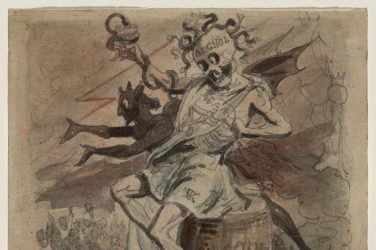
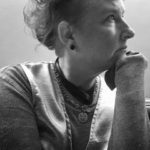
Top image showing detail from the cover of Mother of Methadone: A Doctor’s Quest, a Forgotten History, and a Modern-Day Crisis (2025), featuring Dr. Marie Nyswander, courtesy of Beacon Press
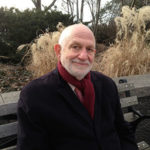
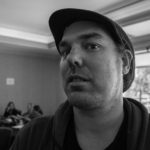
Inset photograph of Dr. Melody Glenn by Helen Redmond