A misguided nurse coinciding with the arrival of medetomidine in the drug supply nearly proved fatal for me.
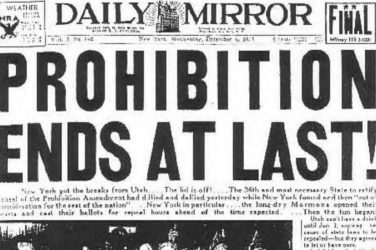
It’s impossible for me to tell this story without context. Supply-side enforcement under the United States’ drug war, as the Iron Law of Prohibition describes, has caused catastrophic effects reminiscent of “bathtub gin” in the 1920s. In recent years this has been seen with the influx of veterinary sedatives like xylazine, and now its more potent big brother, medetomidine.
In 2020, having recovered from heroin addiction years previously, I was working at an outpatient buprenorphine clinic in Kensington, Philadelphia. This was an extremely difficult time: We were learning how to survive during a global pandemic while under occupation by the National Guard.
As resources dwindled and dried up, many of the folks on my caseload began to disappear or die. At the height of the pandemic, it was impossible to walk two feet without finding a body in Kensington requiring resuscitation. Many of those people were close friends of mine. In that traumatic time, it seemed inevitable that I would start using again.
Over the three-year period that followed, I white-kuckled my way through more than 30 buprenorphine inductions and dozens of precipitated withdrawal events. I eventually found stability with methadone.
The nurse at the clinic refused to dispense my methadone. This, she told me, would “teach me to be on time.”
The sigh of relief from a full agonist was a heavenly turning point in my life. I had finally found recovery again. In the three years it had taken, I’d gone through an epidural abscess and subsequent spinal cord injury requiring multiple surgeries, three months of inpatient rehab for physical therapy and antibiotics; two rounds of sepsis; severe lower-extremity wounds related to xylazine contamination where I faced amputation; and the erosion of most of my teeth from sublingual buprenorphine.
One Saturday morning, six months into my recovery, I had a family issue which caused me to arrive at the methadone clinic seven minutes late. The nurse at the clinic refused to dispense my methadone dose for the day as well as the “gifted” take-home dose for Sunday.
This, she told me, would “teach me to be on time.”
As a rapid metabolizer at a clinic that uses the Methadose formulation, I was already experiencing the onset of withdrawal. I begged her to allow me to dose or perhaps travel to another clinic in the system.
She refused, and before closing the door reminded me to show up on Monday, or else I would be discharged for missing three consecutive doses.
I did my best to tough it out. But about 36 hours into withdrawal, I went to the only source that I knew could give me relief: the street.
This was in May 2024, just about the time that medetomidine was first detected in the Philadelphia drug supply. None of us knew about it. But I knew something was different, because the drugs gave me immediate, severe hallucinations—auditory, visual, and tactile. I also noticed long periods of unusual sedation and memory loss.
I was brought back to the ED critically ill. This was before medetomidine was known to be in the supply.
After three weeks of trying to stabilize on methadone once again, I found that every attempt to feel normal was insufficient. I was profoundly weak, incessantly vomiting and had uncontrolled diarrhea.
I went to the emergency department at a large hospital with a reputation for excellent addiction care. I sat in the waiting room for nine hours. Once withdrawal set in, however, I left.
Two days later, I was brought back to the ED critically ill. This was before medetomidine was known to be in the supply; xylazine was still the hot topic. Xylazine withdrawal was relatively straightforward and could be managed with minimal pharmacological assistance. I was left lying in a pile of my own feces and vomit, too weak to stand or communicate effectively, but aware of what was happening and being said around me.
As the nurses performed tasks, they talked over me as if I didn’t exist, joking about me and other patients and discussing weekend plans. Several of these nurses were former colleagues who knew me personally. The shame I felt while being ridiculed, unable to defend myself, was overwhelming. While my wife was in the room they were professional and provided care. But when they were unsupervised, I was clearly viewed as a nuisance.
The doctor sat down and began discussing end-of-life care and decisions. I spent the next few hours preparing videos for each of my children.
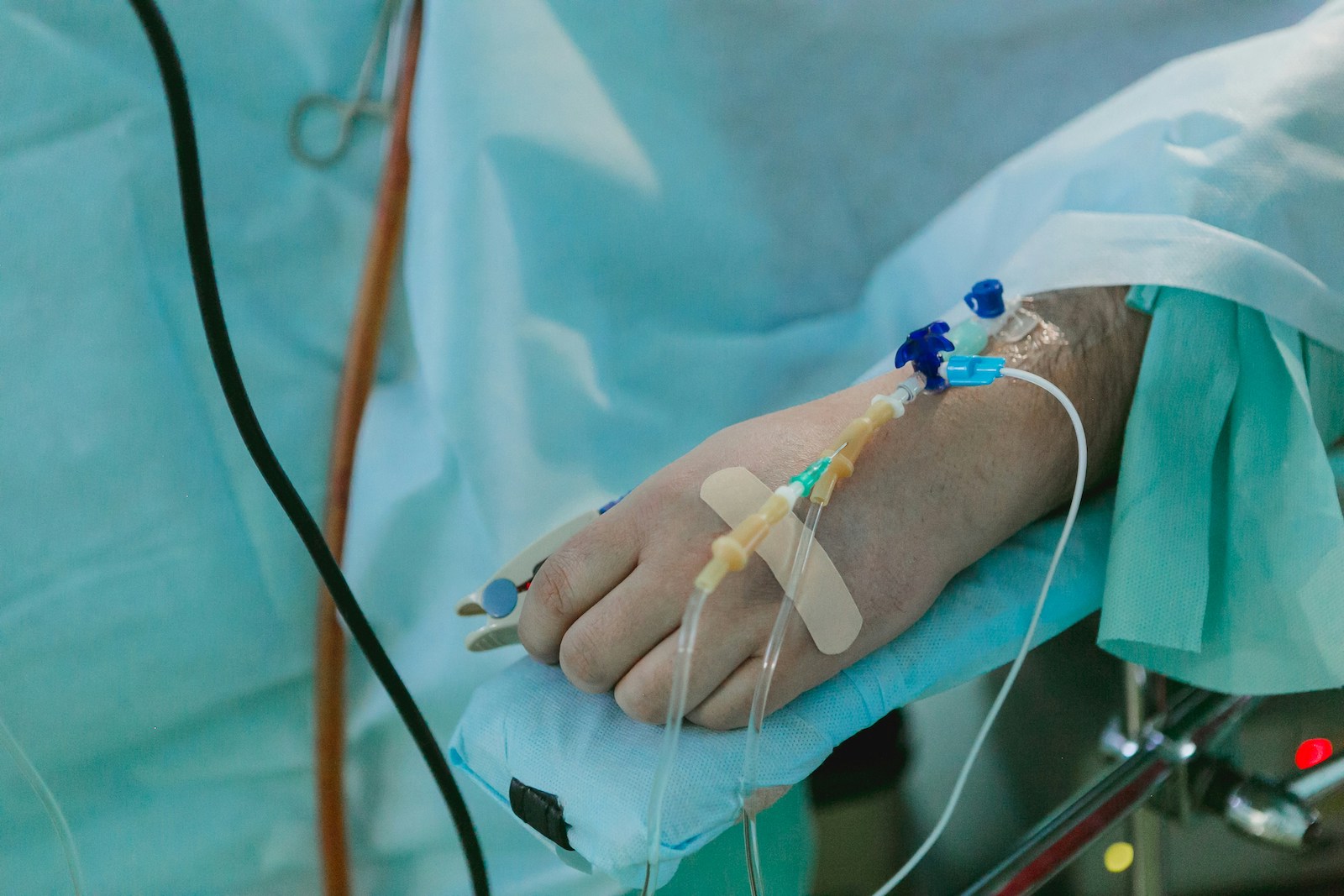
Once blood work started coming back they began to realize how critically ill I was, and I was admitted. I required multiple blood transfusions and long-term antibiotics.
On day three the doctor caring for me sat down and began discussing end-of-life care and decisions. He looked frightened, and explained to me that if my labs did not improve by the next morning, the likelihood of death would increase to 90 percent.
I will never forget that feeling. I spent the next few hours preparing videos for each of my children, telling my story and doing my best to make the case that I was a good father who loved them dearly. I wrote a letter to my wife, declaring my deep love for her and apologizing for not being a stronger and better man. It was a truly heartbreaking and helpless experience.
Miraculously, I turned the corner and everything began to improve. But I kept wondering what was so dramatically different about that experience.
It wasn’t until six months later that I spoke with journalist and harm reductionist Chris Moraff, who told me about his work with PA Groundhogs and the presence of medetomidine in Philadelphia. When I. described the exact block where I purchased the dope and the identifying stamp, he knew without question that I had experienced medetomidine withdrawal, essentially cold turkey—a condition now understood to be so severe that one hospital in Philadelphia has a designated ICU for these cases. Another hospital has a dedicated ambulance to transport medetomidine patients from other hospitals to more specialized care. Most rehabs in the area will now not accept opioid-withdrawal patients before medical clearance.
Prohibition made xylazine less available, at least short-term, but in typical fashion it ushered in a more potent substitute.
Two years ago, xylazine (“tranq”) was the focal point of most medical care, which primarily zeroed in on chronic wound management, limb salvage and infections. At one point xylazine was found in 99 percent of all street samples in Philadelphia. After xylazine was scheduled as a controlled substance in Pennsylvania—temporarily in 2023, then permanently the following year—this dropped to 40 percent, and continues to fall.
Prohibition made xylazine less available, at least short-term, but in typical fashion it ushered in a more potent substitute—the dramatic impacts of which were recently covered by the New York Times.
In fall 2025, I underwent skin graft surgery to finally close my old xylazine wounds. While I was recovering in the burn ICU, I spent a considerable amount of time talking with the physicians and nurses. They were all visibly concerned about medetomidine. Several of the nurses caring for me picked up shifts in the medetomidine-dedicated ICU. They told me they’d never seen so many resource-intensive cases in their entire careers. They appeared beat down and heartbroken, unsure if their work really mattered in the face of such a massive problem.
This story highlights several things. First, there continues to be large-scale ignorance of the detrimental effects of the punitive withholding of methadone in the carceral clinic system. People who take methadone are inherently at risk, and after years of prohibition, the street supply has become so dangerous that a single missed dose can prove fatal. Despite SAMHSA’s recommendations on take-home doses being relaxed in 2024, many (most) clinics have largely ignored these changes and still require daily in-person, observed dosing.
Second, stigma against people who use drugs in health care settings continues, and when it dissuades people from seeking care, it can be deadly.
I will never be the same man as I was prior to 2020. I want those we care for to live long, happy and healthy lives. Our systems stack the odds against them.
Third, my experience shows not only the importance of drug checking, but how it’s critical that changes detected in the drug supply are rapidly communicated to health providers, so they know what they could be dealing with.
And fourth, authorities should have learned long ago that banning drugs and enforcing drug laws may disrupt the supply, but never, in the long-term, for the better. The effects of the Iron Law of Prohibition have accelerated during the current overdose crisis, and our drug supply has long since reached a critical point of danger.
In the past we had the luxury of a supply not without risk, but reliable enough for harm reduction workers to have a sense of predictability and provide a safety net for those in our care. Those days are gone. Today I believe loving harm reduction means not only continuing to provide lifesaving supplies, but also doing everything we can to point people using dope adulterated with xylazine or medetomidine toward a safer supply.
I originally used heroin as a way to manage the ongoing effects of post-traumatic stress, and it did so with precision. I never suffered from abscesses, infections, hospital admissions or long-term complications. However, after using tranq dope for a short period I suffered catastrophic long-term health complications. And then I nearly died after unknowingly using medetomidine.
I will never be the same man as I was prior to 2020. Philly’s current dope is akin to being stood up on prom night by your dream date: empty, cold, lonely and forever painful. Every single time I move my body I am reminded how horrifically tranq is affecting our friends, and of those who have lost their lives after using medetomidine. I want those we care for to live long, happy and healthy lives. Our systems stack the odds against them.
Photograph by Olga Kononenko on Unsplash