

In Illinois, a bill to authorize an overdose prevention center (OPC) pilot is working its way through the House. HB 2929 follows a years-long push to open OPC in Chicago’s West Side, which has borne the state’s highest rates of overdose deaths.
The bill was introduced in the 2025 legislative session, during which it was heavily discussed in the House but did not cross over to the Senate. Earlier in March, it began moving through the House once again. The Mental Health & Addiction Committee recommended an amended version on March 26.
The original version of the bill would have allowed multiple sites, if local authorities approved them. In January 2025, shortly before HB 2929 was introduced, the Illinois Opioid Remediation Advisory Board voted to allocate $18 million for OPC from the state’s opioid settlement payouts (which are expected to total around $1.4 billion by 2038). This would in theory fund three sites at $2 million per year for three years.
Since then, however, the bill has been amended so that the Illinois Department of Human Services (IDHS) would approve a single site in a municipality with a population greater than 2 million, which by default would be Chicago. IDHS would propose three location options in areas with high overdose rates, but only one would ultimately be selected.
HB 2929 bill is sponsored by Representative La Shawn Ford (D), who over the past six years has led multiple legislative efforts to authorize OPC in Illinois—as well as in Chicago, under city rather than state approval. Ford represents the 8th District, which includes Chicago’s West Side. In 2020, IDHS launched its Overdose Prevention Site Community Engagement Project and released a report describing the potential of OPC on the West Side to reduce racial disparities in the state’s overdose crisis. Notably, 86 percent of West Side residents surveyed were in favor of opening an OPC in their community.
In 2021 New York City opened the country’s first two authorized OPC, which operate under the city’s jurisdiction. The only states to have authorized OPC are Rhode Island, which has opened one site; Minnesota, which has put OPC on hold indefinitely; and Vermont, which is attempting to find a location to open an approved site in Burlington.
HB 2929 mandates a “Nothing About Us Without Us” approach.
HB 2929 mandates a “Nothing About Us Without Us” approach, describing how the OPC’s principles would be based in harm reduction and input from people who use drugs. It includes a provision that the state “may not prohibit persons with criminal records from frontline, management, or executive positions within entities that operate the pilot OPS based solely on the existence of the criminal record.”
All 25 cosponsors are Democrats. While the bill previously had found some support among Republican representatives, it faced outspoken opposition from others like Rep. Dennis Tipsword (R), who has propagated the myth that OPC “increase crime” and claimed that the NYC sites have “failed.” Concurrently with his position in the state legislature, Tipsword has been serving as Woodford County deputy sheriff, and plans to run for sheriff once his House term expires later in 2026.
“If someone’s going there and they have their heroin with them, they would have some immunity going to and from the center,” Tipsword told the Denver Gazette in 2025. “Well, obviously, I’m against that but the way they had it written the first time, it said that these people had any immunity from any criminal case. Once you’re a patient at this facility, does that immunity follow you everywhere you go? I mean, the language was horrible and very vague.”
The original language did not suggest broad immunity from “any” case, only any case that stemmed solely from “participation or involvement” in an authorized OPC. The amended language is functionally identical. Tipsword serves on the Mental Health & Addiction Committee, where on March 26 he again opposed the bill but was outvoted.
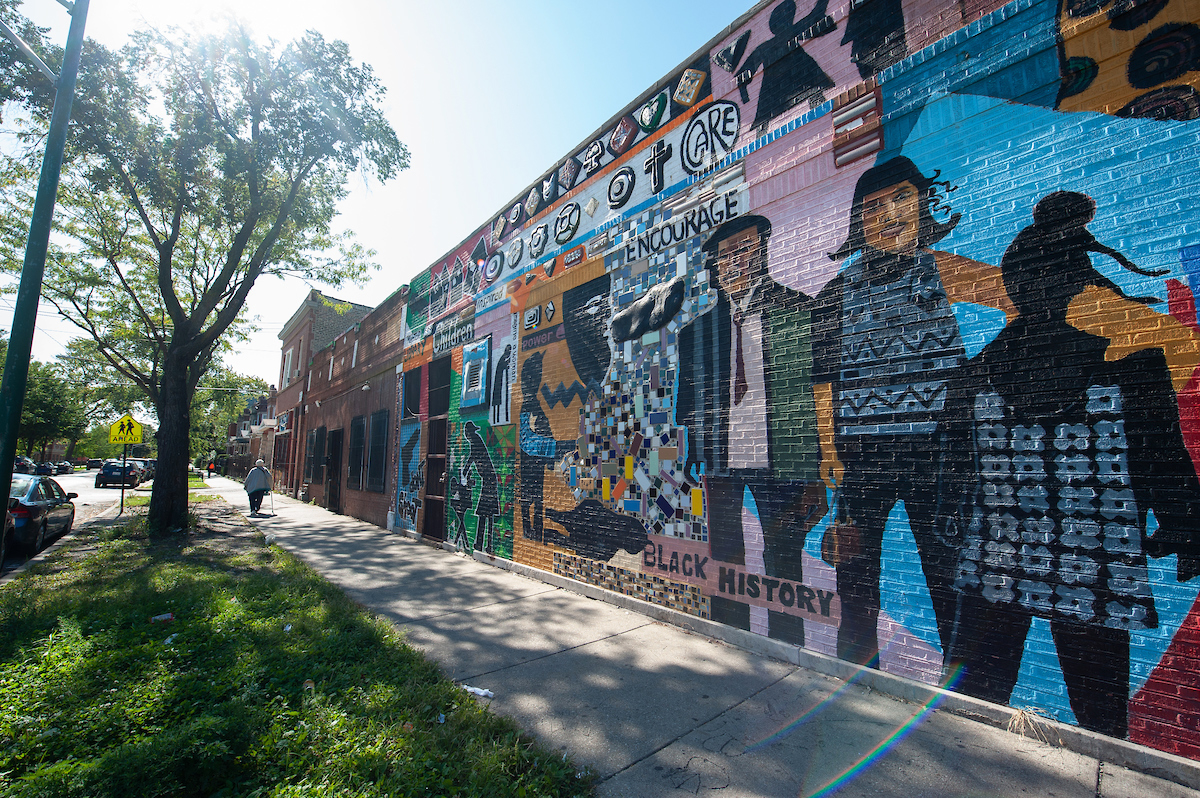
Image of Humboldt Park via City of Chicago