
Illinois lawmakers are considering a proposal to pilot long-acting injectable medication for opioid use disorder (MOUD) within the state prison system. It’s one of several bills currently in committee that purports to expand access to MOUD in the Illinois Department of Corrections (IDOC), without quite applying to most of the people actually in custody.
So far in April, HB4708 has passed the Restorative Justice & Public Safety Committee, received a second reading and changed chief sponsor to Assistant Majority Leader Rep. Will Guzzardi (D). It’s calendered for another committee hearing April 16. The pilot would begin January 1, 2027, in at least one IDOC facility.
As introduced, HB4708 would have required the pilot to provide a minimum of 4,000 doses and bridge participants to community treatment upon release, “including, but not limited to, a referral to a harm reduction provider.” It has since been amended to require that the pilot provide a full course of treatment to at least 3,000 people. It also stipulates that this would be covered by opioid settlement funds, and that the pilot should not commence until full funding has been secured so that every participant “may receive the full course of treatment clinically indicated.” There’s no longer any reference to harm reduction providers, but prior to a participant’s release IDOC would be required to make an appointment with an “appropriate provider or treatment site” and share the relevant medical information.
The bill would also now require an independent third-party evaluation, which would determine the pilot’s success by tracking a handful of metrics for each participant. These are primarily concerned with whether participants continue treatment in the community, but the evaluator would also record any post-release fatal or non-fatal overdose, any rearrest or other further interactions with the criminal-legal system, “institutional safety indicators” and of course cost-effectiveness. The latest amendment would require IDOC to publicize the pilot eligibility criteria and selection process, and a report would be submitted to lawmakers by January 1, 2029.
While it’s obviously important that participants don’t have their treatment cut off because funds ran out, or because IDOC failed to ensure continuity of care upon release, the effect of these provisions will be to deprioritize everyone who has more than a year or two left on their sentence. Not that they wouldn’t have been deprioritized already—MOUD is widely considered inappropriate for anyone whose release date is not imminent.
This is due to the misinformation about the harms of MOUD “diversion”; the lack of staffing resources and political will to contemplate treating the much larger share of the prison population; and the fact that while corrections departments across the country justify any and all policy changes by saying they’re necessary to combat the tidal wave of incoming contraband, they also cling to the narrative that there are simply no drugs in prison and so there’s no need to treat anyone unless they’re about to get out. Notably, the bill does not instruct the third-party evaluator to look into overdose rates among participants while they are still incarcerated.
Another Illinois bill introduced in 2025, SB2185, would require IDOC to screen everyone in custody for OUD and provide medication to anyone eligible, with funding from the Illinois Opioid Settlements Initiative. It’s currently in the Senate Appropriations-Public Safety and Infrastructure Committee, which is required to report on it by April 24. But this bill heavily emphasizes providing MOUD to people who were already enrolled in a treatment program at the time of their arrest, and makes clear that IDOC can defer or discontinue their MOUD if medical staff determine it’s no longer necessary. IDOC considers MOUD for prisoners who weren’t already taking it when they began their sentence, but only at its two women’s facilities.
The bill states that even if they weren’t already enrolled in treatment, an eligible “committed person shall be authorized to receive [MOUD] immediately and for as long as clinically indicated.” But again, IDOC gets to decide that. Even if all the other criteria are met, people with decades left on their sentence aren’t usually found clinically indicated in these situations.
The best-known long-acting buprenorphine product is Sublocade, a monthly injection manufactured by Indivior Pharmaceuticals.
HB4708 does not distinguish between long-acting injectable versions of naltrexone and buprenorphine. But the former, better known by brand name Vivitrol, is already widely used in reentry settings despite the fact that naltrexone is the only MOUD not shown to decrease overdose risk, and has been repeatedly associated with increasing overdose risk.
The best-known long-acting buprenorphine product is Sublocade, a monthly injection manufactured by Indivior Pharmaceuticals. In 2025 Indivior expressed plans to focus its energies on Sublocade, which is exponentially more profitable than the company’s other ventures.
In late March, an Indivior-funded study published in the Journal of Current Medical Research and Opinion suggested that based on treating 100 patients per month, Sublocade would save over $22,000 and 747 staffing hours per month compared to oral buprenorphine, which in prisons must be dispensed every day. (Sublocade also managed to perform better than all other MOUD in the study, including beating a competitor brand’s other long-acting injectable buprenorphine product by $23 and one staffing hour per month.)
In an April 3 paper published in the Journal of Correctional Health Care, 87 percent of prison staff surveyed responded that long-acting injectable buprenorphine could help reduce “diversion” of prescribed Suboxone. Two of the seven authors are employed by Indivior.
Notwithstanding Indivior’s obvious incentive to produce science that shows its product to be just what corrections departments need, making Sublocade widely available in prisons would have substantial benefits. But a central problem plaguing this type of legislation is that it relies on the idea that MOUD provision requires steady, uninterrupted care—which it does—while only making it available to people at the last possible minute before release.
There is, however, at least one Illinois bill under consideration that acknowledges this. HB4583, introduced by Guzzardi in January and currently in the House Rules Committee, would require that everyone in IDOC be assessed for OUD and that medication be provided to anyone at risk, regardless of whether they’re nearing release.
“The Department of Corrections does not currently have extensive medication-assisted treatment programs readily available to meet the needs of all committed persons with opioid use disorder, despite estimates that more than half of the committed population meets the criteria for having a substance use disorder,” the bill states. “Individuals with opioid use disorder living in correctional settings are entitled to the same level of care as those in community-based settings.”
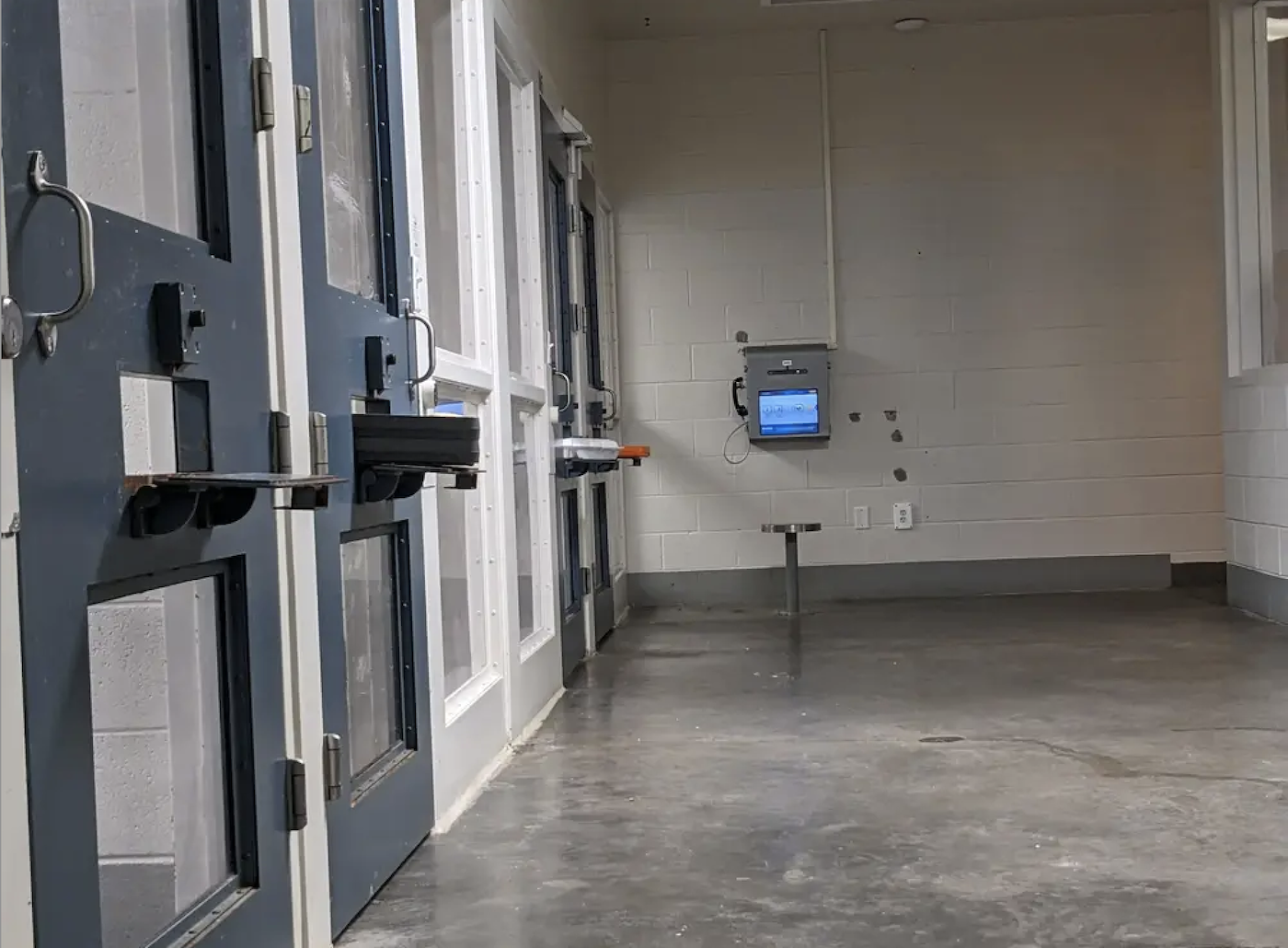
Image via Weber County, Utah