

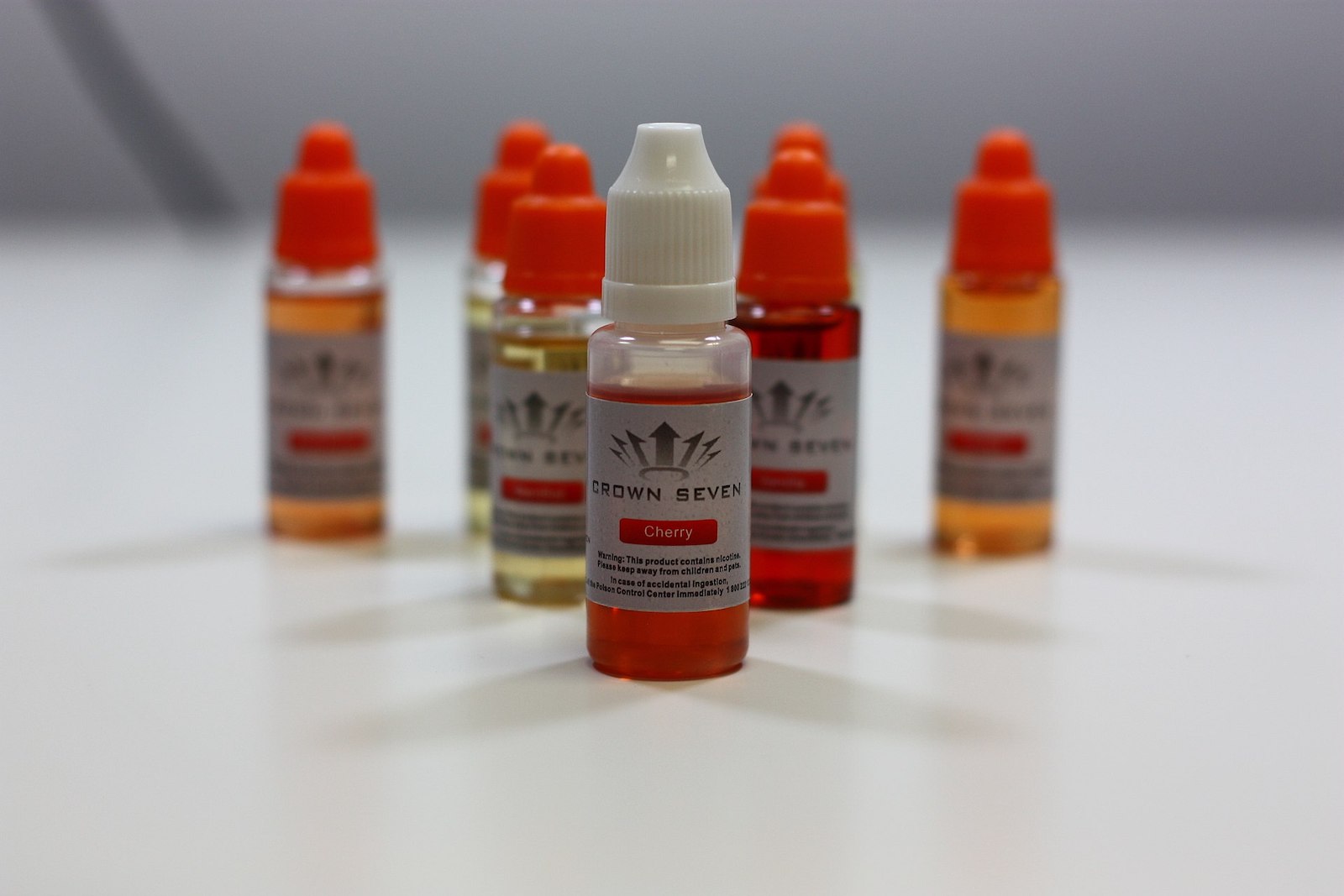
Germany has set its sights on banning menthol vapes and other flavors that contain cooling agents, claiming these make vaping “more attractive.”
That would imply it’s a good thing to make safer substitutes for cigarettes less attractive—in a country with an estimated smoking rate of 28 percent, causing around 125,000 annual deaths.
Banning menthol vapes would carry particular significance when Germany, in line with the rest of the European Union, banned menthol cigarettes in 2020. Data show that people who smoked menthols are very likely to seek the same flavor if they switch to vapes.
But under a draft regulation by the Federal Ministry for Agriculture, the ban would extend to all of the many flavored e-liquids containing synthetic cooling agents. It will take effect later in 2026 if adopted.
Germany’s Federal Institute for Risk Assessment (BfR) claims that “As the cooling effects make it easier to inhale, they can result in increased nicotine intake and possibly lead to greater dependence, especially among young and inexperienced users.”
Yet the Institute admits—as the draft regulation acknowledges—that coolants are “poorly researched,” with “very limited” data to back these claims.
Germany’s aim of reducing its smoking rate to 5 percent or below by 2040 already seemed “unrealistic,” Prof. Stover said. It now looks “even more unrealistic.”
Heino Stover, professor of social science addiction research at Frankfurt University of Applied Sciences, told Filter that the “scientific evidence is not there” to warrant such a sweeping ban.
“Ban on flavors will not help decrease the high smoking prevalence,” he said. Germany’s aim of reducing its smoking rate to 5 percent or below by 2040 already seemed “unrealistic” before the proposed ban; it now looks “even more unrealistic.”
Menthol isn’t the preferred option for German vape consumer Klaus Heckershoff. But the ban, he told Filter, will cover the sweetener sucralose as well as various synthetic cooling agents, “which are contained in many liquids that I use.”
When many of Germany’s most popular e-liquids contain these ingredients, Heckershoff argued that the so-called “menthol ban” will affect almost all vapers.
According to Bundesverband Rauchfreie Alternative, the German consumer organization for smoke-free alternatives, most flavors use cooling agents to “make them round—without it they are kind of unfinished, even if you cannot taste or notice the cooling.”
“A lot of consumers prefer flavors with cooling—such as ‘iced apple,’ over ‘apple’—because it gives them a stronger throat hit, which in turn helps them to stay off cigarettes.”
Board member Andreas Schimo told Filter that the proposal is therefore “a disguised flavor ban.”
“A lot of consumers prefer flavors with cooling—such as ‘iced apple,’ over ‘apple’—because it gives them a stronger throat hit, which in turn helps them to stay off cigarettes or even reduce the nicotine in their vapes,” Schimo said. “Unlike in cigarettes, cooling agents makes the inhalation harder and not easier.”
That consumer assessment directly contradicts the rationale behind banning cooling agents—and like Stover, Schimo said the BfR assessment was based on “very weak evidence” that’s been criticized by scientists.
“While it’s true menthol makes the inhalation of tobacco smoke easier, you cannot transfer this to e-cigarettes,” he elaborated. “Tobacco smoke leads to smoke-induced irritation of the airways. As e-cigarettes do not produce smoke, there is no smoke-induced irritation which would have to be cooled.”
He added that this was BfR’s own position until recently. The institute’s past paper stated: “E-cigarettes do not release irritating combustion products whose effects would need to be masked by additives. Therefore, inhalation facilitated by menthol is significantly less relevant with these products than with tobacco cigarettes.”
“Now they are saying the opposite without having any new research, data or science on this matter,” Schimo said. Bundesverband Rauchfreie Alternative has reached out to the BfR, asking for an explanation for its paradigm shift, but has not received one to date.
To see the potential impacts of flavor bans, Germany only need look to its neighbor, the Netherlands, which banned all flavors at the beginning of 2024. There, advocates note, the market has shifted to unregulated products, often sold without age controls. Both youth vaping and youth smoking have since risen.
Stover predicts similar outcomes for Germans, and worries that, “people might return to combustible cigarettes because e-cigarettes without flavors are not attractive at all.”
“The bans now planned only make youth access easier, because they strengthen the illegal market, which does not care at all about the protection of minors.”
Many jurisdictions around the world have experienced increases in smoking after vape flavors are banned. Nor do these policies have the desired impact on youth vaping, Heckershoff noted.
“The bans now planned, like all the others before, only make this access easier,” he said, “because they strengthen the illegal market, which does not care at all about the protection of minors.”
With access to flavors expected to be greatly reduced, Heckershoff fears that far fewer of the 20 million people who smoke in Germany will be able to take the path he took to quitting combustibles.
“If harm reduction was consistently implemented for nicotine instead of continually restricting legal options, the number of deaths from tobacco smoke could be significantly reduced and many thousands of lives could be saved,” he said. “But politicians don’t seem to be interested in that, despite the fact that nicotine from e-cigarettes is proven to be more comparable in effect to coffee than tobacco cigarettes.”
Photograph by Lindsay Fox via Wikimedia Commons/Creative Commons 2.0