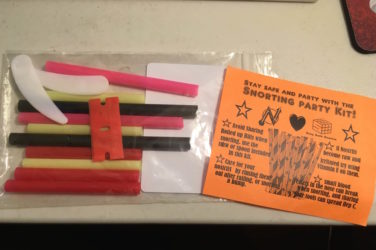


The Food and Drug Administration is asking the public to weigh in on the merits of commercial drug-disposal products, for destroying leftover prescription opioids at home. The agency is considering whether to require pharmaceutical companies to offer such products, though it can’t seem to find many reasons to look into the issue other than that recent legislation requires it.
In late 2025, the federal government reauthorized the Substance Use-Disorder Prevention that Promotes Opioid Recovery and Treatment for Patients and Communities (SUPPORT) Act. One of its provisions required Department of Health and Human Services Secretary Robert F. Kennedy Jr. (R) to work with the Drug Enforcement Administration to publish guidance on use of in-home drug disposal systems. The FDA issued a Request for Information (RFI) in the Federal Register on March 6, and the public can submit comment electronically or by mail until April 6.
“Having unused opioids laying around at home can be a significant risk to those struggling with opioids and can be a gateway for opioid-naïve family members,” stated FDA Commissioner Dr. Marty Makary. “We need to develop creative ways to address opioid misuse and abuse.”
This is ungenerous to his agency’s previous efforts, as both the FDA and DEA have already developed inordinately creative ways of rounding up leftover medications.
Currently, the government’s first-line option for disposal of unwanted or expired medications is for patients to drop them off with law enforcement at a Prescription Drug Take Back Day, a recurring event that the DEA promotes in the tone that car dealerships use to promote Memorial Day weekend sales. In areas where no such event is scheduled in the near future, people are encouraged to find the drug dropboxes stationed at various pharmacies or at their local sheriff’s office. Or, they can use special prepaid envelopes to legally mail the drugs directly to a disposal facility. You get a certificate once they’ve been incinerated.
If none of those options are feasible, you’re supposed to check the FDA’s flush list, a nonintuitive selection of the medications—mostly opioid analgesics—that the agency claims pose the greatest overdose risk to children and pets. The list includes buprenorphine, methadone, a benzodiazepine rectal gel and a transdermal Ritalin patch.
“Medicines on the flush list are those (1) sought-after for their misuse and/or abuse potential and (2) that can result in death from one dose if inappropriately taken,” the list states. “If children, adults or pets in your home accidentally or intentionally ingest, touch, misuse or abuse a medicine on the flush list, they can suffer serious consequences including death.”
At the end of the list the agency explains that the risk of overdose from accidental exposure “far outweighs” any potential harms of flushing, and that the selected drugs “present negligible risk to the environment, although additional data would be helpful for confirming this.”
Most medications are not on the flush list, and according to the FDA are fine to add to your regular household trash as long as you make sure they’re unsalvageable. You do this not by dissolving or crushing them, but by leaving them completely intact and mixing them with cat litter, dirt or used coffee grounds.
“This makes the medicine less appealing to children and pets,” the FDA has stated previously, “and unrecognizable to someone who might intentionally go through the trash looking for drugs.”
Though creative, at the cat-litter stage we start to lose the plot a bit more. Of all the conceivable demographics that might be deterred from eating pills because there’s dirt on them, at the bottom of the list would be babies, dogs and whatever drug-using bogeyman the FDA imagines is waiting to go through your trash, opening random Ziplocs full of cat litter to see if there are pharmaceuticals inside.
The argument for leaving tablets fully intact is that crushing them would release dangerous drug dust into the air—creating an exposure risk that is not real, but which the feds take very seriously nonetheless—and perhaps be easier for bystanders to accidentally ingest. There are an infinite number of more effective ways to make pills unrecognizable to drug users and inaccessible to babies and dogs.
Similarly, the FDA also warns that “once the expiration date has passed there is no guarantee that the medicine will be safe and effective … don’t use expired medicines—it’s not worth the risk!” The agency is aware that the expiration date printed on the label refers to when the prescription expires (meaning your pharmacy won’t fill it after that date) not the medication itself, but still we talk about shelf-stable opioids like something that could give you food poisoning.
“It remains challenging to validate data on in-home disposal systems because there are no industry-wide agreed upon tests to evaluate in-home disposal systems for their intended purpose of disposing of opioid analgesics,” the FDA stated in its March 6 notice.
Because in-home disposal products are not regulated, manufacturers are not required to report adverse events and thus there hasn’t been a ton of data for the FDA to review. In looking through more anecdotal records, however, the agency “reports of patients who thought the disposal system was a separate medication that should be ingested,” or “bags not sealing appropriately and foaming out before the bag could be resealed.”
Companies that make the in-home disposal products currently on the market have a different interpretation. DisposeRx, which posted a March 10 endorsement of the FDA’s action, was already describing its drug-deactivating gel packets as “FDA-recognized.” Deterra, which makes a similar product, states that FDA guidelines “include at-home medication disposal products as a safe, convenient” option.
Despite the flush list, the DEA considers incineration the only method of rendering drugs “nonretrievable.” But since 2022 this standard has not applied to the safe-disposal options the FDA requires pharmaceutical manufacturers to offer.
Open burning of household waste is prohibited. But when explaining why you can’t just burn the unwanted drugs yourself, multiple government agencies including the Environmental Protection Agency also consider it relevant to note that open burns wouldn’t be able to achieve the combustion temperatures necessary to fully, nonretrievably incinerate the drugs.
Using a drug disposal product could itself introduce risk of child exposure, because it involves removing the medication from the child-resistant packaging it already comes in. It might rely on a chemical reaction that takes place over the course of several hours, or more. It also just attracts more attention. The FDA also notes that wider adoption of these products “would likely result in an increased number of used systems with potentially available opioid analgesics in household trash,” from which they could be retrieved if the disposal product didn’t work.
The prepaid envelopes were the first safe-disposal system that the FDA required manufacturers to offer pharmacies and providers, who can in turn give them to patients. It refers to them as an “underutilized” option, one that essentially checks all the boxes. The envelopes don’t require removing the drugs from their child-safe packaging—you can just put the bottle itself in there—and are straightforward products people are already familiar with. Their use is already regulated by the United States Postal Service. They can even constitute “nonretrievable” disposal because once mailed, federal law ensures they go straight to the incinerator with no tampering along the way.
So we’ve so far established that opioids can be safely flushed; that the prepaid envelopes are the ideal solution; that the the only incineration can render drugs “non-retrievable”; and that at-home disposal kits introduce multiple opportunities for the diversion and exposure the feds are so worried about. The only reason to reinvent the wheel—or toilet, incinerator, etc.,—is to further the “gateway theory” that Makary was referencing.
The tail end of someone else’s post-surgery prescription is not an ongoing supply source. The premise the FDA is getting at is the myth that opioids are so toxic, so likely to get teenagers “immediately addicted,” so powerful that regular fire won’t stop people from using them and we need to invent increasingly complex yet clumsy ways of containing them.
Image (cropped) via Drug Enforcement Administration