
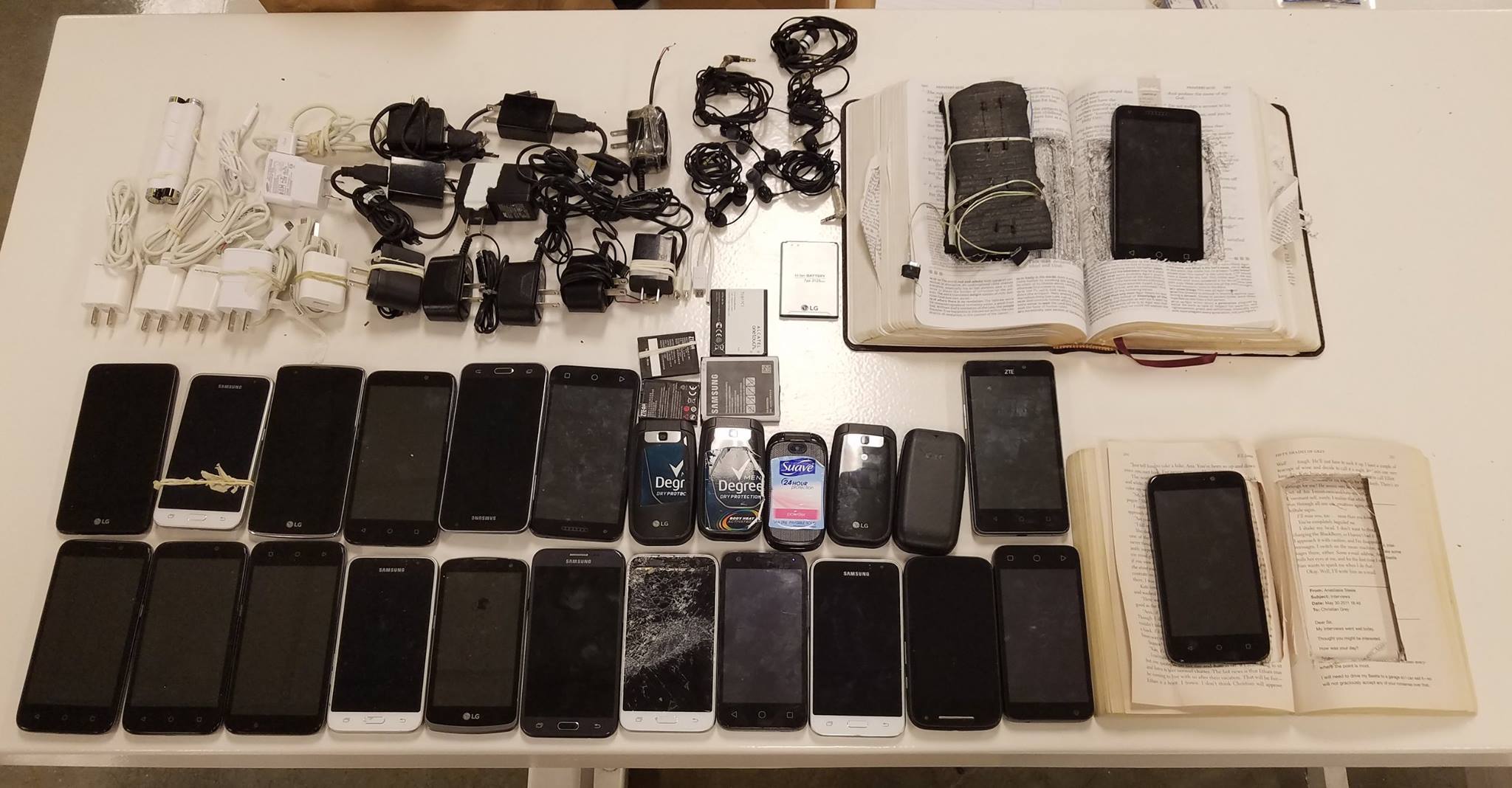
The Federal Communications Commission (FCC) is about to formally consider allowing corrections departments to use cell phone signal jamming devices. It’s the culmination of a years-long smear campaign against contraband cell phones, which do far more good than harm.
“I am pleased to announce that the FCC will vote, for the first time ever, on allowing prisons to jam contraband cellphones,” Chairman Brendan Carr stated in a September 5 press release. “For years, thousands upon thousands of contraband cellphones have been pouring into prisons, and some of the worst possible offenders have been using them to order hits, coordinate violent gang activity and aid criminal enterprises.”
The vote will take place September 30. If authorized, corrections departments that opted to use the technology could likely start doing so in 2026.
Signal jamming technology basically creates a dead zone for cell phone reception, disrupting active calls and messages. Why is it federally illegal? Because it’s a public safety hazard, starting with the fact that it could interfere with 911 calls in communities nearby. Historically, the FCC has not been inclined to budge on the issue, but corrections departments and elected officials have been pressuring the commission for well over a decade now. Few things vex them more than contraband cell phones.
The prison industrial complex relies on the public not being able to see what goes on inside.
The prison industrial complex relies on the public not being able to see what goes on inside. But with cell phones that access the internet, prisoners are able to film and share the footage on social media. In an environment where many can’t afford food and toiletries, phones also allow prisoners to earn their own money—that’s a good thing. They allow people to talk to their families, and to call for help during emergencies.
And of course they circumvent the profiteers like Securus Technologies that we have to pay in order to use the prison wall phones.
“Renting phones and hotspot use is the easy way to offset the phone bill,” B*, currently serving a life sentence in Georgia Department of Corrections (GDC) custody, told Filter. “I got two men who, between them alone, pay for an unlimited data plan monthly. Three others also buy hotspot time from me regularly at $1 an hour. Over the course of a year, the phone has paid for itself and allowed me to eat.”
GDC confiscated upwards 15,000 contraband cell phones in 2024.
“During the pandemic the [cell phone] market boomed,” said Al*, a de facto GDC historian also serving a life sentence. “In some comparably few cases, incarcerated people use these devices to engage in criminal activities. Other prisoners have used their cell phones to pursue higher educations. The vast majority have used their phones as simply a means of staying relevant in their families’ lives, or to occupy their minds during inconceivably long sentences … The most serious threat to politicians, though, has been the exposure of the truth.”
These Android 15s cost about $80 at Walmart; here, they go for $450. Larger phones cost twice that.
The FCC referenced “targeted jamming solutions” that would operate without “harmful interference to wireless carrier networks, and in particular, wireless devices of Americans who live, work and travel near prisons.” Officials plan to seek public comment as they work out the technical details.
GDC has already been using the Securus Wireless Containment Solution to block numbers that haven’t been pre-approved, at least at a few facilities. But “targeted” jamming technology could actively disrupt service within localized areas, like housing units. GDC did not respond to Filter‘s request for comment.
“Corrections has changed,” Al continued. “Today it is an industry that requires endless growth. [It] no longer needs convict labor, it just needs convicts. And it needs chaos to sustain budgets for continual growth [and building] more prisons … disrupting the phones will cause chaos.”
A delivery of Android 15s has just arrived at this facility. This palm-sized model runs about $80 at Walmart; here, they go for $450. Larger phones cost twice that—drone deliveries charge by the gram. These aren’t so great for watching TV, but will still keep you connected to the outside world. Prohibition has never made them go away, only driven up the price. Though it’s obviously too soon to know exactly how signal jamming would impact the contraband phone market, it’s highly doubtful it would just die out.
B* predicts the jammers could be weak, or so localized that there will still be places that get a signal.
“A lot of prisoners with phones already know what environmental barriers interfere with reception,” he said. “The jammers will have to allow for the legal WiFi connections. There are kiosks in every living unit that transmit wirelessly. Newer fire alarm systems are wireless. The officers’ clipboard is now an iPad … if there is a means for all that to get through, someone will find a way for phones to work.”
*Names have been changed for sources’ protection