
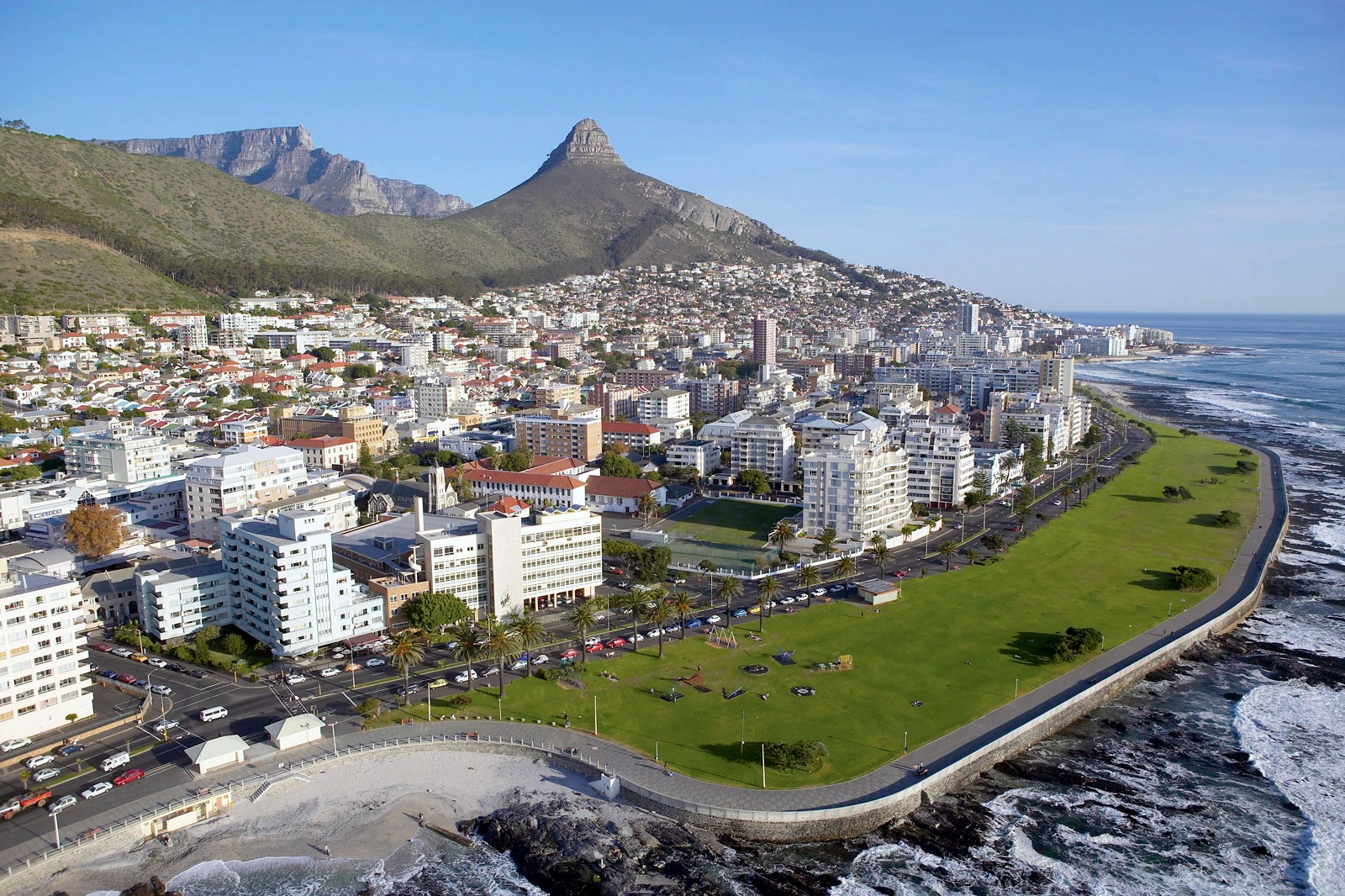
Cape Town, South Africa, is a city renowned for its breathtaking landscapes and vibrant culture. Woven into the fabric of the unregulated drug trade is the “Nigerian mafia.” Though they cause significant harm, they also engage in their own forms of harm reduction when it comes to both drug distribution and violence. Their story shows how Cape Town’s drug trade is divided along class lines, how both local and immigrant communities struggle to survive without economic investment, and how the drug supply will always exist wherever there is demand.
The Nigerian mafia are not a single group. The term describes a vast network of different syndicates, but it is what everyone here calls them. Their presence in Cape Town is not new. In the late 1990s, a few years after apartheid ended, these syndicates first set up shop in Sea Point, an affluent suburb known for its safety and contributions to the economy. But they were pushed out of these communities and instead settled into Cape Town’s northern suburbs, where they could more easily operate under the radar.
Their modus operandi is to establish a foothold in an impoverished area where gang activity is not particularly strong. Once entrenched, they seek out local gangs they can collaborate with to distribute drugs more effectively. This allows them to expand, and results in a complex, decentralized web of different illicit activities.
From the northern suburbs the mafia began selling crack cocaine, and soon powder cocaine. Today, powder cocaine remains the biggest component of the trade, but the syndicates also supply other criminalized drugs like MDMA and tik, or methamphetamine.
“Our goal is to establish dominance by offering better drugs and protection,” BJ*, an upper-level supplier in his early 30s, told Filter. “It’s about building trust and ensuring that everyone benefits … We all need to support our families in Nigeria, and being involved in criminal activity is the easiest way to do it—to keep our families under a roof and food in their stomach. We are doing it to survive, without ill intentions.”
Local gangs often sell cheaper drugs that they manufacture themselves, but the Nigerian mafia’s cocaine and MDMA is imported from transnational drug-trafficking organizations in South America. It’s widely known that the quality is superior. The mafia is involved in manufacturing methamphetamine, but much of this is shipped to other countries where it can be sold at a higher price.
“Cocaine [is] the easiest and most lucrative trade which doesn’t require any legal [documentation], as the majority of us are in the country illegally.”
BJ is from Abuja, the capital city of Nigeria. He’s been in Cape Town for more than a decade now, and like many Nigerians living in South Africa he is undocumented. He is primarily involved in the importation and distribution of cocaine, but he also sells MDMA and tik. He’s a very resourceful individual.
“We didn’t come here to only be drug dealers, but we have to do what we must to survive and make a living,” he said. “Cocaine [is] the easiest and most lucrative trade which doesn’t require any legal [documentation], as the majority of us are in the country illegally.”
According to BJ, over the past few years the syndicates have had access to a steady supply of high-quality cocaine. Though they will sometimes cut the product, they will sell it pure to customers who purchase 5 grams or more. Everything is designed to maximize profit, but also to minimize conflict.
For example, because tik is cheaper than cocaine, cutting some of it into the cocaine supply would be an easy way to stretch profits further. But the mafia do not do this, nor do they hardly ever sell tik to customers from out of town. BJ said that this is a safety measure—they want to keep cocaine and tik separate so that users don’t get a drug they aren’t prepared for. Tik lasts much longer than cocaine.
Tik has become the most prominent drug in many neighborhoods, especially in the Western Cape province. It is inexpensive, and most of the people who use it live in poverty. Because of this, there has been little interest in establishing or expanding harm reduction services for them.
Many forms of harm reduction are legal in South Africa, including syringe service programs and medications for opioid use disorder, but the national government does not fund any of them. Much of the funding has come from PEPFAR (the United States President’s Emergency Plan for AIDS Relief) as part of that initiative’s global HIV/AIDS response. With President Donald Trump’s freeze on foreign aid, coverage for many services will run out at the end of March.
Cape Town’s youth—especially those raised in the townships—grow up seeing the drug trade as the best way to survive, and perhaps achieve some status.
Lieutenant Kris Pojie of the South African Police Service told Filter that law enforcement focuses on disrupting the Nigerian mafia’s supply chains and financial networks.
“Our strategy involves intelligence-driven operations targeting key individuals within these syndicates,” Pojie said. “Community tip-offs are invaluable.”
However, these syndicates are adaptable and crafty, and can swiftly relocate when necessary. Their networks have proved challenging for law enforcement to dismantle.
But the mafia do not have a strong presence in the townships, the impoverished neighborhoods that collected non-white people evicted or displaced under apartheid. Countless gangs emerged there as a result, which makes it much harder for Nigerian syndicates to establish a foothold. Today townships like those in Cape Flats see near-daily shootings as various groups fight for their position in the drug trade.
The two most powerful are the Hard Livings and the Americans, which hold substantial control in the markets for drugs like tik, heroin and marijuana. Children as young as 5 are recruited to transport drugs.
First responders will not go into some areas without police escorts, and police officers themselves are often hesitant to enter. Three provinces were recently selected for military deployment.
The mafia do not involve themselves in the day-to-day turf wars between gangs, and members of various syndicates usually reside in peaceful suburbs. They engage in other forms of violence, such as human trafficking.
But both the mafia and the local gangs rely heavily on the drug trade. So Cape Town’s youth—especially those raised in the townships—grow up seeing the drug trade as the best way to survive and perhaps achieve some status, similar to what BJ described. Economic opportunities are so limited that they are rarely able to envision a different future for themselves.
*Name has been changed to protect source
Image of Sea Point via Wikimedia/Hilton1949/Creative Commons 3.0