

Once trusted to champion evidence-based public health, the World Health Organization (WHO) has slipped into an increasingly ideological stance on tobacco and nicotine. This is irresponsible, unethical and utterly inimical to public health.
The agency’s behavior at the recent Conference of the Parties (COP11) to its Framework Convention on Tobacco Control (FCTC), held in Geneva, revealed a bureaucracy that has drifted away from science—now swayed less by the truth than by the priorities of wealthy private donors. Instead of striving to reduce the burden of disease from smoking, the WHO’s leadership appears wedded to a prohibitionist agenda that would deny millions of people access to safer alternatives, thus perpetuating the harms the treaty was created to end.
Throughout COP11, the FCTC Secretariat and its network of allied NGOs attempted to paint proven reduced-risk nicotine products as an urgent threat to global health. Delegations were pressured to treat nicotine pouches, vapes and heated tobacco products as if they were as deadly as combustible cigarettes, despite overwhelming evidence that their risk profiles differ by orders of magnitude.
Delegates were urged to regulate SNP more harshly than cigarettes—protecting products that kill while strangling the potential of substitutes that do not.
The world suffers 8 million annual deaths from cigarette smoking and other harmful tobacco use. Not one death has ever been reliably attributed solely to regulated safer nicotine products.
Yet delegates were urged to regulate these more harshly than cigarettes—a logically backward position, protecting products that kill half their long-term users while strangling the potential of substitutes that do not.
Fortunately, the effort largely failed. Delegates pushed back forcefully, refusing to accept proposals that had no scientific foundation. Attempts to smuggle in sweeping “forward-looking measures” that would have turned voluntary restrictions into de facto obligations were instead watered down to preserve national sovereignty.
Most tellingly, the attempt to force reduced-risk products into the same regulatory category as cigarettes met with widespread resistance. Parties made clear that no consensus existed, kicking the discussion to the 12th COP meeting in 2027.
The Secretariat and its allies presented evidence that was weak—naturally enough, when their case is anti-science. Less natural was the almost cult-like way in which this already-exclusionary discussion was managed.
Any delegate who raised the fact that non-combustibles are significantly less harmful was accused of making “industry-aligned” arguments—a way of silencing dissent.
Any delegate who raised the simple, indisputable fact that non-combustible nicotine products are significantly less harmful than smoking was accused of making “industry-aligned” arguments. That term is designed as a convenient rhetorical tool to dismiss anyone who prioritizes real-world health outcomes over ideological purity—a way of silencing dissent, no matter the extent of its evidential support.
The ubiquitous delusion reached its peak when COP11 President Dr. Reina Roa closed the meeting by declaring that novel nicotine products cause “disability and death.”
It defies belief that the president of a global health congress would make a statement so demonstrably false, and so profoundly damaging.
But the whole event was drenched in hypocrisy. The FCTC groupthink was illustrated through the “Orchid” and “Dirty Ashtray” awards, in bulletins compiled by the closely affiliated Global Alliance for Tobacco Control (GATC). Mexico, a country with soaring smoking rates, a vape ban and a growing illicit market, was lavished with praise in receiving the Orchid Award. New Zealand, which has more than halved smoking prevalence by embracing harm reduction, was condemned with the Dirty Ashtray Award.
The clear message was that the FCTC values ideological loyalty over real reductions in smoking-related harms.
When the funding ecosystem is so lopsided, it is unsurprising that the treaty process has degenerated into a dismal echo chamber.
Following the money helps to explain the inexcusable. As investigative reporting has shown, 15 of the 29 NGOs accredited by the Secretariat for COP11 receive funding from Michael Bloomberg, whose personal crusade against nicotine has distorted global policy. Organizations promoted for supposedly neutral expertise are financially tied to a single billionaire, whose quit-or-die stance on smoking is treated as sacred doctrine. Almost 200 accredited delegates at COP11 were from Bloomberg-funded organizations—not including the WHO itself, which also receives Bloomberg money.
Contributors of articles in the GATC COP11 bulletins included the Global Center for Good Governance in Tobacco Control, University of Bath, Action on Smoking and Health USA, the Smokefree Partnership, the Campaign for Tobacco Free Kids, Vital Strategies, European Network for Smoking and Tobacco Prevention, the NCD Alliance and the South-East Asia Tobacco Control Alliance. All are heavily funded by Bloomberg’s array of anti-nicotine organizations, as indeed is the GATC.
When the funding ecosystem is so lopsided, it is unsurprising that the treaty process has degenerated into a dismal echo chamber.
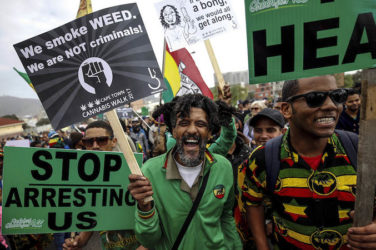
Outside the WHO bubble, a very different conversation was taking place. Just down the road, the Taxpayers Protection Alliance hosted its “Good COP” conference, which brought together researchers, doctors and consumers from around the world. Unlike the WHO’s closed-door proceedings, Good COP was transparent and openly accessible to people on all sides of the debate. It demonstrated what scientifically grounded, ethical and genuinely public-health-oriented dialogue looks like.
The FCTC treaty was designed to save lives, not become a platform for moral panic and donor-driven dogma.
The tragedy is that the FCTC treaty was designed to save lives, not become a platform for moral panic and donor-driven dogma. Article 1(d) explicitly identifies harm reduction as a pillar of tobacco control, yet the WHO behaves as though this principle never existed. Its refusal to acknowledge overwhelming evidence in favor of safer nicotine products goes against the purpose of the treaty described in Article 3: to protect against harms from “tobacco consumption and exposure to tobacco smoke.”
This dereliction of duty is already costing lives, and will cost more—above all in low- and middle-income countries where smoking remains endemic and alternatives are desperately needed.
If the WHO does not correct course, it risks becoming entrenched not as a guardian of public health but an obstacle to it. Science, ethics and the taxpayers who fund the WHO demand better.
Photograph (adapted) via Pickpik
The Influence Foundation, which operates Filter, received a one-off donation from the Taxpayers Protection Alliance in 2024 to support travel to a harm reduction event. Filter‘s Editorial Independence Policy applies.