
In a small but sunny kitchen in the Downtown Eastside (DTES), a vat of cooked pasta and some surplus vegetables from a nearby grocer await a communal meal. Oona Krieg, interim executive director of the Vancouver Area Network of Drug Users, remarks that it’s been a quiet day. Usually if it’s not one fire, it’s another.
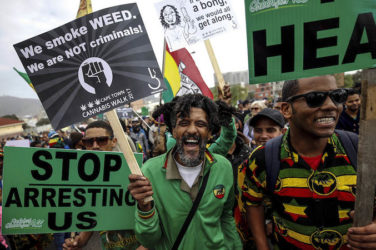
On January 31, British Columbia ended its historic—if insufficient—drug decriminalization pilot. For three years, the province had allowed people to possess up to 2.5 grams of unregulated opioids, methamphetamine, cocaine and MDMA without facing charges. Now, drug-user communities are figuring out what comes next.
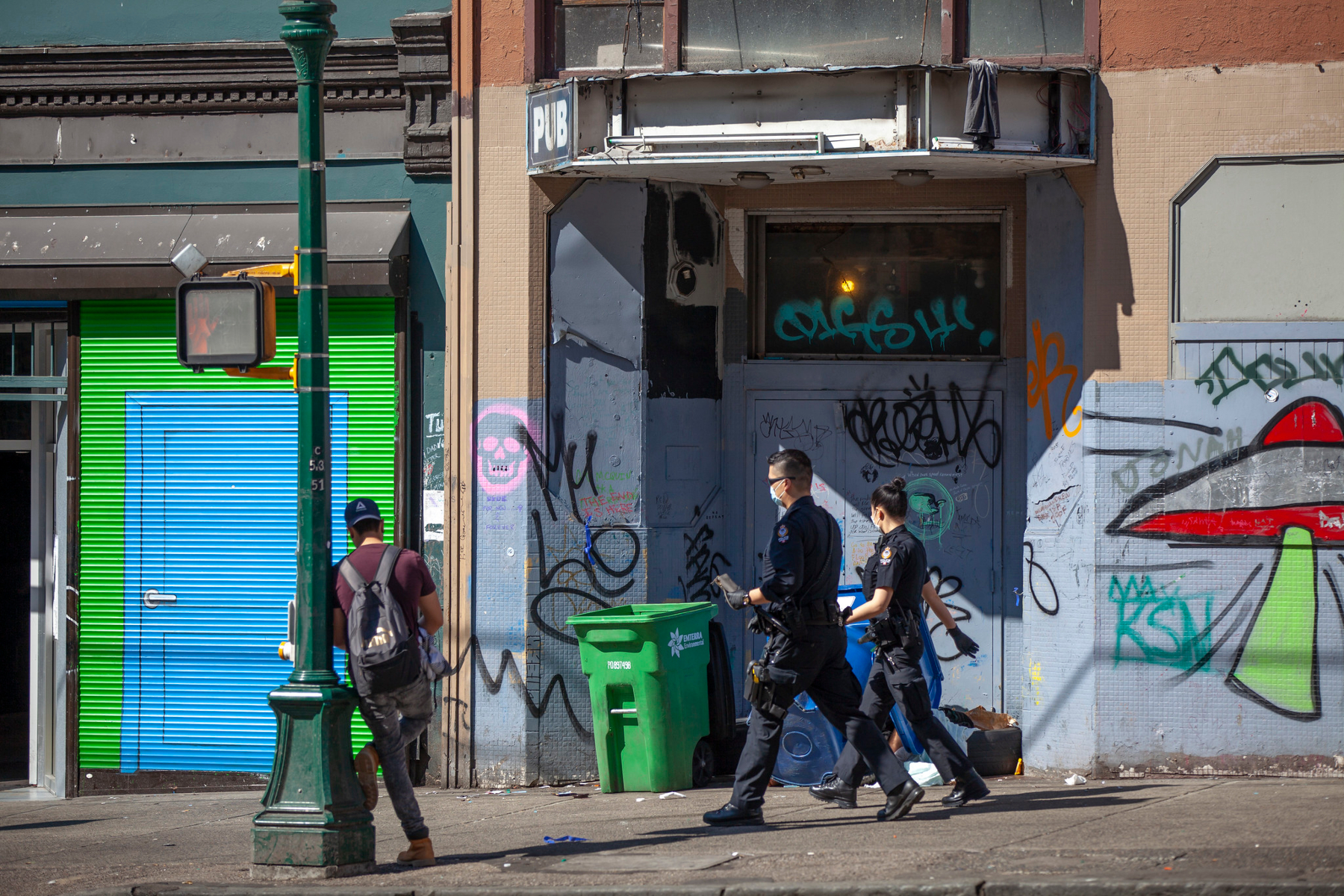
Vancouver is hosting seven FIFA World Cup matches this summer, and harm reduction workers are bracing for something like the 2010 Olympics when police forcibly removed people living in public spaces, trashing tents and harm reduction supplies. A clean image for TV.
Krieg points out the absurdity of street sweeps targeting people who use drugs “without there actually being any money being put toward opening more treatment centers” or other necessary supports.
“It seems like they’re going back to when I first started with VANDU,” said Samona Marsh, the group’s secretary and a member of its police oversight project, as well as vice president of Coalition of Peers Dismantling the Drug War. “Nobody would say [sterile] needles are harm reduction.”
Teasing and bright, with three decades of lived experience, Marsh holds your gaze. She calls it like it is, ribbing some of the flaws in medical safer supply programs. (“I don’t want to take a pill when I’m sick—why the hell would I want to take a pill to get high?”)
The decrim pilot had been fraught, but it was progress. Yet in January, BC officials including Health Minister Josie Osborne and Premier David Eby justified its end by simply saying it wasn’t working.
“Not working for who?” said Marsh, sitting cross-legged on the floor. “It was working for us.”
“It was a shocker to most people in the room.”
Amid rising political backlash, BC began gutting the decrim pilot shortly after it began. In 2024 it recriminalized drug use in all public spaces; consumption was effectively restricted to private indoor spaces, leaving unhoused people at heightened risk for criminalization. The 2.5-gram threshold left people vulnerable to distribution charges. And all along, the pilot continued to rely on police.
Though a widely publicized 2025 study suggested that the decrim pilot facilitated diversion of safer supply medications, Lisa Lapointe, who had recently retired as the province’s longest-running chief coroner, said it did so by misrepresenting the data. “We know that the crisis started under a criminalization program,” she told the Canadian Press. “We know that the number of deaths grew exponentially under the criminalization program .. [the study] doesn’t indicate that decriminalization is not working.”
Just weeks before the province ended the decrim pilot, BC’s Office of the Human Rights Commissioner called for a “human rights-based approach” to the overdose crisis, stating that emerging evidence suggested the pilot was in fact working as intended and that curtailing it “was based on unsubstantiated public perception that street disorder increased under decriminalization,” despite no evidence of that.
“This is the highest level of the [provincial government] making decisions that aren’t based in evidence,” Blake Edwards, a student nurse and long-time DTES outreach worker, told Filter. “I do take it personally, as a frontline worker for this long and seeing the entire evolution of this crisis. I’ve lost so many clients over the years. And I’ve lost so many friends.”
From the start, he said, what’s now being called a failed social experiment never prioritized the people who were actually dying. Drug user-led community groups have been denied the resources they need since “the forever emergency,” as Edwards described it, was first declared a BC public health crisis in 2016.
“It was a shocker to most people in the room,” said Pivot Legal Society lawyer Caitlin Shane, recalling a Surrey Union of Drug Users meeting in January the pilot’s demise was relayed to members, some of whom don’t have regular internet access. “It’s a decision that’s going to directly impact people’s lives … all of these types of political interventions are going to drive reliance on the unregulated market.”
Shane leads the drug policy reform campaign at Pivot, a DTES-based nonprofit focused on poverty and human rights. She describes how BC’s current drug policy reflects a right-wing turn among Eby and the BC New Democratic Party. They’ve made it clear, she said, that they don’t consider people who use drugs worthy of evidence-based supports.
Eby used to be a lawyer at Pivot, she added with a laugh.
Downstairs, photographs memorialize community members lost to the drug war.
Back at VANDU, Marsh notes that fewer glass pipes are being distributed for safer smoking; they are added to a To-Do list. As in the western United States, many people who use opioids in the DTES have shifted from injection to inhalation as they try to reduce the harms of a rapidly changing drug supply. But in recent months glass pipes have come under fire once again as harm-reduction opponents push Canadian drug policy to the right. Saskatchewan already ended pipe distribution in 2024, and prohibited the distribution of educational resources on safer smoking.
Downstairs, photographs memorialize community members lost to the drug war. People who lived and fought for dignity and self-determination, who saw night shifts become unions, friends become comrades and street-smarts become drug policy.
“My mom’s there,” Marsh said. “I don’t know where my dad’s picture is though.”
She gets frustrated over drug use being medicalized and harm reduction being co-opted by institutions, producing what she calls “Swiss cheese research” overly fixated on trauma, as if there could be no other acceptable reason to use drugs. Can’t it ever just be a choice?
“Like Tracey Morrison, I’m going to die down here,” she said quietly, recalling the beloved DTES housing and drug-policy activist, who died in 2017.
“Once again, just another junkie dead.”
Image of Vancouver’s Downtown Eastside by GoToVan via Flickr/Creative Commons 2.0