
Afghanistan used to have the distinction of producing the opium for 95 per cent of the heroin on the European market, and about 80 percent of the world’s illicit supply. But since the ruling Taliban announced a ban on growing the crop in 2022—it was already technically illegal, but the announcement amounted to increased threats—cultivation has plummeted.
The crackdown was largely implemented in the southern provinces of Helmand and Kandahar. Local authorities enforced the ban, and major suppliers and larger farms were able to offset lost income by drawing down opium stocks they’d built up during boom times in the previous five years.
Did the poppy ban in Afghanistan succeed? Not really. Afghan farmers crossed the border into Pakistan and planted poppy in the remote province of Baluchistan. Pakistan is now the “world’s new capital of opium production.”
“Necessity has driven cultivation shifts to less conspicuous areas.”
“The Taliban’s opium ban was initially lauded as successful but as critics anticipated, without addressing issues of rural and land poverty, and unemployment, the ban was unlikely to hold,” Julia Buxton, professor of justice at Liverpool John Moores University, told Filter. “Necessity has driven cultivation shifts to less conspicuous areas from the south to the northeast of Afghanistan and displacement into Pakistan.”
It’s called the “balloon effect.” Push down production of a profitable commodity in one area and it pops up in another.
Satellite imagery shows an exponential growth of large poppy farms in Balochistan, a large but thinly populated province in Pakistan that borders Afghanistan. Poppy farmers there have benefited from its isolation from the center of government and its mountainous terrain. Balochistan is bringing a bumper crop to the illicit market with “unrestrained cultivation that has not ever been seen in Afghanistan, even in its peak years of opium production,” David Mansfield, an expert on the opium trade, told the Telegraph.
Proponents of poppy prohibition have been proven wrong once again.
Powerful structural and economic factors ensure that opium production in the region isn’t going to end. Poppy is more lucrative than any other crop. It’s suited to growing in dry conditions and opium paste can easily be stored. Thousands of workers are employed all along the chain of production, from planting to harvesting to transporting the raw opium to market.
“The Taliban is under intense domestic pressure to lift the ban. Powerful classes in Afghanistan maintain lucrative interests in opium farming.”
Though Afghanistan has ceded its position of top opium producer to Pakistan for now, this might only be temporary.
“The Taliban is under intense domestic pressure to lift the ban,” Buxton said. “Following Iran’s expulsion of 600,000 Afghan migrants in July, and in a situation of severe hardship, powerful, wealthy landed classes in Afghanistan maintain lucrative interests in opium farming.”
In the contradictory and dangerous world of drug prohibition, it’s good news that farmers continue to grow massive amounts of poppy that is then turned into heroin to be sold in Asia and Europe. The continuation of this trade makes it less likely that more-potent synthetic opioids will displace heroin, as happened in North America.
There, the arrival of fentanyl, in particular, and its consumption by many people who initially didn’t know what they were being sold, was a major factor in an unprecedented overdose crisis that has tragically claimed hundreds of thousands of lives.
There are solutions to help both farmers who are dependent on growing poppies for a living and people dependent on opioids, and they involve ending—or failing that, at least loosening—prohibition.
The Afghan government should build a domestic industry that produces opioid medications like morphine and employ farmers to grow poppies legally. That’s what India, Turkey and Australia have been doing for decades. Heroin has a public health role too: Heroin-assisted treatment (HAT) is at least partially available in countries like the United Kingdom and Switzerland, and is proven to be effective. HAT needs to be available worldwide.
Such interventions are life-sustaining. They can help to alleviate endemic poverty in Afghanistan and keep people who use opioids alive. Playing drug-war whack-a-mole does neither.
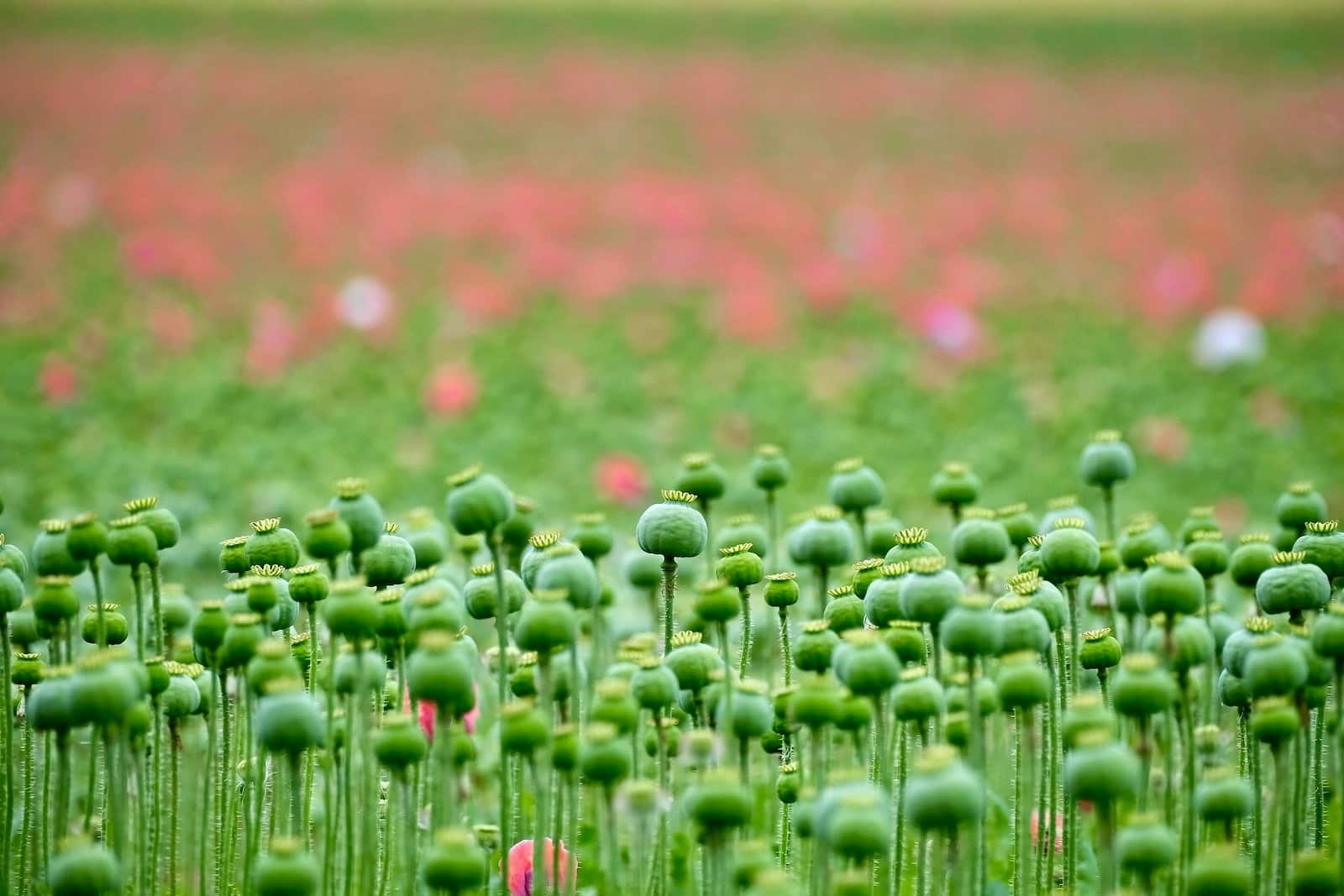
Photograph by Karl Egger via Pixabay