
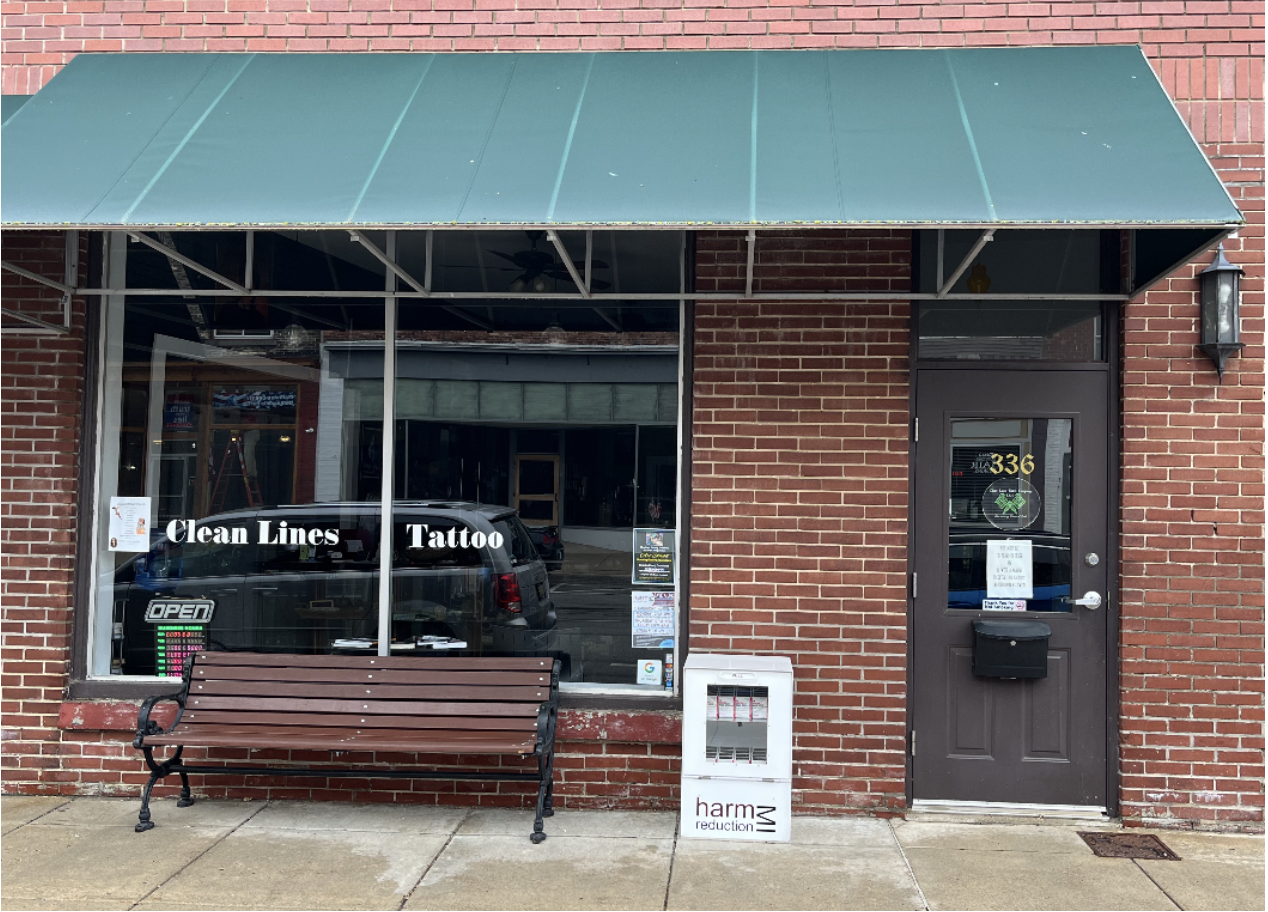
In 2021, Harm Reduction Michigan (HRMI) began using streetside newspaper-style boxes to station naloxone kits in outdoor spaces where the public could access them for free. More than 24,000 doses were dispensed this way between 2023 and 2024, and as of December 2024 HRMI had installed 184 boxes across more than half the counties in the state. Along with other innovative strategies like vending machines and mail-order kits, naloxone box programs are emerging as a promising way to increase saturation in rural and underserved communities.
A recent study published in Harm Reduction Journal appears to be the first scientific analysis of the naloxone box model. Researchers from HRMI and Facente Consulting found stakeholders “universally” perceived the boxes as a way to democratize naloxone distribution.
“Naloxone is such a safe, easy-to-use, lifesaving tool, and it’s often treated like, ‘Oh, this is a medicine—we have to safeguard it, we have to restrict it,’” co-author Shelley Facente told Filter. “The takeaway from this is just having it in a box—where people can open it and get to it 24/7—works.”
Researchers analyzed data that HRMI staff had been submitting to the state health department, logging how many kits had been taken and from which boxes. They also interviewed 11 people who had played a role in program implementation or accessed the boxes personally. They found that one critical factor in the program’s uptake was 24/7 accessibility—the boxes were placed outside, where the public could still reach them after business hours.
“If it’s 11 pm and they can’t access it, that naloxone isn’t doing any good,” co-author and HRMI founder Pam Lynch told Filter. “I mean, you’re hoping that people are taking kits ahead of time. But we’ve absolutely had situations where people actually drove up to one of our boxes with somebody overdosing in the car and ran up to the box and used the medication on the person in the car.”
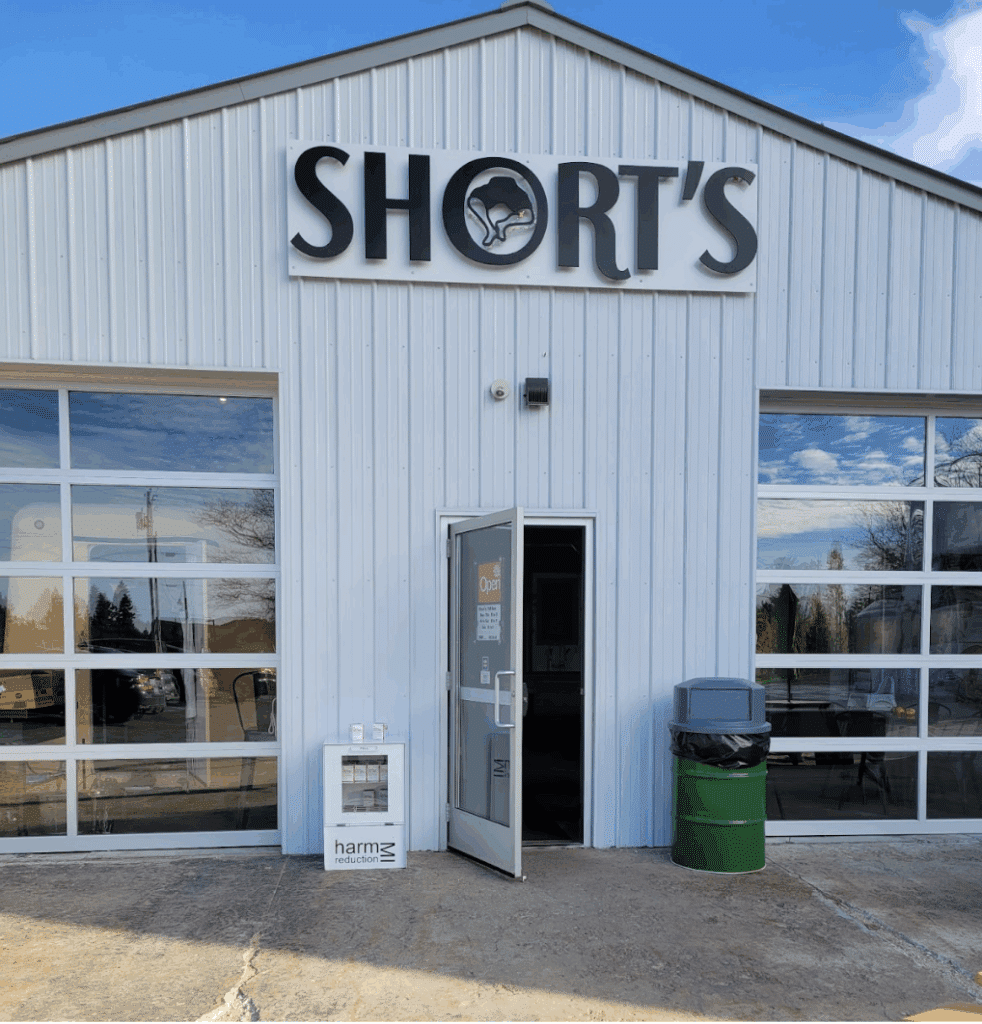 A naloxone box outside Short’s Brewing Pull Barn, a “non-traditional” community partner in Elk Rapids, Michigan.
A brand-new HRMI box costs around $500, a fraction of the cost for a naloxone vending machine. But HRMI also got many boxes for free, from local news organizations that no longer needed them.
Compared to vending machines, naloxone boxes also have a much lower barrier to entry in terms of the installation process—they slide easily into the passenger seat or trunk of most cars, which makes them convenient not just to set up, but to relocate.
“While the vending machine model has been really important and really productive … it’s not super accessible,” co-author Katie Burk told Filter. “They’re expensive, they need electricity access, they’re heavy.”
Alongside more traditional venues like harm reduction and social services programs, many “non-traditional” naloxone box placements were initiated by librarians, gas station clerks and small-business owners looking to protect their customers and their neighborhoods. More than 50 of the boxes are stocked by community members, independently of HRMI. The boxes from which people took the most naloxone were the ones outside retail stores; bars and restaurants were popular locations as well.
Lynch told Filter that many business owners felt compelled to implement a naloxone box due to their personal experiences losing loved ones. One local veteran noticed a box stationed at a cannabis dispensary and requested one for her new restaurant.
“She had loved ones who she had done combat with who had overdosed on opioids fatally,” Lynch said. “It was very important to her to place a box outside her newly established restaurant in memory of her colleague and friend who had died.”
Burk pointed out that people often don’t think of overdose prevention as within the scope of work for a librarian, or someone running a cannabis dispensary.
“But I think that these folks, through caring about the issue … really stepped up to the plate and were willing to do the work,” she told Filter.
“Let’s find champions in other areas that have been highly impacted by overdose … and be a little more intentional about placing boxes there.”
Enthusiasm from community partners was crucial to the HRMI program’s expansion and maintenance. But it also led the geographic distribution of the boxes to reflect interest, rather than need. Some of the counties with the highest rates of overdose deaths still have very few boxes, or none at all. Burk said this shows the importance of HRMI and other organizations seeking out community partners in high-impact areas—rather than waiting for partners to come to them.
“Let’s find champions in other areas that have been highly impacted by overdose and overdose deaths,” she said, “and be a little more intentional about placing boxes there.”
While some interviewees told the researchers that the boxes received initial pushback, they noted that over time the program sparked many productive conversations and changed the minds of community members who had initially been wary or confused. One person who worked at a “non-traditional” box location told the researchers that they’d seen “a lot of success with people in terms of broadening their horizons.”
More harm reduction organizations are beginning to implement the naloxone box model in free clinics, college campuses and other community spaces. With naloxone products increasingly accessible, Facente hopes her team’s research will encourage more people to embrace this low-threshold approach to naloxone distribution—making kits freely available in public spaces, without unnecessary barriers.
“Naloxone hasn’t been treated that way,” she said, “but there’s really no reason that it can’t be.”
Images via Harm Reduction Michigan